
‘Gourd Girls’ craft a life of their own design
Unique pottery process uses gourds as molds.
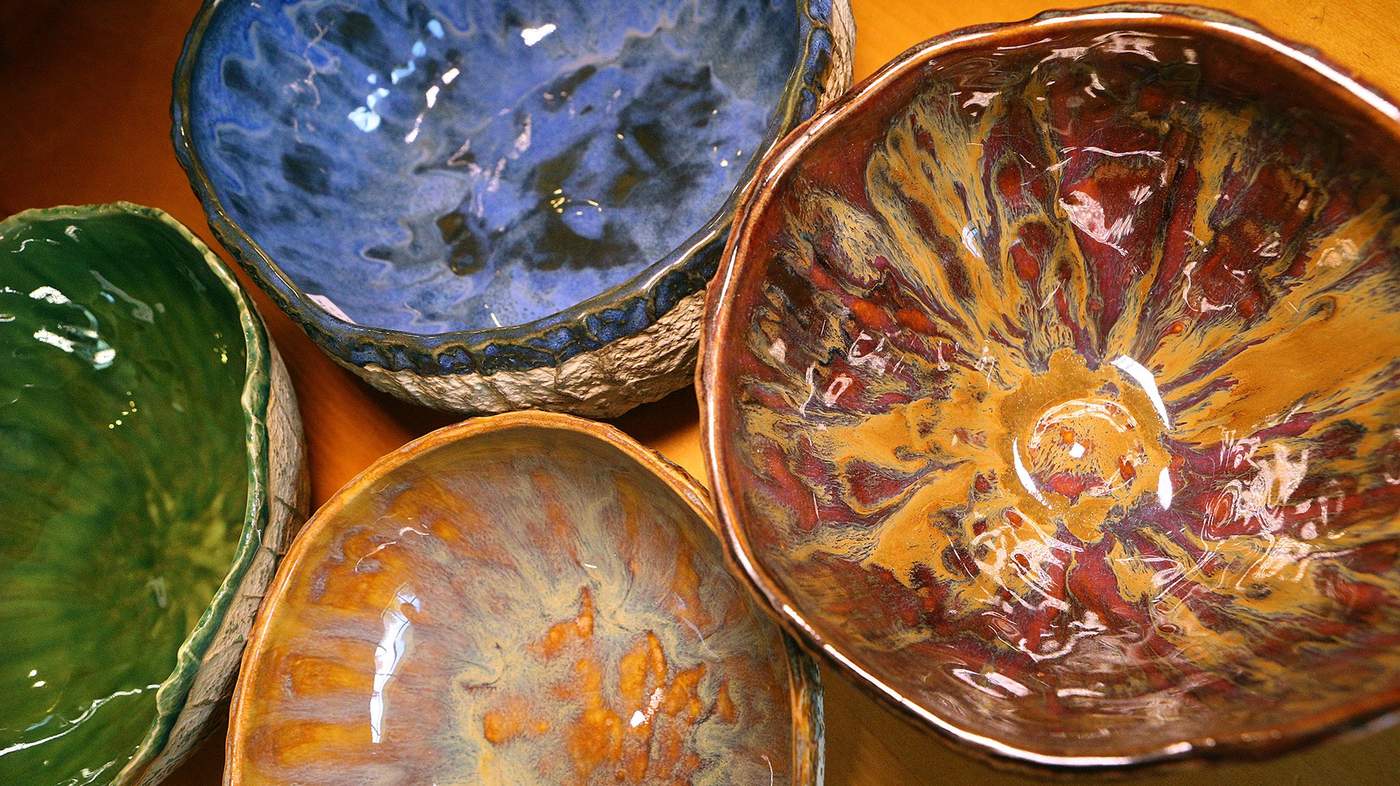


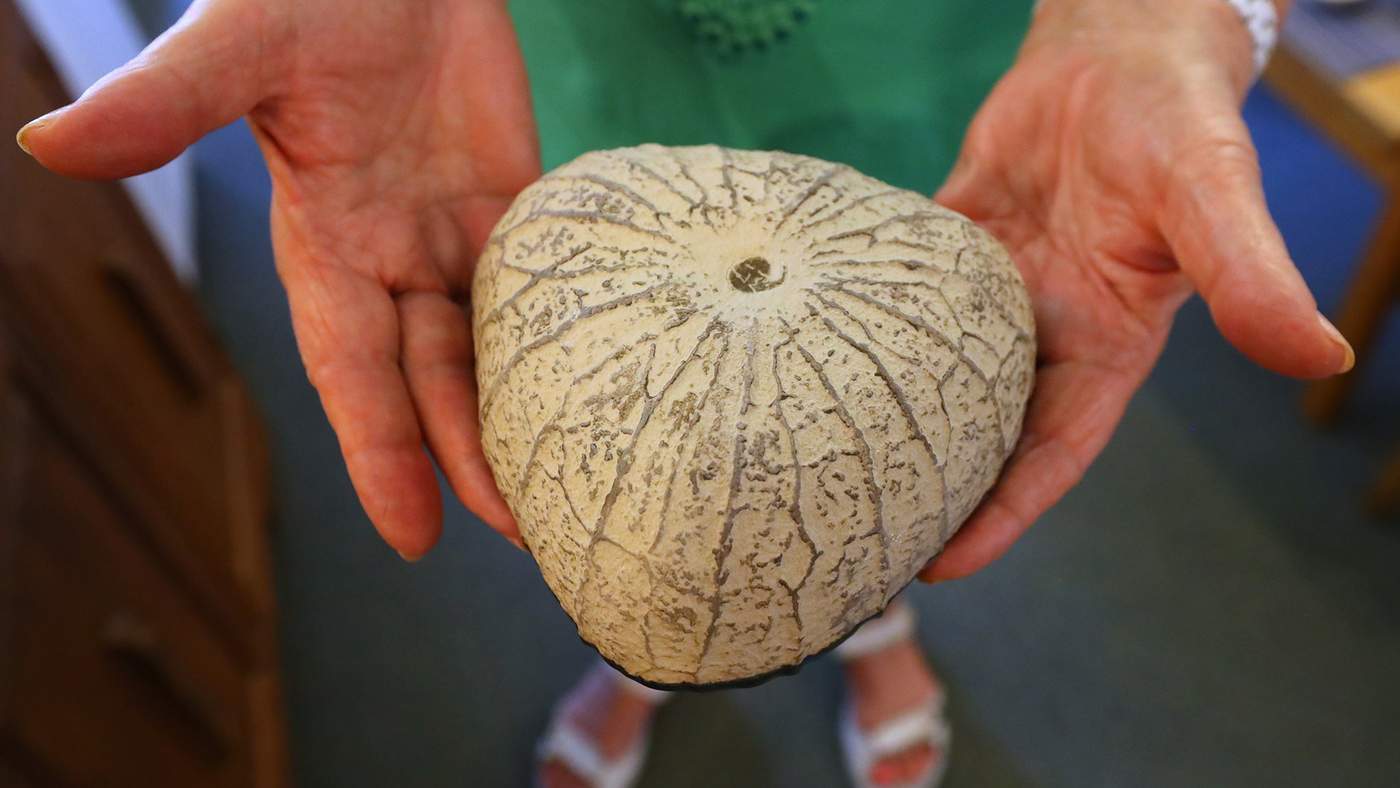
Jane Seliga of Cumming looks over a unusual triangular pottery bowl made from a gourd while shopping at The Gourd Place in July 2017.
Wilson soon established herself as a gourd artist on the craft show circuit, with Lymburner at her side, handling the business side of things. She eventually quit her teaching job to spend her time making containers and planters carved with wildflowers, as well as Christmas tree ornaments, wheeled toys, puzzles and masks.
In the context of the times, Wilson’s decision at age 26 to lease 7 acres and become a gourd farmer in 1977 wasn’t so far-fetched. The youth culture was turning up its collective nose at the 9-to-5 rat race of their parents’ generation, and the back-to-land movement had taken root.
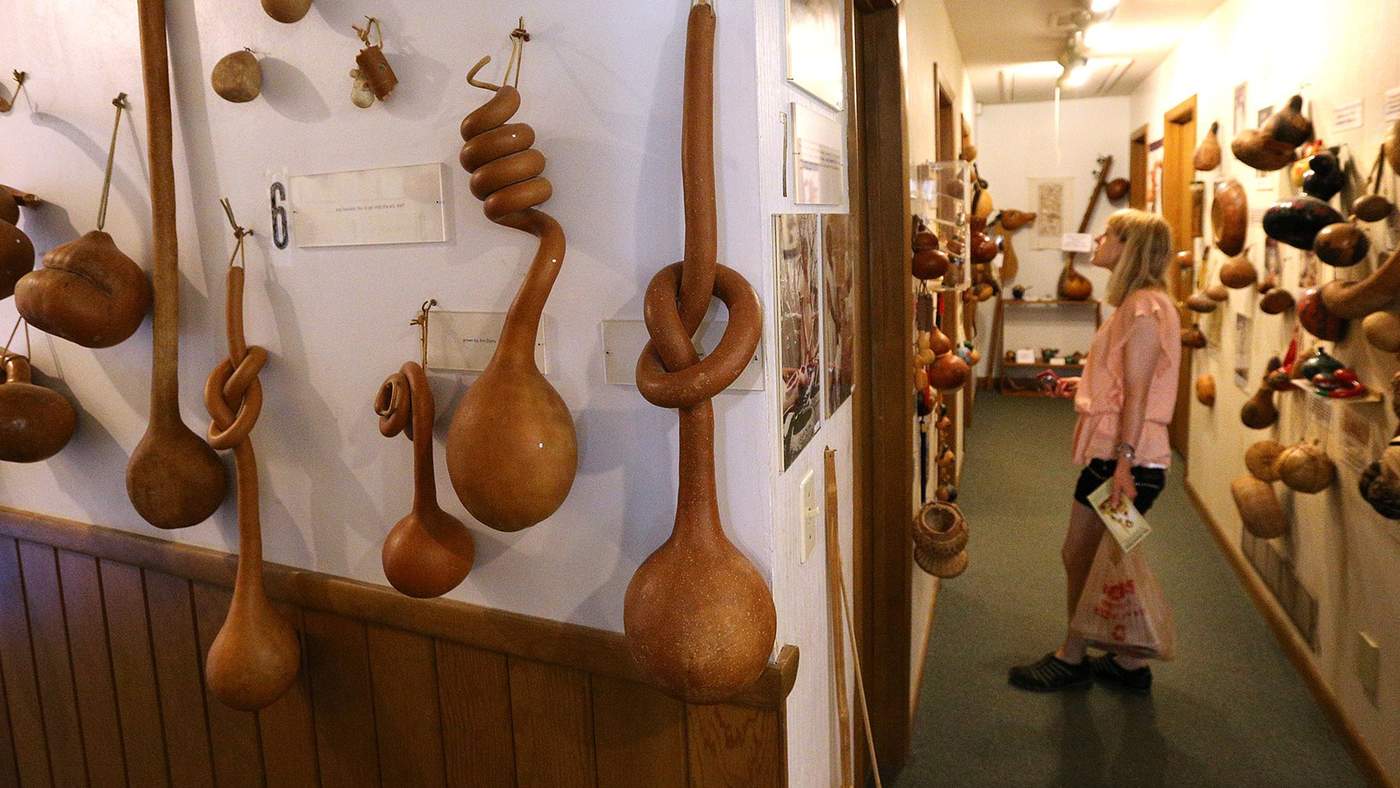
For a dozen years, the women grew gourds, and Wilson continued to produce gourd crafts. Along the way, the women learned about the ancient traditions of gourd art and began collecting stunning examples of it from around the world. In the early ‘80s, they opened their first shop and a small museum where they displayed their collection and sold Wilson’s wares. By then, Lymburner had quit her teaching job to help manage the business, which still barely made enough to keep them afloat.
In the early ’90s, the women relocated their shop and museum to a pretty piece of land on a pond in Sautee with a house where they could also live. Still they struggled to make ends meet. Wilson took a job for a while working at a rape crisis center to make extra money while Lymburner ran the store.
Then one day in 2000, Wilson was driving down Ga. 365 when an image popped in her head. It was of a dried shard of gourd lying in a field, something she’d seen dozens of times at the farm. But inside was a thin layer of clay, as though it had been splashed in from a storm.
The image began to recur, only this time it was a picture of liquid clay — slip — being poured into a gourd. Something was nudging her toward making pottery from gourd molds, a concept she had never considered before.
Gemma Warag of Scotland shops for unusual items at The Gourd Place, home of Gourdcraft Originals and Gourd Impressions pottery.
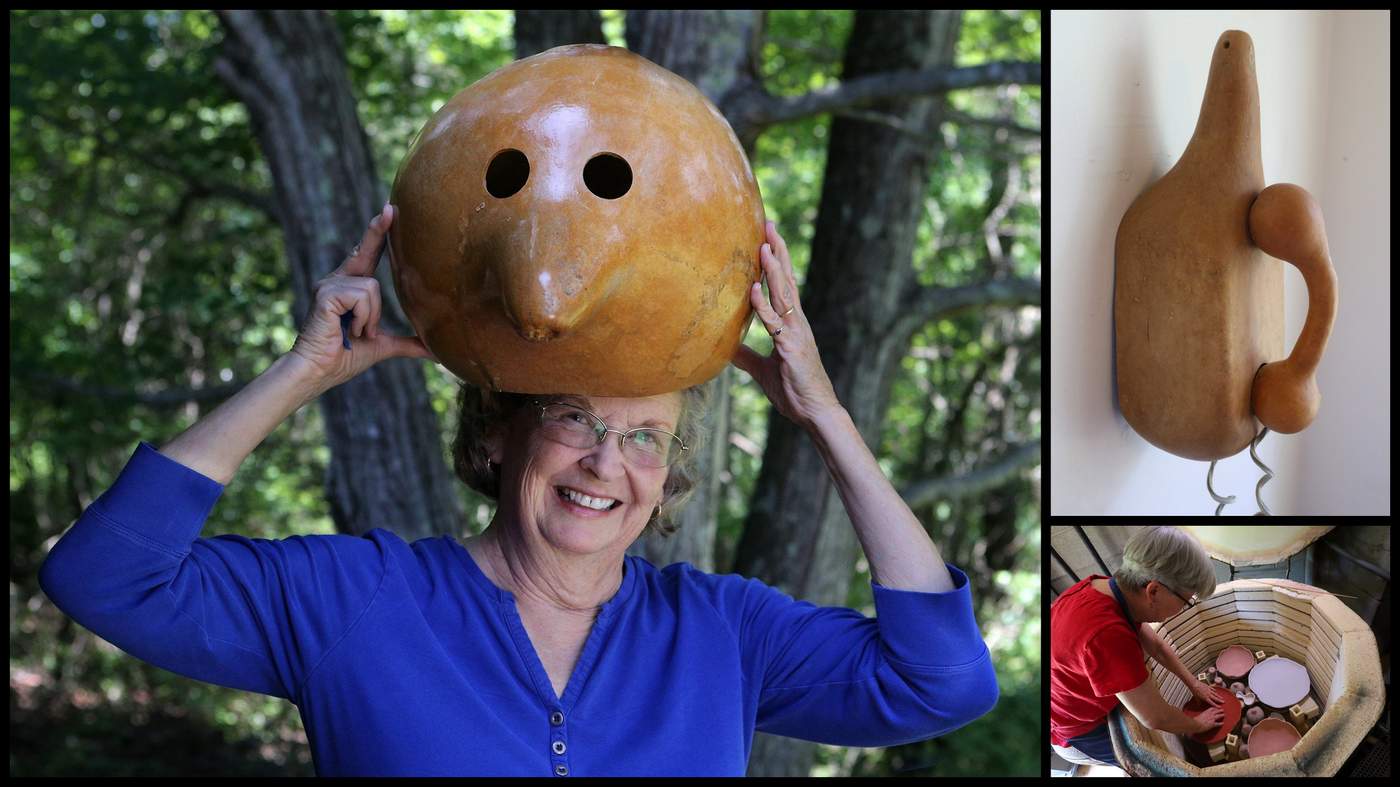
Co-owner Janice Lymburner shows off a gourd head at The Gourd Place.
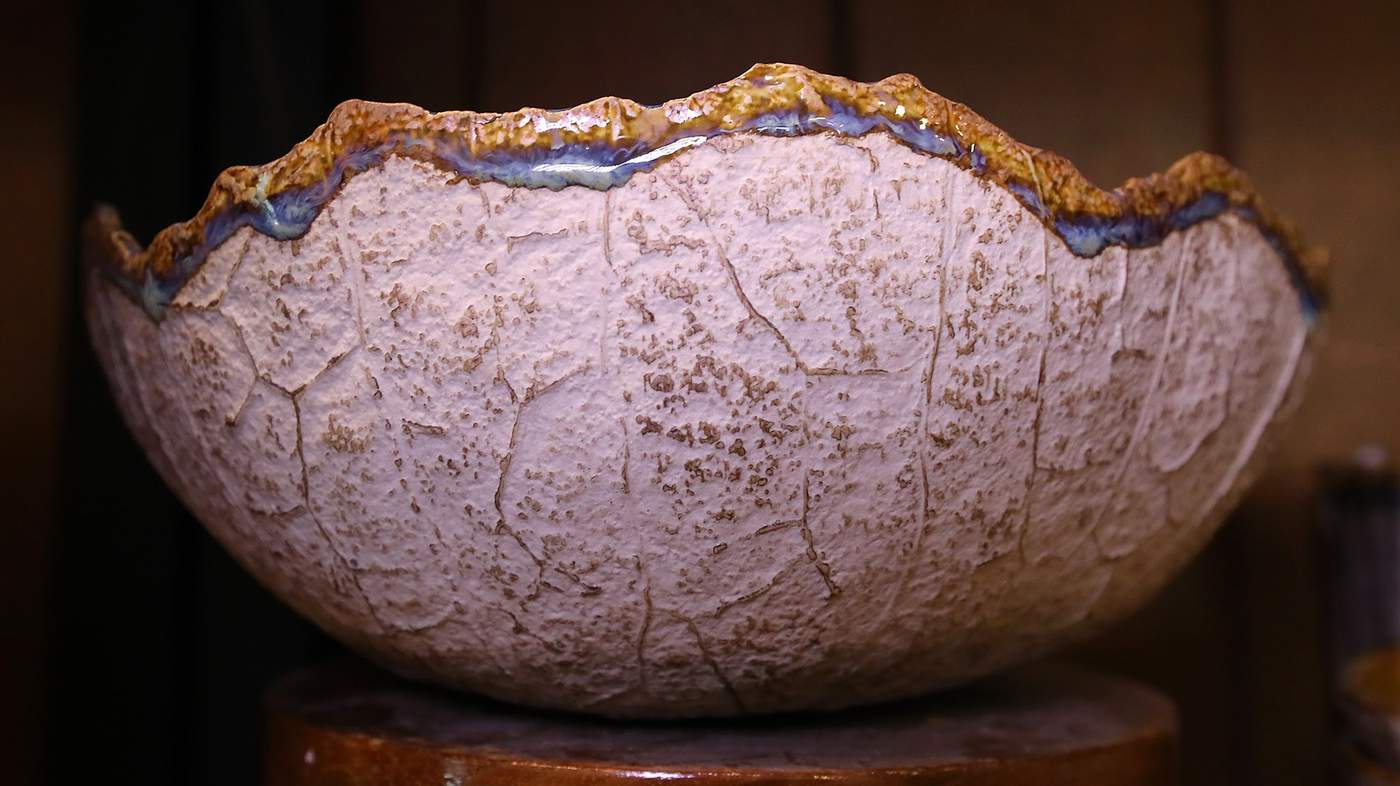
One of Priscilla Wilson's pottery bowls made from a gourd.
Please confirm the information below before signing in.