
Another historic crusade
for John Lewis
For 28 years, the Georgia congressman fought for a national museum of African-American history.
The doors are about to open.


M ore than 23 years ago, U.S. Rep. John Lewis took a reporter from this newspaper to a venerable red brick building on the National Mall for which he had great plans.
“You could put a whole slave ship in here,” the Atlanta Democrat said as he walked through the long, two-story grand hall of the Arts and Industries building, located just east of the Smithsonian Castle. “You could put a Greyhound bus in here.”
Lawmakers in June 1993 were on the verge of passing a bill that would have converted the cavernous 19th-century structure into a national museum of African-American history.
What Lewis didn’t know was that his effort would fizzle in the Senate, blocked by a member of the chamber who had a history of being a staunch segregationist.
But like so many of Lewis’ crusades during his long career as a congressman and civil rights leader, he purposefully yet respectfully pushed forward.
It took him 10 more years to shepherd the concept through Congress, but next weekend Lewis will finally witness the opening of a Smithsonian museum that traces the history and celebrates the contributions of African Americans in the United States from slavery to the present.
Washington is set to honor the opening of the National Museum of African American History and Culture — a gleaming bronze structure across the Mall from the Arts and Industries building — in grand style on Sept. 24.
On the agenda is a three-day cultural festival near the Washington Monument, a private concert at the Kennedy Center and dedication ceremony featuring Presidents Barack Obama and George W. Bush. Georgians are planning to travel to Washington by the busload.
“I don’t know what I’m going to do when it’s open. I’m probably going to cry,” said Lewis in a recent interview in his Capitol Hill office, which itself feels like a museum. “It’s probably going to be a little too much.”
For Lewis, 76, the museum is the fruit of 28 years of advocacy in Congress, another example of perseverance in the face of long odds on Capitol Hill and beyond. It’s also a capstone to a career on the crest of the civil rights movement, one that comes at a time when shootings and protests have laid bare just how far the country has to go to before achieving full racial equality and reconciliation.

Preparations are finalized for the opening of the National Museum of African American History and Culture in Washington, Wednesday, Sept. 14, 2016. (AP Photo/Susan Walsh)
Video: Museum walk thru
Video: Erica Hernandez
Video: John Lewis discusses the museum
Video: Erica Hernandez and Cox Washington Bureau
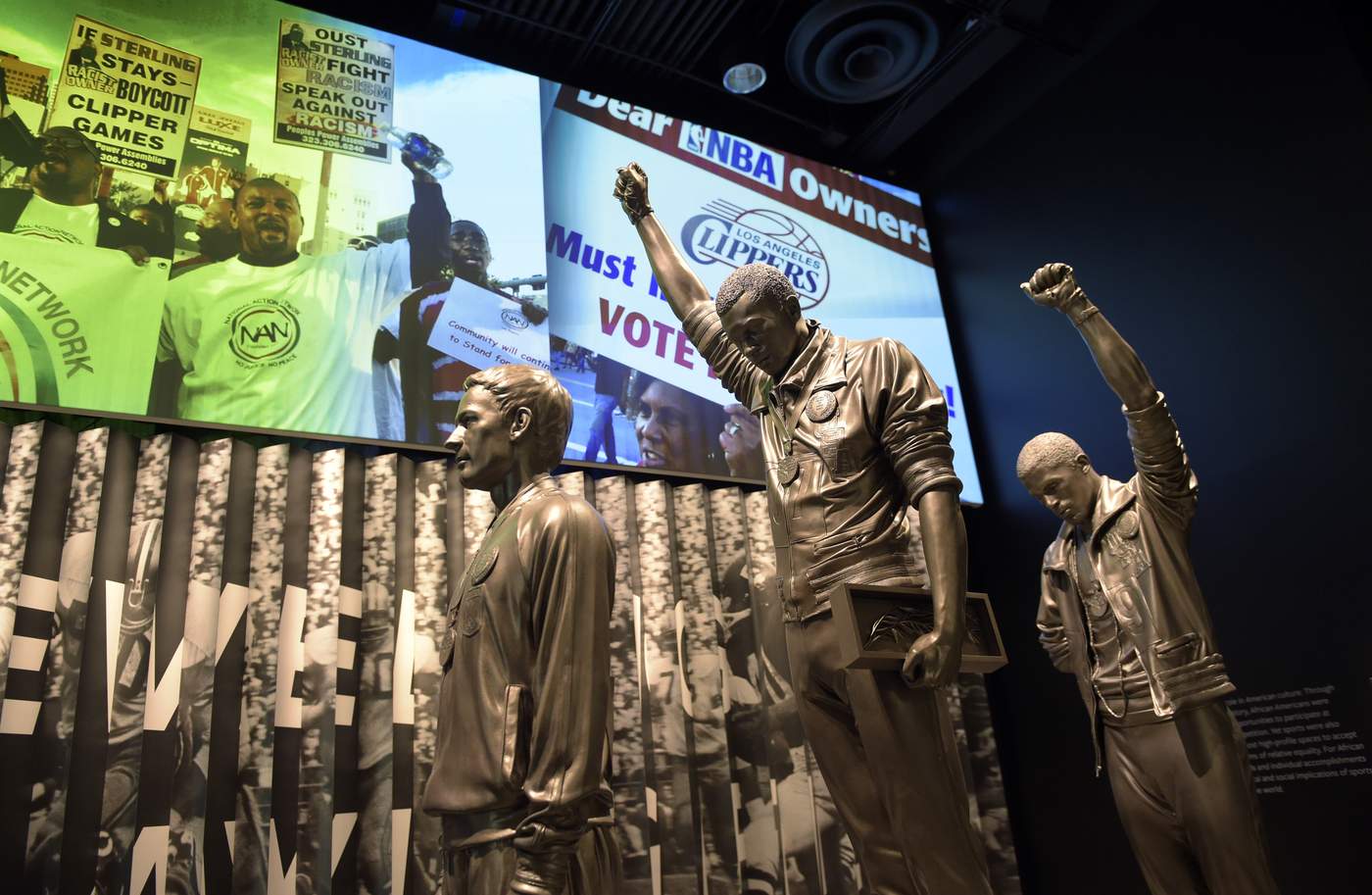
A statue of the 1968 Olympics Black Power salute is on display at the National Museum of African American History and Culture in Washington, Wednesday, Sept. 14, 2016, during a press preview. (AP Photo/Susan Walsh)
Timeline
Sources: Atlanta Journal-Constitution archives; Smithsonian Institution archives; Robert Wilkins’ “The Forgotten Museum,” 2002; news reports.
Video: Ask the curators
Video: Erica Hernandez