
You don’t look Indian
Long-distance bike ride connects John Perry to his Cherokee heritage

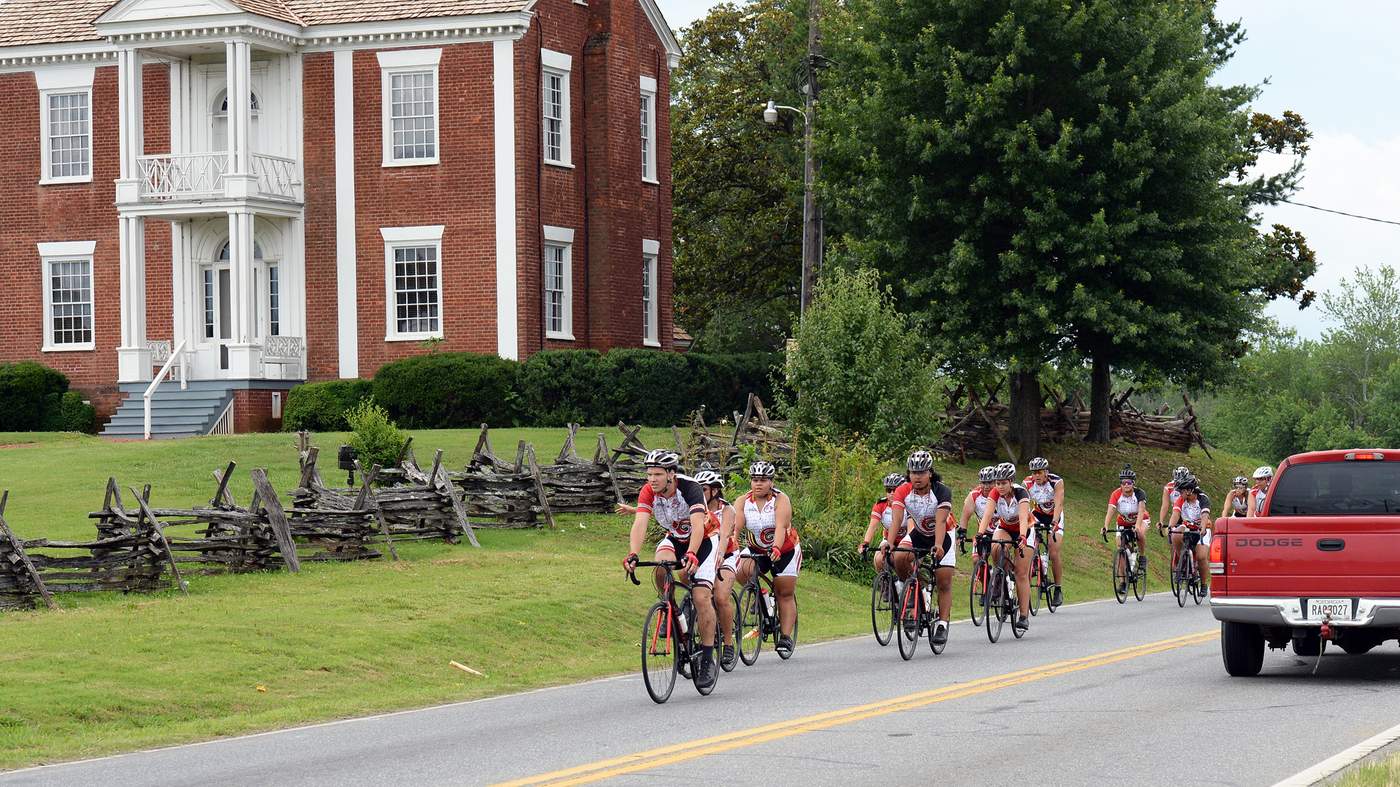
Riders pass the Chief Vann House, the first brick residence of the Cherokee Nation at New Echota. The bike ride, sponsored by the Cherokee Nation, began in Chatsworth on June 4. KENT D. JOHNSON/AJC STAFF
The Dawes Roll census card listing the name of John's second great grandmother, Mary Ross Jones (line 2), and his great grandfather, John Enoila Jones (line 3). Citizens of the modern Cherokee Nation must be able to trace their ancestry back to the Dawes Cherokee-by-blood roll. Contributed photo

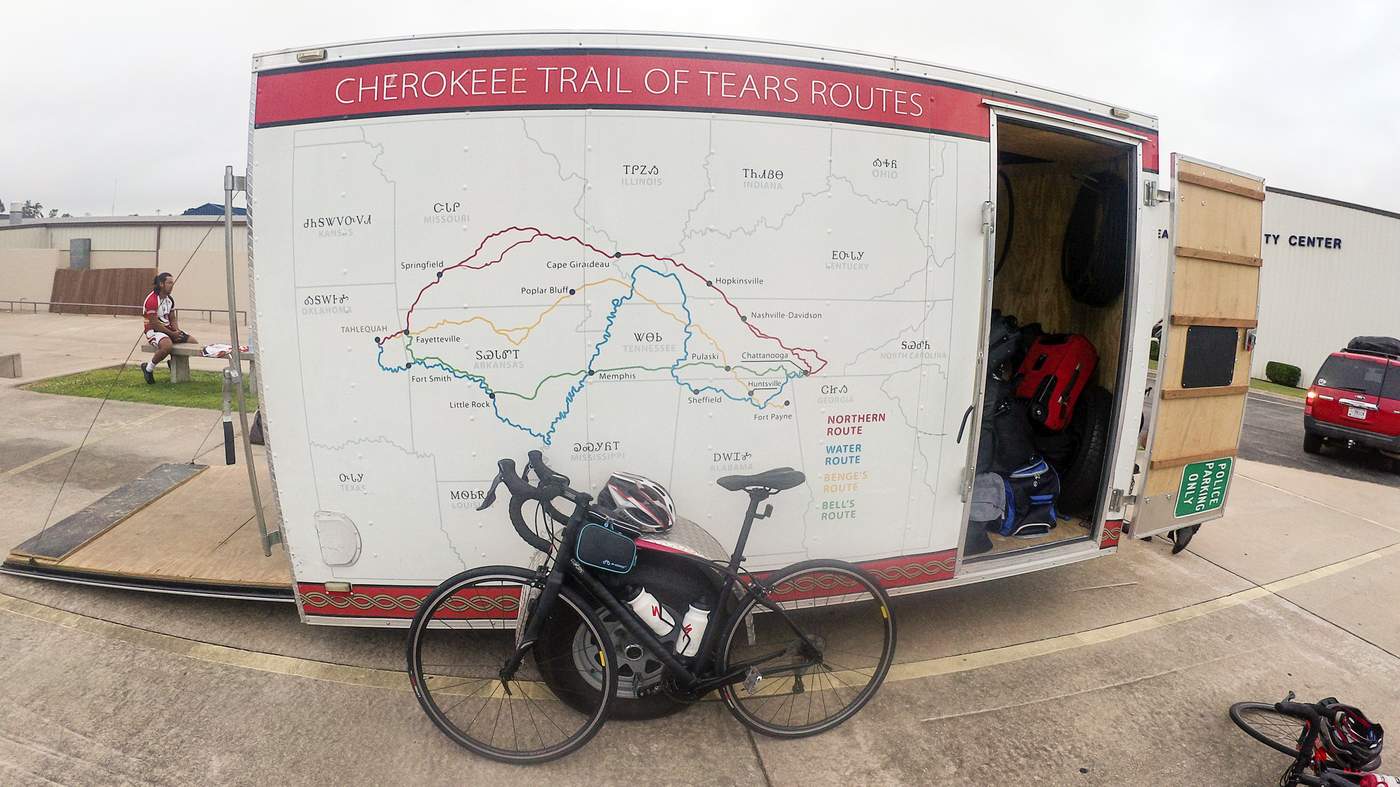
An interactive map of the Remember the Removal Memorial Bike Ride
John (center) with four distant cousins he met on the ride. From left are Trey Pritchett, Brian Barlow, Gaya Pikup and Ellic Miller. KENT D. JOHNSON/AJC STAFF
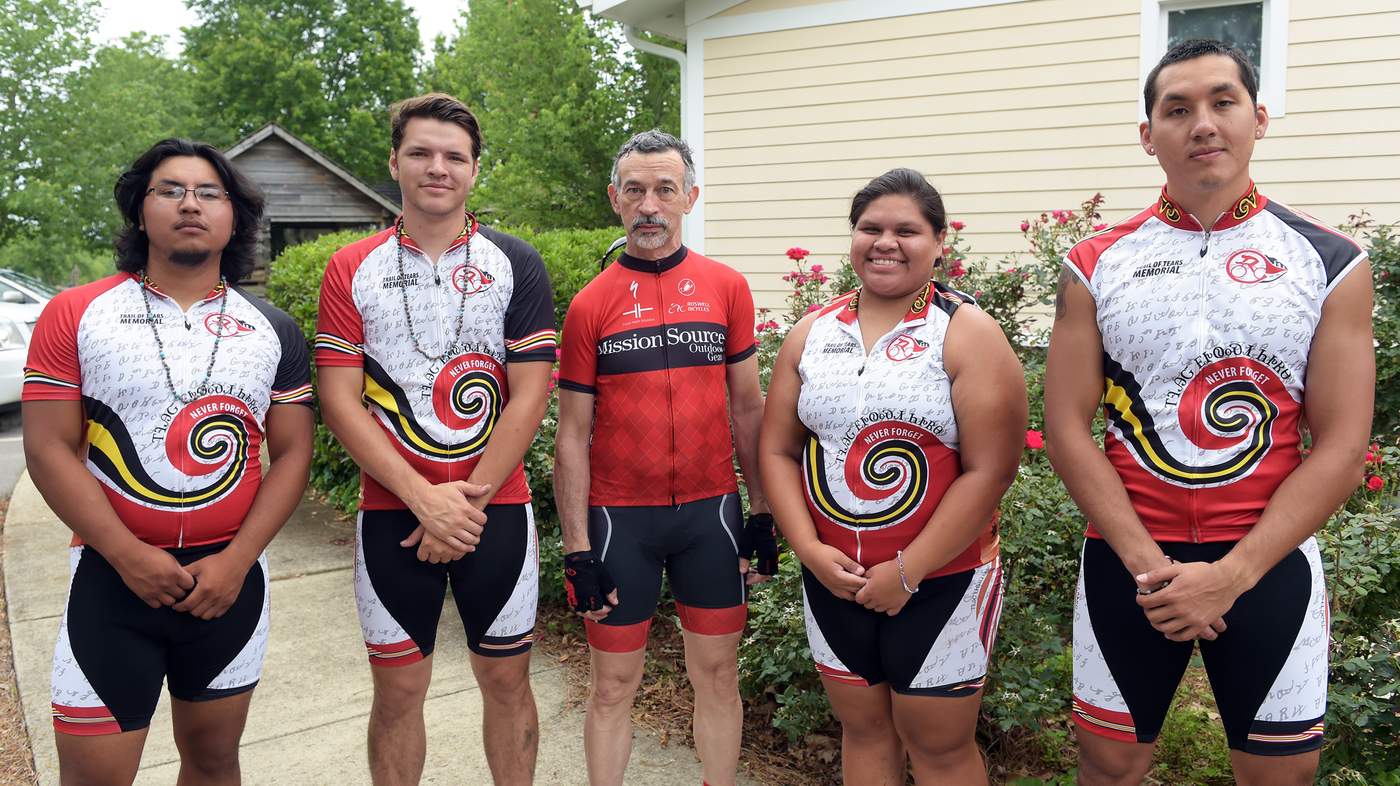
Photo: Blue Hole Spring at Red Clay State Park in Bradley County, Tenn. Photo by Brian Stansberry via Wikimedia Commons.
5
‘This really happened’
Day two begins where day one ended, Red Clay State Historical Park in Tennessee. When Georgia outlawed tribal gatherings at New Echota, the tribe moved its council meetings across the border to the Red Clay Council Grounds near Cleveland, Tenn.
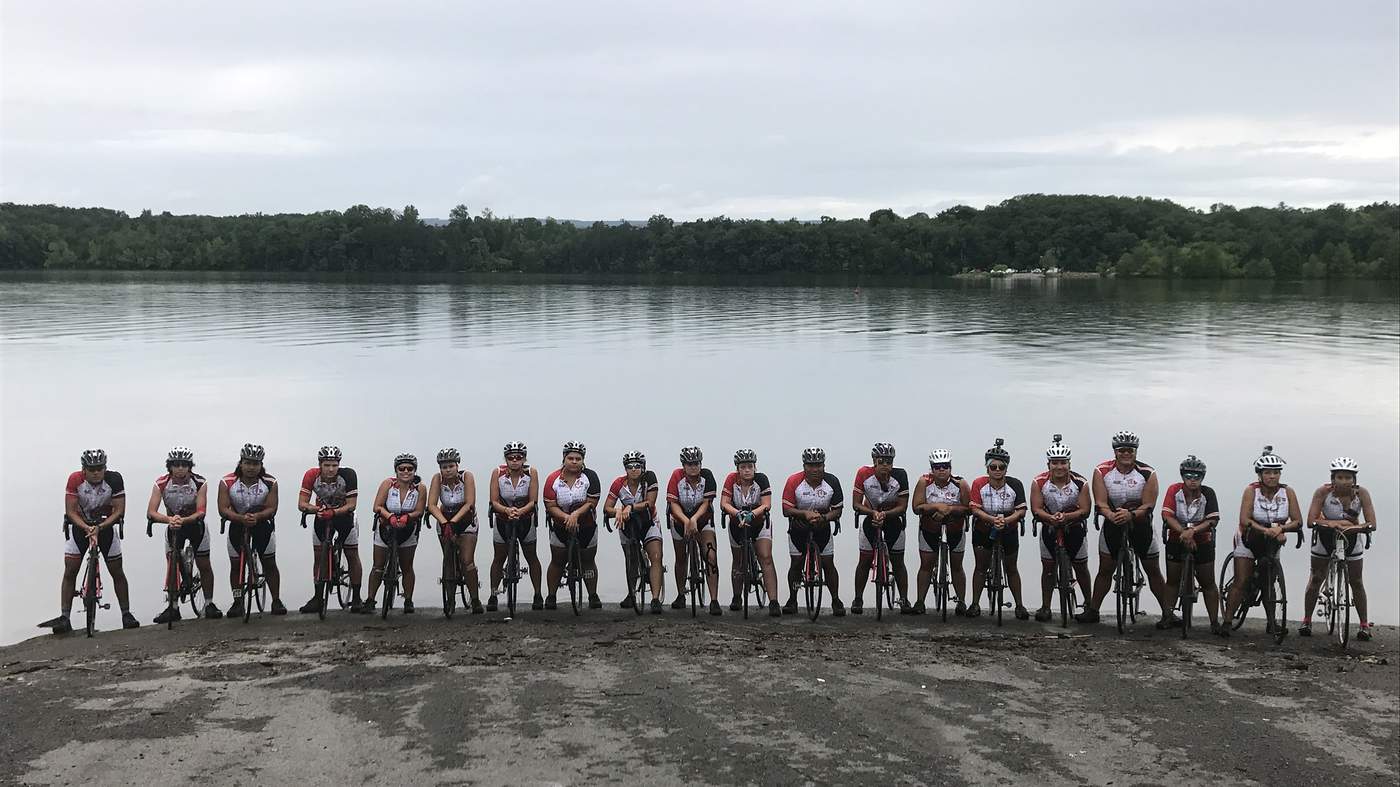
The evening before, the riders were allowed to perform what has become a tradition for the riders but is prohibited to other park visitors. They all took a dive into the frigid waters of Blue Hole Spring, which had been the water source during Cherokee council meetings.
The plan had been to camp at Red Clay, but rain persuaded ride organizers to check in to a hotel.
When we return to the park this morning it is dry, but clouds are threatening. Trey Pritchett, 19, a sophomore at Northeastern Oklahoma State University, is today’s ride leader. He leads the war cry and the prayer.
Pritchett is my seventh cousin through George Lowrey, who was assistant chief under John Ross during the removal. Lowrey’s daughter, Susan, married Andrew Ross.
Pritchett attends Northeastern Oklahoma State University as a Promise Scholar, a Cherokee Nation program to help first generation college students. The scholarship requires students to live on campus in Tahlequah and to take courses in Cherokee language and culture.
Pritchett tells me he first became interested in Cherokee culture and language after learning about the Trail of Tears in a high school history class.
“I figured out that if we’re not learning this, it’s going to die out. We’re not going to be Indians anymore,” he says.
Pritchett’s grandfather was among a shrinking population of first language speakers. He learned English in his 20s. When Pritchett began asking the meaning of Cherokee words, his grandfather was reluctant to answer.
“His first response was, it needs to die out. He said that you can’t get an office job speaking Cherokee because they won’t understand you. You’re better off speaking English,” Pritchett says.
But he was determined.
“I was doing my best to learn from him. And I think he realized that we need to pass this down. That’s our language and we need to keep it alive,” Pritchett says. “Our language is what makes us who we are.”
Pritchett recently changed his major to Cherokee education. He previously taught in the Cherokee Immersion School, where pre-school through sixth-grade students learn in Cherokee and English. When the bike ride ends, he is entering the Cherokee Master-Apprentice Program, designed to produce fluent adult language speakers.
“With this ride, you will find out so much that you did not know, and it definitely will change you,” he says. “It will make you think differently. It will make you think about your people. It will put you in a situation where, man, this really happened. This happened to my great-great-grandparents. This happened.”
Brian Barlow senses that change. It’s late in the afternoon, June 22, 17 days since I left the riders in Tennessee. Brian and I are standing under the wide-open Oklahoma sky outside Maryetta Public School in Stilwell, Okla., watching other riders play stickball with their younger siblings.
Barlow is my seventh cousin through John McDonald, a Scottish trader who was appointed agent to the Cherokees around 1760. He married Annie Shorey, who was half Cherokee.
At some point, McDonald rescued two fellow Scots from captivity by a Cherokee named Bloody Fellow. One of them, Daniel Ross, stayed with McDonald and married his daughter Mollie. Among their children were John, Lewis and Andrew Ross.
Stilwell was the penultimate destination of the bike ride, just 22 miles from the final destination, the old Cherokee National Capitol in downtown Tahlequah.
I had driven from Atlanta and arrived several hours after the riders.
Barlow tells me his moment of transformation came before the ride even started, at the site of the Moravian Mission near Chatsworth where he discovered his ancestor was listed on the roster of students.
“A lot of people think of native people in the 19th century and they don’t think education. But we were pretty educated. It was back in the 1800s and he was getting an education, wanting to make the world a better place,” Barlow said.
I realize now that I feel most connected to my Cherokee blood when I’m confronted by Indian stereotypes.
Riders on the annual Cherokee Remember the Removal Bike Ride, which traces the path of the Trail of Tears. KENT D. JOHNSON/AJC STAFF

The riders gather for a traditional Cherokee war cry, a prayer and daily instructions and announcements before the start of day two at Red Clay State Historic Park near Cleveland, Tenn. Photo by John Perry/AJC


ABOUT THE STORY
As a member of the newsroom data team, I was working with a group of reporters and editors on stories about race in Atlanta. I came to realize that my American Indian heritage gave me a unique perspective on race that was foreign to most Georgians. Then I received a press release from the Cherokee Nation about the 2017 Remember the Removal Memorial Bike Ride from Georgia to Oklahoma. I am a fanatic cyclist, so this seemed the perfect excuse to ride my bike and also write a story about my heritage. This story is a result of that ride.
John Perry
Data specialist
personaljourneys@ajc.com
ABOUT THE AUTHOR

John Perry is technical director of The Atlanta Journal-Constitution’s data journalism team. He came to the AJC in January 2008. As a member of the investigative team, he helped uncover widespread cheating on state tests in the Atlanta Public Schools. Before coming to Atlanta, Perry was a senior fellow at the nonprofit investigative journalism organization, The Center for Public Integrity and database editor at The Oklahoman, the newspaper in Oklahoma City.

ABOUT THE PHOTOGRAPHER
Kent D. Johnson was a veteran journalist with more than 31 years experience. He joined the AJC as sports photo editor in 1998 and held a number of visual editing and shooting roles at the paper, including photo assignment editor for nine years. Johnson also worked at papers in Charlotte, N.C.; Jackson, Miss.; Fort Myers, Fla.; and Muskogee, Okla. This is Kent’s last assignment for The Atlanta-Journal Constitution. He died unexpectedly in August. We still miss him every day.
The Trail of Tears National Historic Trail. U.S. National Park Service, restoration/cleanup by Matt Holly

Please confirm the information below before signing in.