
The Fab’rik of life
The pitfalls of having it all and the power of living in the now


Photo: Dana leads a team meeting at the corporate office. Seated to Dana’s right is Lisa Dimson, Fab’rik’s chief managing officer.
2
Being the best
If there is any truth to birth order traits, Dana, the eldest of three siblings who grew up in Roswell, is a first-born to her core.
When anyone asked what she wanted to be when she grew up, Dana replied, the best.
“She was so nervous about being anything but perfect,” said her mother, Anne Williams, an interior designer.
Anne and Myott Williams, a custom framer and artist, were young when they married. While they had plenty of passion, money was less abundant. Dana knew they didn’t have a lot to spare so she rarely asked for anything.
Dana’s mom made all of her clothing and Dana remembered how good it made her feel.
“My soul would light up when my mom had pins in her mouth and was pinning a dress on me,” Dana said. “I have that belief that everyone deserves to live a fairy tale life. Mine wasn’t magical or broken, it was just good.”
She attended the University of Georgia on a Hope Scholarship, the first in her family to go to college. During her first week on campus, she plunked herself down in a counselor’s office and asked, What job will make a lot of money?
The answer led to a career in management consulting, and for several years it seemed to be a good fit. For someone as solutions oriented as Dana, it felt like heaven, until it didn’t.
“I had the paycheck. I had a place in San Francisco. It was everything on paper,” she said. She was on track to become a manager or partner, but when she talked to women in those roles, none of them had children.
“I wanted to have it all,” Dana said.
The idea for Fab’rik came a few months after Dana returned home to Atlanta. The night she decided to make the boutique a reality, she went out to a bar with friends and locked eyes with a handsome stranger.
I know this sounds crazy, but I’m going to marry you, she told him.
Angelo Spinola was taken aback. He had never met a woman with so much confidence. Something about her convinced Angelo that she was the real deal. They went on a date and began a journey that, as far as Dana was concerned, had already been pre-determined.
Personal stylist Martinique Douglas straightens a display at the Fab’rik store at Atlantic Station.
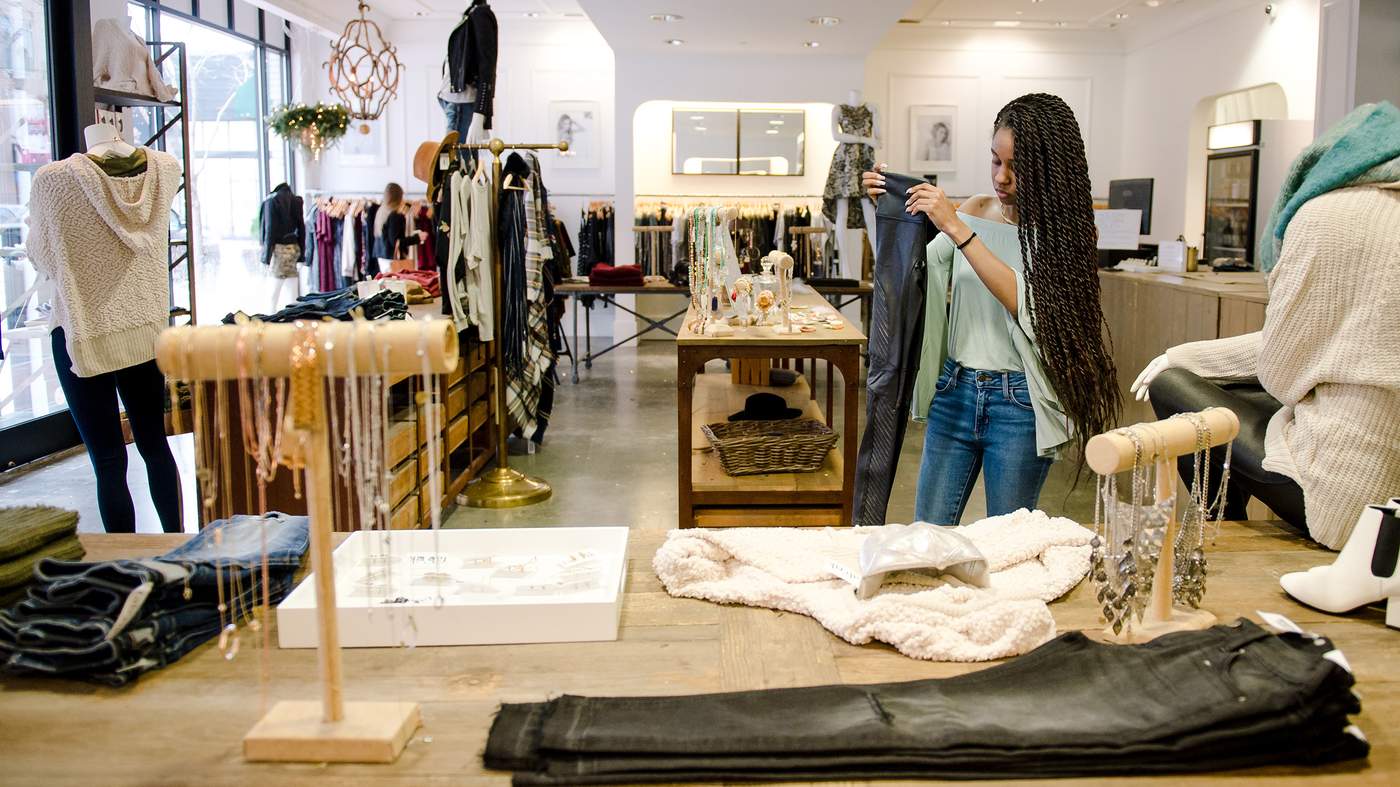
Photo: After a two-month hiatus from her business, Dana returned to Fab’rik in November. Here she leads a team meeting at the corporate office.
3
Fab’rik is born
Fab’rik is the phonetic spelling of the word fabric. For years, Atlantans have stumbled over how to pronounce it, but for Dana, the inspiration behind it was simple — clothing could make you feel beautiful when life was anything but pretty.
Her own sense of style had evolved since her mom made her clothing. Years of traveling the world had exposed her to the finer things, but her homegrown roots left her cringing at the thought of paying $400 for a T-shirt.
She wanted Fab’rik to be a place where most items were less than $100 but would leave customers feeling as if they were shopping at Neiman Marcus. It took a year to perfect her business plan, then she shopped it to 14 banks and got 14 rejections. In the end, a friend of her dad’s agreed to take the risk.
Fab’rik opened in 2002 on West Peachtree Street in Midtown. The space had a warehouse ambiance, cool clothing and zero foot traffic. Realizing she needed to draw people in, Dana began hosting events. In the pre-dating-app era, she held Valentine’s Day parties where singles could make a match from Polaroids posted on the walls of the store. Her pet fashion shows offered pet adoptions while customers shopped.
The business was young and Dana spent all of her time there, often working until 2 a.m. then heading back in at 6 a.m. In 2004, she and Angelo married, and two years later, their first son, Hudson, was born. Dana was excited to start a family, but she had underestimated the impact it would have on her life.
Suddenly things she’d taken for granted like fashion buying trips to LA, fielding calls from customers and having the time and energy to strategize the business were a challenge. Dana couldn’t even figure out how to physically be in her stores anymore.
So she hired a nanny and resolved to not let herself become consumed with mom guilt.
Fab’rik had a growing customer base and she needed to keep the momentum going. Angelo helped her franchise the business. The first one opened in Raleigh, North Carolina. Dana and Ally Melson, a longtime Fab’rik employee, scrambled to give the company structure.
“We went from no rules to a lot of rules,” said Melson, 37, now chief operating officer.
During the recession that began in 2008, many Atlanta boutiques closed their doors, but Fab’rik expanded. Between 2002 and 2017, the company grew to 42 locations in 12 states.
Fab’rik had grown up and Dana, by then a mom of two, was changing as well.
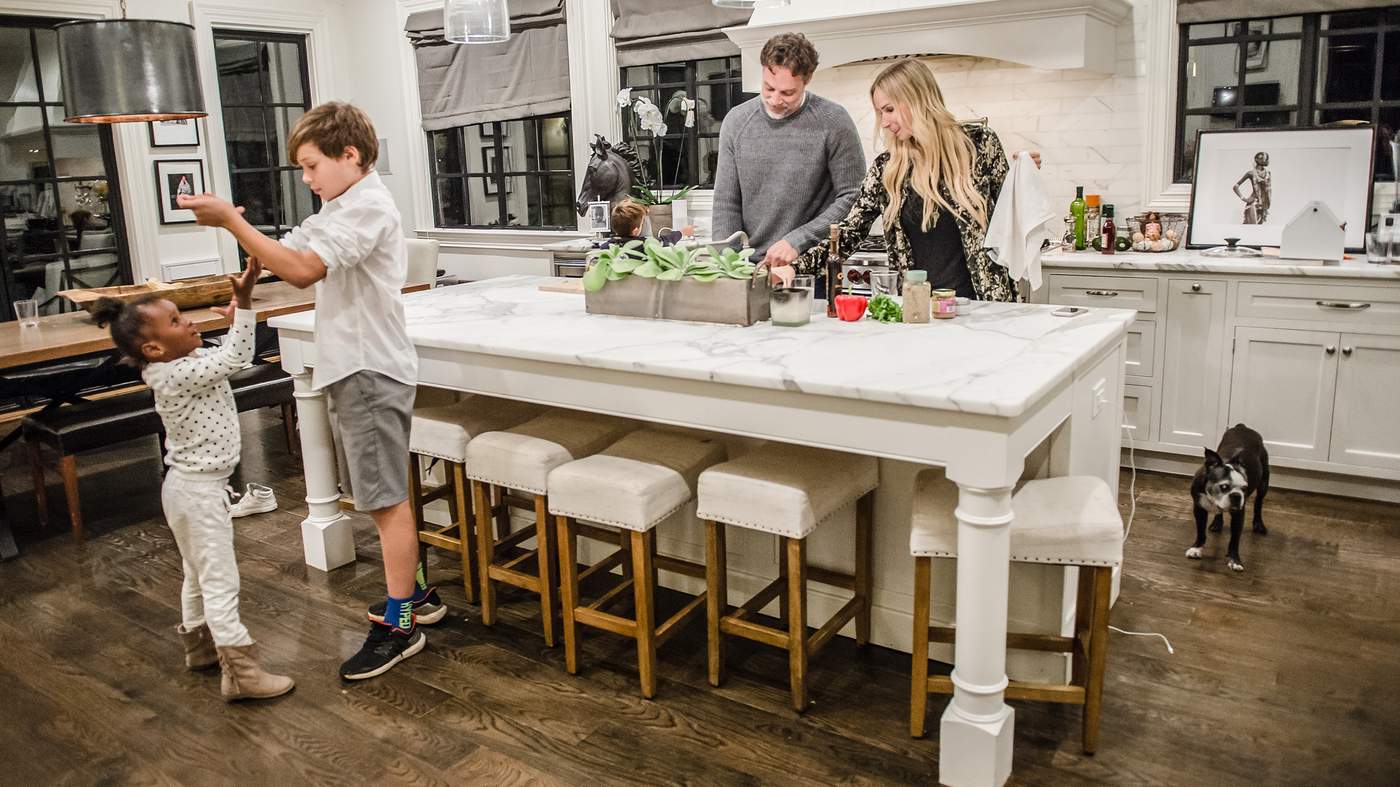
Dana and husband Angelo Spinola clean up after dinner as their children (from left) Asher, 4, and Hudson, 11, play at their Atlanta home.

5
Forced to slow down
As soon as they arrived in the Bahamas, the Spinolas crammed their first day full of activities. Jogging, yoga, massages, lunch at the waterfront, dinner that evening. By nighttime, all they could do was crawl into bed.
Angelo was up first in the early hours of the morning, dizzy and sweating. Then Dana began to feel the same sensations, most likely, they later determined, from dehydration. A wave of nausea sent Dana to the bathroom where she apparently fainted. The next thing she knew, she was regaining consciousness on the bathroom floor. As she came to, she saw blood everywhere. Dana had smashed her face on the toilet basin when she fainted, shattering her jaw bone. Her teeth felt like grit in her mouth. It took almost 24 hours for them to get back to Atlanta.
For three months, Dana could not do anything. She ate through a feeding tube and lost 40 pounds. She was afraid to be around her rowdy boys, who at ages 2, 4 and 6 could have accidentally sent her back to the ER. It was a blow to her confidence and the first time she had been forced to slow down, but Dana learned an important lesson.
“When you have your mouth wired shut, you need to listen. I had to slow down and feel the love of the present moment from all the beautiful things in my life,” she said. Unable to talk, she began to find happiness in silence and mindfulness. Though she didn’t realize it at the time, the experience was preparing her for the next phase of her life.
A few months after her recovery, Dana got a call from the adoption agency and an email with the picture of a baby girl dressed in pink. After almost four years of waiting, a child was available for adoption in Ethiopia. Eight months later, in August 2014, Dana landed at Hartsfield-Jackson International Airport with 1-year-old Asher in her arms.
From day one, Dana set out to make sure Asher knew she was loved. Angelo worried he would spoil her rotten. Neither of them could stop the hurtful comments from outsiders. The first time it happened was in a grocery store.
Why don’t you take care of your own? said a woman in the check-out line as Dana held Asher in her arms, with her three boys in tow.
“In my head, I was trying to craft the perfect answer,” Dana said. But Hudson beat her to it.
We are, he told the woman.

As usual, the changes in Dana’s personal life soon blended into her professional life. Fab’rik launched an in-house clothing line called Asher that features a hang tag with a baby picture of Asher. Each Fab’rik location is matched with a baby. When customers purchase items from the Asher collection, a portion of the proceeds goes toward the child’s care until he or she is adopted. Team members are also encouraged to support the baby in other ways — communicating via Skype and learning his or her personal story.
Dana didn’t want to stop there. She talked about building an orphanage in Africa, a complicated process that involves a lot of red tape and resources. She decided to begin by developing relationships with other orphanages and establishing deeper ties in the countries she was considering, Kenya and Ethiopia.
She was spinning on all wheels when Dimson began to sense that something was off.
Dana helps Kia Outterbridge select an event at a Free Fab’rik event at City of Refuge.
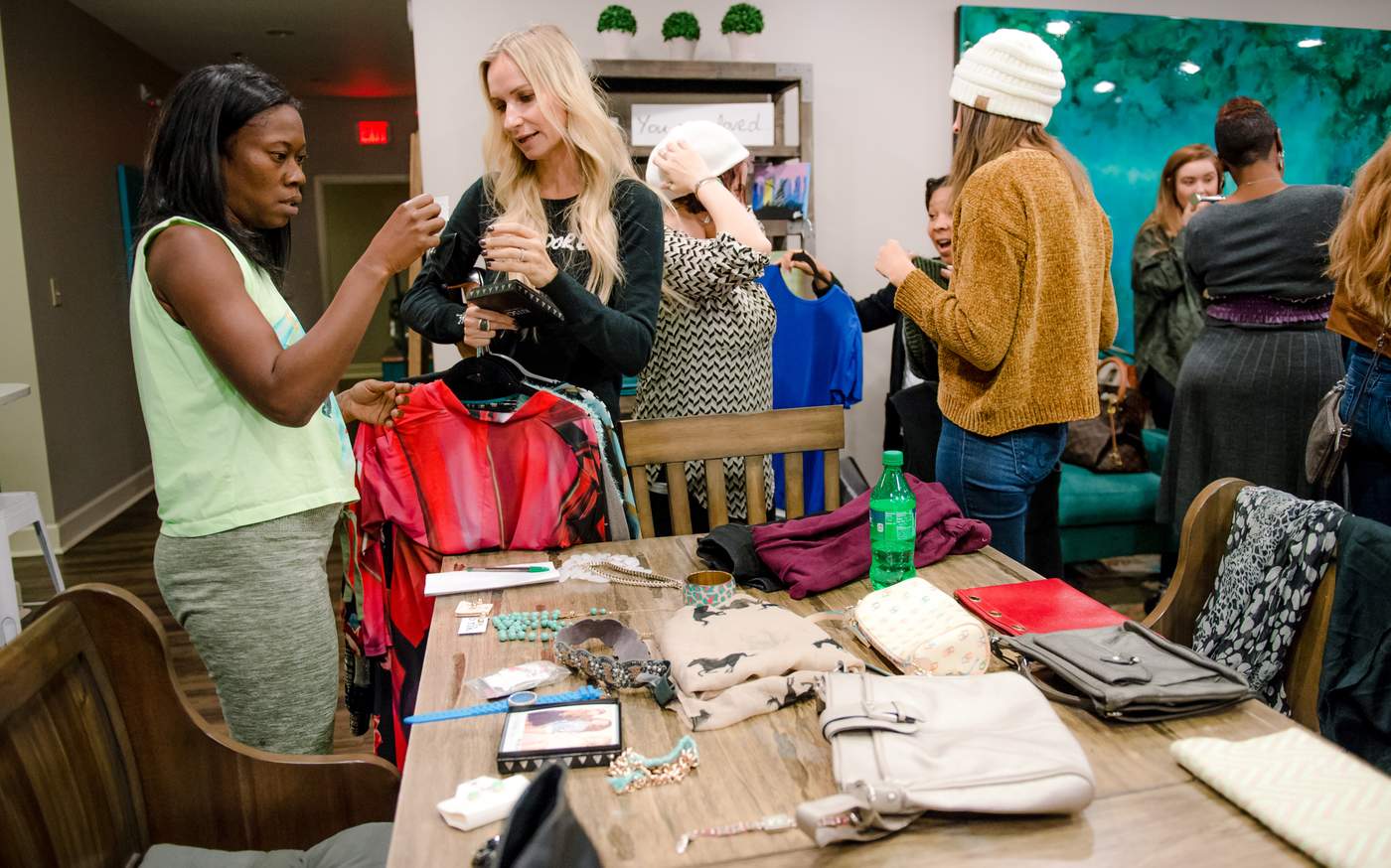
Photo: Dana Spinola at the Midtown location of Fab'rik in July 2009.
6
Pressing pause
When Dana first started Fab’rik, it was a one-woman show. Her earliest employees recall interviewing for what they thought would be routine retail jobs and quickly becoming swept up in Dana’s dreams for the company. Her enthusiasm was that contagious. But as the company grew, the more she became wrapped up in spreadsheets and documents, the more bogged down she began to feel.
Simple things became major productions. Her communications with team members were short and to the point. Instead of using mistakes as a teaching moment, she focused on why those mistakes never should have happened.
“I was taking the wind out of everybody’s sails instead of putting it in, because I didn’t have it,” Dana said.
Dimson saw the pressure mount from one day to the next.
“Sometimes when there is that much pressure you can only operate at one level. Dana is a visionary and a dreamer. I need her brain thinking bigger,” said Dimson.
Former and current employees had posted negative reviews of Fab’rik online and some of the harshest comments were reserved for the corporate leadership.
“Dana Spinola is the worst CEO a company could ever have,” wrote one employee in July 2016.
“Love what you do, hate who you work for,” wrote a former employee in March riffing on Fab’rik’s mantra, “If you love what you do, you’ll never work another day in your life.”
When Dana went online to wade through the criticisms, she got a pen and paper and made two lists: things that were just hurtful and things she could improve.
“At first, I was so frustrated. I wondered why people didn’t just come and talk to me, then I realized even my closest people were afraid to come talk to me. I said, I will never let anyone in this company feel this way again.”
Dana had an army of women — stylists, franchise owners, friends, fellow entrepreneurs — who looked up to her as an example of how they could live their lives. She was telling everyone to do what they love, yet she was unhappy and overwhelmed and the cracks were beginning to show.
At home, Dana also struggled for balance, moving from morning to evening at such a rapid a pace, she had little time to appreciate the smaller moments.
Dimson offered Dana the opportunity to take a sabbatical and learn to let go.
Dana helps Kia Outterbridge select an event at a Free Fab’rik event at City of Refuge.
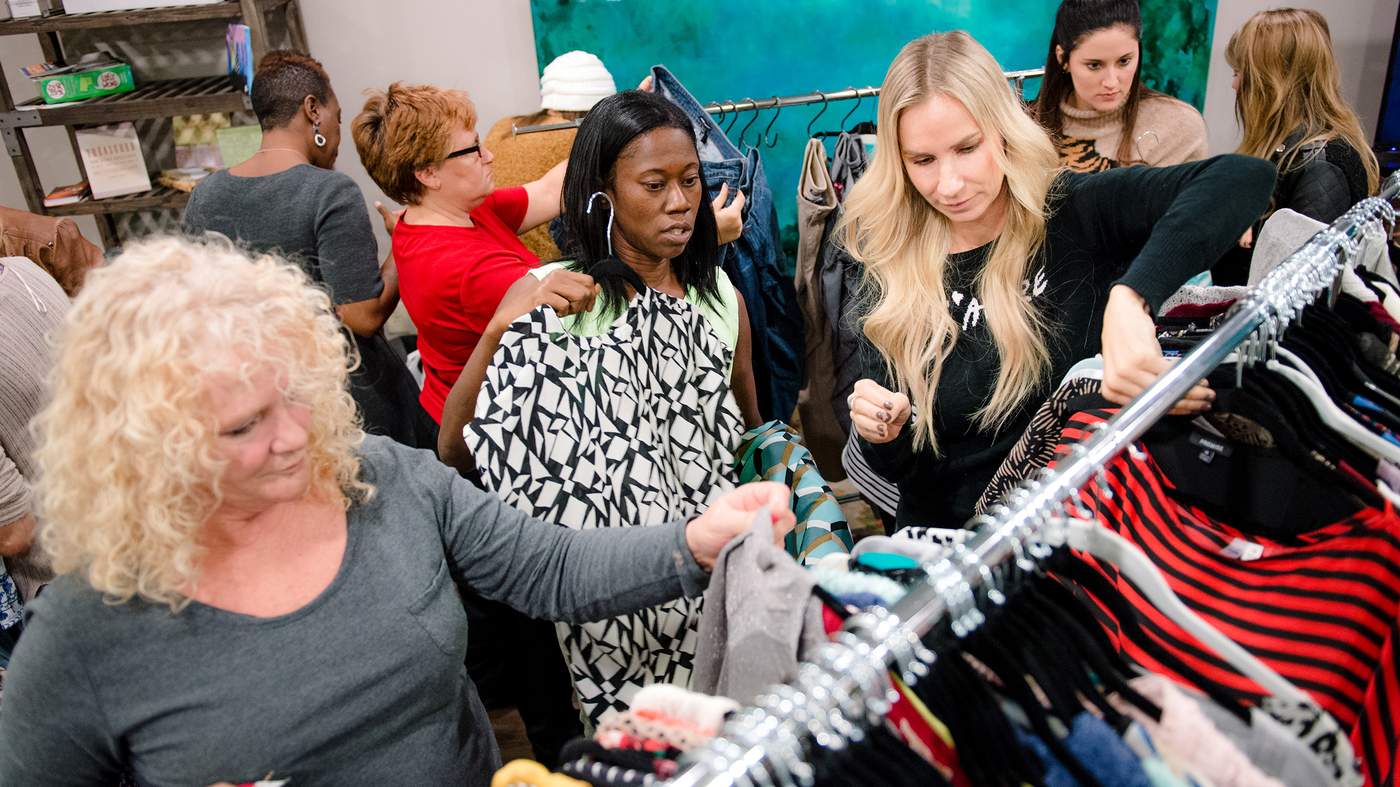
Photo: Leading one of her Free Fab’rik events benefitting victims of sex trafficking, Dana (seated, center) speaks with those women and volunteers at City of Refuge in Atlanta.
7
Refueled for the future
One evening last month, Dana arrived at City of Refuge to host a charitable event she calls Free Fab’rik.
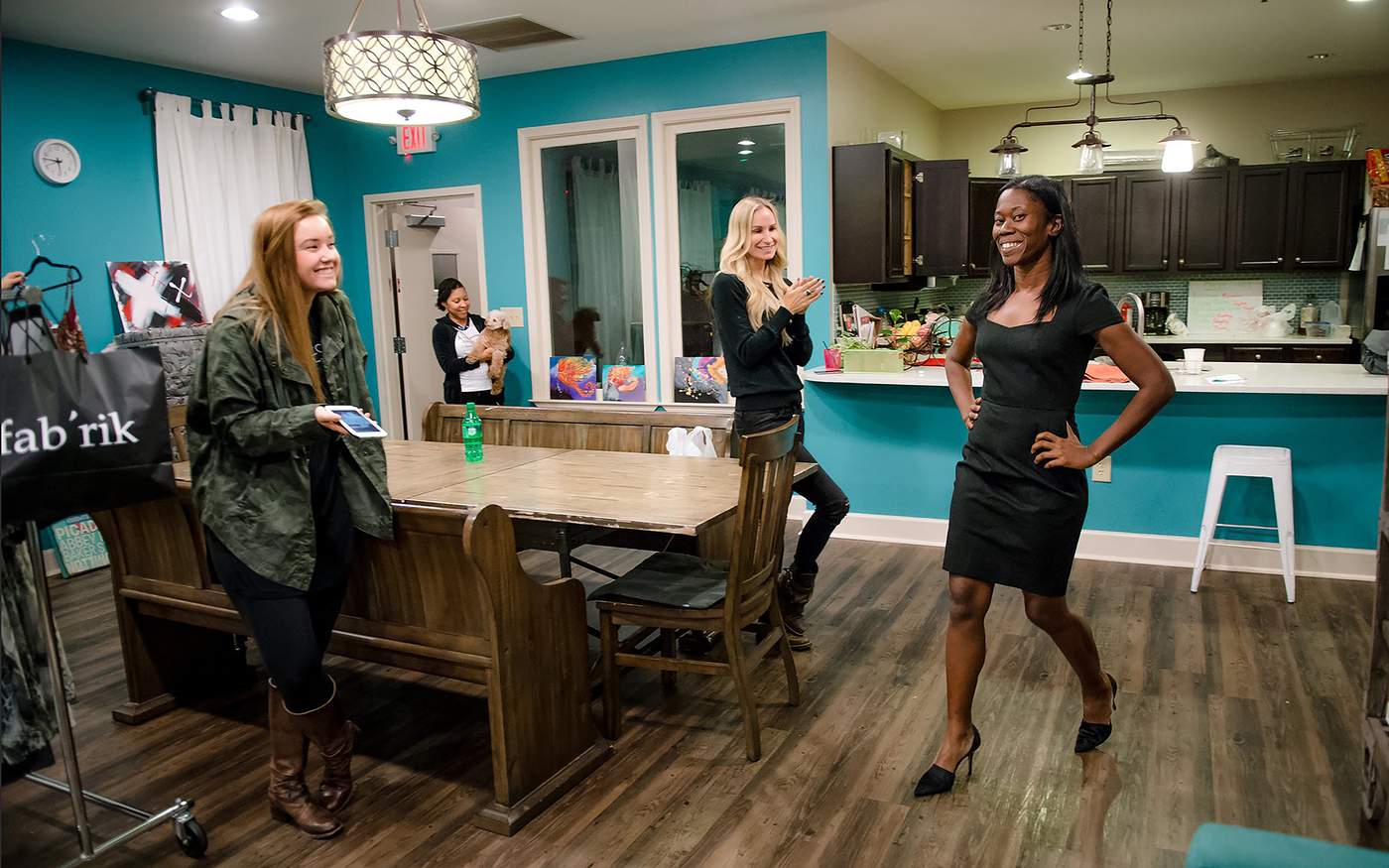
Located in a former warehouse on Atlanta’s Westside, City of Refuge provides housing, health care, job training and more to thousands of individuals in need. In a colorful room with soft lighting and artwork lining the walls, women who had been victims of human trafficking lounged on sofas. When Dana entered, she tossed a pillow on the floor and summoned the women and volunteers to gather in a circle.
“My name is Dana, and I own a clothing store called Fab’rik,” she said. “We have incredible customers who have worn something that doesn’t mean as much to them anymore. I could just put the clothing in bins, but I like the idea of shopping together and sharing.”
The women paired up with volunteers who styled them in the gently-used clothing and accessories then cheered the women on as they ended the evening with a celebratory fashion show.
But before the shopping started, the dozen or so women in attendance shared their stories of struggle and survival.
“I was a prostitute with a master’s degree,” said Kia Outterbridge, a former schoolteacher. “There was a lot of shame. I didn’t want to be a 40-year-old drug addict.”
“What made you finally get help?” asked Dana.
“I never wanted to take the time to work on myself. I needed to run out of options,” Kia said.
“I have been working on myself for the last two months,” Dana nodded. “I ran out of options, too.”
For two months, Dana walked away from the company she had nurtured for 15 years, and left it in the hands of her team. For the first time in her adult life, she chose to focus on herself — not her business, her employees or her philanthropic endeavors. She needed time to find her center.
She took a monastic retreat at the Monastery of the Holy Spirit in Conyers, fasting and living in silence for four days.
“Usually when I am alone in my own thoughts, my mind is spinning. I thought I would feel anxiety, but instead I felt calm and present,” she said.
She discovered that she is an introvert, but as a busy entrepreneur and in-demand personality, she hadn’t allowed herself the solitude she needed to refuel.
Dana let go of the nanny she had employed for 10 years, inviting her to take her own journey of self-discovery. Then Dana set about clearing the clutter from her life. She rearranged the furniture to create cozy places for her family to gather. And she committed to doing the one thing her children asked her to do — pick them up from school. She made time to cook special meals for her family again, including Angelo’s favorite huevos rancheros.
When she returned to Fab’rik in November, the atmosphere at the company’s Westside headquarters was decidedly different. Things had gone well in Dana’s absence. Team members had the opportunity to grow into their jobs, and Dana felt confident that she could unravel herself from the day-to-day operations to once again focus on the big picture.
Taking a step back had helped Dana learn the importance of caring for herself as much as she cared for her business and for others. And it taught her how important it can be to just say no.
“My definition of selfish changed. I really respect people that take good care of themselves. I used to feel that you need to leave it all on the table at the expense of yourself,” she said.
One weekday evening, not long after her return to Fab’rik, Dana stood in her kitchen whipping up a pot of vegan chili while her brood, Hudson, 11; Lincoln, 9; Ryder, 6 and Asher, 4, played cards with their dad. Seated at the table, the family shared the highs and lows of their day before wrapping up dinner with a dance party.
“I didn’t appreciate how bad it was until I saw that just that decision (to take a sabbatical) flipped the switch,” said Angelo. “She is a different person now. She has been a lot more relaxed and less on edge and a lot happier.”
The circumstances of her life haven’t changed so much — Dana is still the CEO of a growing fashion brand, still a wife and a busy mom of four, still a devoted believer intent on changing the world and helping others — but she has learned to slow down in the midst of all that activity.
She has evolved from the young girl who wanted to be the best and the young woman who wanted to have it all into yet another phase of life where she understands exactly what it means to just be present.

ABOUT THE STORY
“Having it all” has become one of those catchphrases that sounded good at the time. I’m not the first person to observe that for many women “having it all” can feel a lot like “doing it all,” and that can be an exhausting endeavor that leads to burnout. Moms with demanding jobs outside the home know this better than anyone. It couldn’t have been easy for Fab’rik owner Dana Spinola to take a hiatus from her successful retail business, but the lessons it taught her about balance may well sustain her for a long time to come.
Suzanne Van Atten
Personal Journeys editor
personaljourneys@ajc.com

ABOUT THE REPORTER
Nedra Rhone has been a reporter for 11 years at the AJC where she has written on a range of topics including shopping, fashion and daily news. A graduate of Columbia Journalism School, she has previously covered courts, cops, K-12 education and popular culture at newspapers including Newsday and the Los Angeles Times.

ABOUT THE PHOTOGRAPHER
Bita Honarvar is an Atlanta-based photographer whose work has appeared in The New York Times, Guardian US, Chicago Tribune and The Atlanta Journal-Constitution, where she was a staff photojournalist and photo editor for 16 years.
Please confirm the information below before signing in.