
Ground zero in the immigration debate

Critics says detention centers that hold women and children are inhumane; defenders say they help deter illegal immigration.
By Jeremy Redmon
The Atlanta Journal-Constitution

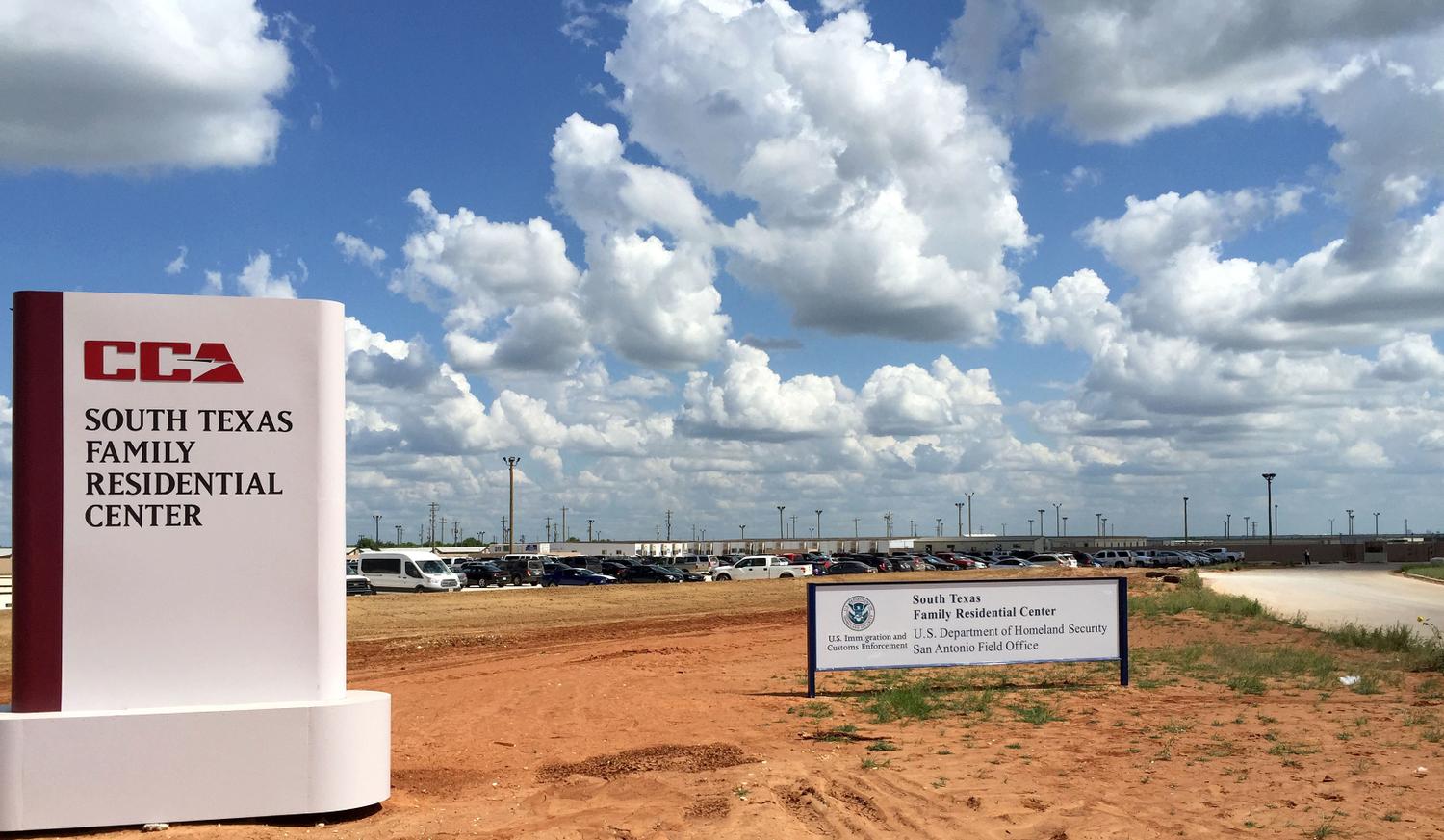
Dilley, Texas -- The more than 1,800 women and children who are being detained in this isolated part of South Texas are called “residents.” Their bunk bed-filled barracks are called “suites.” And their living quarters are situated in “neighborhoods” named after a cuddly brown bear, a pretty blue butterfly and a bright red bird.
Yet, there is no mistaking what this place is — a tightly secured immigration detention center complete with roaming guards, metal detectors and high fences.

The South Texas Family Residential Center — the largest of its kind in the U.S. with capacity to hold 2,400 people — is now ground zero in the contentious national debate over illegal immigration. And there is a lot at stake in that debate for Georgia, a state that has fought for years to drive out immigrants living illegally within its borders.

The federal government opened the detention center in this small oil town in December in response to the surge of Central American women and children who said they were fleeing poverty, domestic violence and brutal gangs in their native countries. Two other family detention centers operate in Karnes City, Texas, and Leesport, Pa.

Immigration watchdogs say these centers deter illegal immigration and protect national security. Meanwhile, immigrant rights groups and more than 130 House Democrats — including some from Georgia — are calling on the Obama administration to stop detaining families. They say this practice is inhumane, psychologically harmful and too expensive.

Federal immigration authorities have repeatedly said the detention centers serve as an “effective and humane” way to keep families together while their immigration cases are adjudicated. But recently, amid a federal lawsuit challenging the government’s practices, U.S. Homeland Security Secretary Jeh Johnson announced several measures aimed at shortening the time families are detained, saying “long-term detention is an inefficient use of our resources and should be discontinued.” Some women and children have been detained for months in South Texas.

Many ties to Georgia found in detention center

Georgia is directly linked to the predicament. After winning their freedom from the two detention centers in South Texas, some families are making their way to the Peach State, where they have friends and relatives.

Jacinta Guzman Raymondo and her two sons moved to Marietta this year to be near a friend after they were released on bond from the Karnes County Residential Center 50 miles southeast of San Antonio. Fearing for their lives, they fled their native country of Guatemala in December after they say a gang extorted money from them. Raymondo said her 9-year-old and 18-year-old sons underwent psychological counseling at the detention center because they were traumatized by their 2 1/2 months of confinement.

“We were very scared,” Raymondo said through an interpreter, adding she was surprised she and her sons were detained while seeking asylum in the U.S.

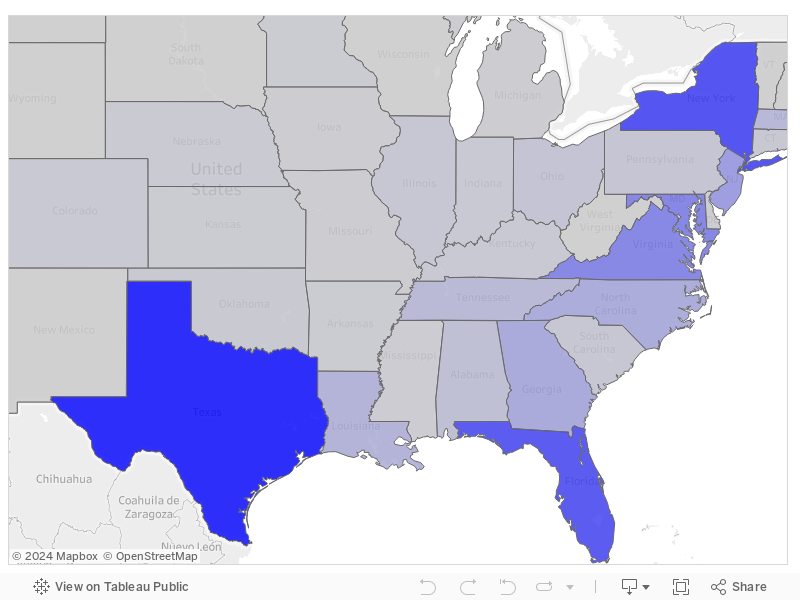
Where unaccompanied children have been sent

This map shows how many unaccompanied children have been sent to sponsors or relatives in each state. Note: Years are fiscal years and 2015 number represents the year to date figure.
Georgians are also depending on the family detention center in Dilley for work. Since last year, 46 people have permanently or temporarily transferred there from other Georgia detention centers operated by Corrections Corp. of America, a private prison company based in Nashville, Tenn.

At the same time, several attorneys based in Georgia have been traveling here to represent — for free — detainees such as Raymondo who are seeking refuge in the U.S. Kathy Harrington Sullivan, an immigration attorney based in Alpharetta, volunteered here last spring, helping detainees get released on bond.

“There is absolutely no justifiable basis for jailing women and children who have presented themselves to agents at the border according to U.S. asylum law and no excuse for treating them as criminals for having done so,” Sullivan said.

In 2011, Georgia followed Arizona’s lead and enacted a stringent law to crack down on illegal immigration. But the many provisions in that statute have no impact on the asylum process, which is handled by federal immigration judges. Those granted asylum can work legally in the U.S. and apply for Social Security cards and legal permanent residence.

Federal statistics show only a small number of the families have been deported. Between July of last year and April, most of the 2,007 immigration cases involving women and children detained in South Texas were transferred to other immigration courts in Atlanta and other cities across the nation, according to U.S. Justice Department figures. Removals, or deportations, have been ordered in 83 of the cases. Judges granted relief in 12 others. Most of the rest are still pending.

Many back detention, but others question costs

Critics say the controversy over family detention is a symptom of lax immigration enforcement.

“The goal should be prevention, apprehension and quick removal to reduce incentives for these illegal entries,” said Bob Dane, a spokesman for the Federation for American Immigration Reform, a Washington-based organization that supports tougher immigration enforcement. “Devising alternatives to detention simply sweetens the incentive to enter.”

At total capacity here in Dilley, it costs taxpayers $313, on average, to house each detainee per day, according to U.S. Immigration and Customs Enforcement. In comparison, it costs between 30 cents and $14 a day for alternatives to detention, including supervised release, routine check-ins with immigration authorities and electronic monitoring, according to a 2012 report by the National Immigration Forum.

Studies show most who participate in such alternative programs appear for their required immigration court hearings. In the fiscal year ending in September 2010, 94 percent did so, federal budget records show.

Federal immigration officials gave The Atlanta Journal-Constitution a tour of the detention center recently, though they would not allow cameras into the complex, saying they were seeking to protect the detainees’ privacy.

With its patches of gravel, corrugated metal ramps and modular buildings resembling classroom trailers, the 50-acre complex appears temporary and utilitarian. Several new arrivals slumped in gray chairs in one building, waiting to be checked in and given medical screenings. Their expressions conveyed a mixture of weariness and resignation. Thirty-five had arrived at the center that day.

Most of the women and children here are from El Salvador, Guatemala and Honduras. But there are others from Belize, Brazil, Mexico and Peru. The government first started holding them nearby in temporary housing for local oil workers. They were moved to the current site in April. The women and children live 12 to a building, complete with bunk beds. From their barracks, the detainees can walk a short distance to a library, chapel, and medical and dental clinics. There is also a “city park” with a soccer field, volleyball court and playground.

Children attend school here four hours a day. On the day of the AJC’s visit, an instructor was leading some of them through an English spelling lesson while others were engrossed in reading “The Little Half-Chick.”


Video: Detention center debate


Conditions of centers have sparked complaints

A few detainees interviewed here said they and their children have been losing weight because they don’t like the food. ICE officials firmly disputed that, saying they routinely weigh the detainees and have found no problems. They showed off the dining hall at the detention center, where the day’s menu consisted of stroganoff with noodles, chicken nuggets, peas, carrots, beans and tortillas.

The women also complained they and their children couldn’t sleep because the detention center kept the lights on in their living quarters 24 hours a day for security reasons. ICE officials said they stopped that practice and started using flashlights instead this month after the AJC inquired about the issue.

Further, several women said they and their children were grappling with anxiety and depression. For example, Maria, who asked that her full name not be used because she fears for her life, came to the U.S. this year, seeking asylum with her young sons, her U.S.-born daughter and her 56-year-old mother. The government, she said, sent her daughter to stay with friends elsewhere in Texas and put her mother in an immigration detention center in Florida.

Maria said her family fled Mexico because the father of her daughter is a gang member who threatened to kill Maria and her mother. Mexican police, she said, did nothing after she reported her allegations to them. She pulled out a thick stack of court documents that trace her odyssey, saying she is seeking a visa that allows crime victims to remain legally in the U.S. As she began to weep, her 2-year-old son crawled into her lap, cradled her head in his hands and looked tenderly at her.

“The suffering I have been through for the last six months has been so terrible — and the worst has been for my children,” she said through an interpreter. “I feel I haven’t been able to care for them, but at least I was able to keep them from being killed.”

The government previously held families in a temporary detention center in Artesia, N.M. The retrofitted Federal Law Enforcement Training Campus in Artesia — its dormitories housed U.S. Border Patrol trainees — became a lightning rod for controversy and was closed last year. In August, a coalition of immigrant and civil rights groups sued the federal government, complaining it had transformed the center into a “deportation mill” that was violating the detainees’ constitutional rights with fast-track deportation proceedings. That same month, federal authorities released an 11-year-old boy from the facility after discovering he is a U.S. citizen.

A separate federal lawsuit accuses the government of violating a 1997 legal settlement aimed at minimizing the detention of immigrant children. In April, a federal judge in California issued a tentative ruling saying the government had breached that settlement. The case is still pending.

In May, the Obama administration announced it would seek to improve living conditions and access to attorneys in its family detention centers. And in a prepared statement issued recently, Johnson, the homeland security secretary, said the government would support releasing — on bond — families who demonstrate a “credible or reasonable” fear of persecution in their home countries.

“I have reached the conclusion that we must make substantial changes in our detention practices with respect to families with children,” Johnson said, noting he had just toured one of the family detention centers in South Texas. “In short, once a family has established eligibility for asylum or other relief under our laws, long-term detention is an inefficient use of our resources and should be discontinued.”

Several of the women interviewed in Dilley complained about being separated from loved ones. While mothers and children were held there, fathers and adult children were sent elsewhere, including to the Stewart Detention Center south of Atlanta.

Fabiola Maribel Plascencia Ramirez said the government divided her family this year after they came to the U.S. seeking asylum. Ramirez said she and her family fled Mexico after a gang sought to extort money from them and then threatened to kill them when they wouldn’t pay. Ramirez is being held in Dilley with her three young children. The father of her children is detained in El Paso, more than 500 miles away.

Ramirez started weeping as she talked about being treated for anxiety in the detention center. Speaking through an interpreter, she said her children often cry and ask for their father. Her daughter has wondered aloud whether he has been killed.

“I don’t know how much longer I can survive here,” Ramirez said. “There is no hope.”


Where unaccompanied children come from

See the number of unaccompanied children from Central American countries that have come to the U.S. in recent years.

Attorneys from Georgia, elsewhere help free immigrant families

Dilley, Texas -- Erika Cisneros quietly slipped into a restroom in the sprawling immigration detention center here so she could wipe away her tears in private.A young South Georgia attorney who just set up her own law firm this year, Cisneros got emotional as she helped one of the detainees. Cisneros was told the Central American woman had been beaten by her father and raped by a gang member in her native country. Then the woman nearly drowned in the Rio Grande with her 3-year-old daughter as they sought refuge in the U.S.

Cisneros is among more than 100 attorneys, paralegals and other volunteers who have streamed into the South Texas Family Residential Center since February. Traveling here at their own expense and working free of charge, they are representing Central American women and children who are seeking asylum in the U.S. Many are fleeing deprivation, domestic violence and gang warfare in their native countries, which are among the nations with the highest murder rates in the world.

“It’s mentally exhausting because you hear these horrific stories,” said Cisneros, a petite woman from Moultrie who left her husband and 2-year-old son for two weeks so she could help the detainees. “Most of these women have small children with them.”

During a recent visit to the detention center, The Atlanta Journal-Constitution observed several of Cisneros’ colleagues help families win their freedom from the detention center. But there are not enough of them to aid all of the more than 1,800 women and children locked up in this isolated part of South Texas about 70 miles southwest of San Antonio.

Results show lawyers make a difference

The volunteers can see as many as 100 detainees a day while leaving at least 200 more waiting for help. And for those detainees without legal help, winning the right to stay in the U.S. is nearly impossible, according to a recent study tracking the results of immigration cases adjudicated since last year.

Of the 7,265 families that were not represented by attorneys, less than 2 percent were allowed to stay in the U.S., according to the reportby the Transactional Records Access Clearinghouse, a data gathering organization at Syracuse University. The rest were ordered deported. In contrast, 26 percent of the 475 families that did have attorneys won the right to stay in the U.S.

Several groups teamed up to create the pro bono legal program in Dilley, including the Catholic Legal Immigration Network, the American Immigration Council, the Refugee and Immigrant Center for Education and Legal Services and the American Immigration Lawyers Association. Collectively known as CARA, the group helps detainees prepare for their asylum interviews and represents them in immigration courts located in the detention center.

Many of the women and children are seeking asylumin the U.S., a long and complicated process that can make them relive painful experiences. They are required to fill out an application and submit to interviews with federal officials. During that process, they must demonstrate they have suffered persecution in their home country or have a well-founded fear of experiencing it on account of race, religion, nationality, membership in a particular social group or political opinion.

The volunteers cited many reasons for traveling to Texas at their own expense. For Cisneros, the work is personal. She said she is sensitive to the plight of immigrants without legal status because she is the daughter of Mexican-American migrant farmworkers. Both of her parents are U.S. citizens, but she said many who work in the agricultural industry are living illegally in the U.S.

Geraldine Carolan of Peachtree City cited her Catholic faith as one of her reasons for volunteering in Texas. Some Bible passages talk about loving, clothing and feeding aliens, sojourners and strangers, which some readers interpret to mean immigrants. Carolan recounted several grim stories she heard from the detainees, including one who said she was beaten after her stepfather gave her to another man as collateral for a loan.

“Because I have traveled pretty extensively with Catholic Relief Services in Africa, I kind of thought I had seen and heard it all,” said Carolan, a retired attorney who worked for Delta Air Lines and Coca-Cola. “And some of the things I heard in Dilley were just beyond my comprehension.”

The attorneys work in weeklong rotations, often more than 12 hours a day. On Sundays, they meet for an orientation session in a rented ranch house outside of town, not far from the gas flares that burn brightly at night in the oil-producing region. On one recent Sunday, a dozen volunteers munched on homemade spaghetti and salad as Brian Hoffman, the lead attorney for the pro bono project, walked them through the asylum process.

Court in Texas, judge in Miami

The following afternoon, Hoffman strode into a courtroom inside the detention center. He was there to represent Alba Cruz-Montano, a Salvadoran woman seeking to stay in the U.S. with her 3-year-old daughter, Nicole. They sat beside each other at a long wooden table in a sterile room with white walls and a forest green carpet. Serving as a bailiff, a private detention center guard watched from his perch nearby.

The hearing took place by videoconference. Before them stood a large television screen topped with a camera. The judge on the screen — Lourdes Rodriguez de Jongh — was sitting in an immigration court in Miami. A clerk and an attorney for U.S. Immigration and Customs Enforcement sat to her left.

As Hoffman questioned her, Cruz-Montano spoke of how the father of her daughter beat her and their child, threatened to separate them and refused to give her money for food unless Cruz-Montano had sex with him. As the judge and the ICE attorney took turns questioning the woman, her daughter burst into the room. Her hair in pigtails, the girl playfully climbed on the wooden courtroom railing and urgently called for her mother. Hoffman gently scooped her up and carried her outside, speaking sweetly to her.

The proceedings resumed. The judge eventually heard enough and announced she was granting the woman and her daughter relief. They would be released from the detention center that night. Her voice choked with emotion, Cruz-Montano covered her face with her hands, repeating “Gracias!”

The judge responded: “For your young age, you have gone through a lot. … I encourage you to take care of yourself. You are strong because you came to the United States with a 3-year-old. Good luck to you.”

The judge then turned to Hoffman: “You did a great job with her. Good for you.”

With tears in her eyes, Cruz-Montano hugged Hoffman. Then she dashed outside the courtroom and wrapped her daughter in a tight embrace.

San Antonio group aids immigrant families headed to Georgia, elsewhere

San Antonio, Texas -- Bleary-eyed and bewildered, the Central American mothers and their young children filed into the downtown Greyhound bus station here just past midnight.
They carried all their meager belongings in see-through plastic bags. Several of the little boys climbed onto the benches in the bustling station and swiftly nodded off as strangers queued around them for bus tickets.

Santiago Garcia-Leco sprang into action as soon as he spotted the Guatemalans, Hondurans and Salvadorans. Garcia-Leco, who has advocated for immigrants in Georgia and elsewhere, let the mothers use his cellphone to call their loved ones. He handed them bags of snacks, socks and coloring books. And he gave them lessons on navigating the Greyhound bus system.

Garcia-Leco is a volunteer with the Interfaith Welcome Coalition, a group of churches and nonprofit organizations that aims to help immigrant families. The coalition — which includes an immigrant legal aid group — visits the families in detention, feeds and clothes them after they are released, and puts them up in temporary shelters in the San Antonio area.

A shuttle service had just driven the women and children about 70 miles northeast from an immigration detention center in the small oil town of Dilley. They were bonded out of the South Texas Family Residential Center and were on their way to link up with friends and relatives in other states, where they could continue to fight in court to remain in the U.S. They were headed to Alabama, California, Florida and Oklahoma. But Garcia-Leco said he has helped others travel to Atlanta and Savannah.

For Garcia-Leco, his work hits close to home. His mother illegally brought him from Mexico to the U.S. when he was 4 years old.

“It is my responsibility,” he said of his efforts. “If we are not going to do anything for ourselves, who will do it?”

Earlier that evening, Garcia-Leco and another volunteer, Julia Jarrell, greeted a Salvadoran woman and her 11-year-old son at the bus station. They brought the pair to a house in a leafy neighborhood nearby, where they could rest and get something to eat.

Blanca Linarez and her son, Jose, had spent 11 months in the Karnes County Residential Center about 50 miles southeast of San Antonio. A judge had just put her deportation proceedings on hold and granted her son asylum.

Linarez said she fled her native country because her son’s father was a violent gang member who had abused them. She was headed to Los Angeles to clean houses and live with an older sister. But she was worried about burdening her sibling, who had just undergone surgery for a brain tumor.

“I am feeling worried about my final destination,” she said, “and I am not sure of what the future holds.”

Linarez was quick to praise Jarrell, who had visited her repeatedly while she was detained.

“Julia gave me strength — aside from God,” said Linarez, a Catholic who wears a large crucifix necklace.

Asked about his time in Karnes, Linarez’s son, Jose, shook his head and fidgeted with a stack of dominoes on the kitchen table in the shelter.

“I’m happy I am not going to be there anymore,” he said quietly. “I don’t want to remember it.”