Fathers and sons

Paternal figures take many forms from
traditional to unorthodox to gone.
On what’s to become our final day together as a family, 5-year-old me squats in the kitchen corner, gluey-fingered with a cherry Popsicle. Dad polishes his rifle. Mom jabs at the linoleum with a broom.

“Move your feet,” she snaps at him. “Move your feet.”

She grumbles about housework, his lack of ambition and the miserable thing their life together has become. Baked squash for dinner. Again.

My father eyes down the barrel of his gun at a vase in the next room. “I could,” he tells her — jokey, slurring from the beer — “put you out of your misery.”

As if on cue, Mom scoops me up. She piles clothes into the car. Tires spin and gravel flies. Dad staggers in the driveway, roaring.

We never go back.

Do I recall the scene accurately? Or has my mother’s later telling lodged in my brain for me to embellish and distort over the years, adding drama with each access? I don’t know, but it feels real.

After the divorce, Mom finds a secretarial job and delivers me to my grandparents on the other side of our northern Illinois city, Rockford. They will raise me. Anyway, that’s the idea: to provide this sad, bewildered kid with a solid, two-parent home that replaces his broken one. The year I show up, my grandfather runs off with a woman he met at the power plant.

I am bad luck for adults. I swear to myself — in kindergarten — that I will never marry. If I marry, I will never have kids. If I marry and have kids, I will never get divorced.

Then I grow up, get married, have kids and get divorced. Twice. I am bad luck for myself.

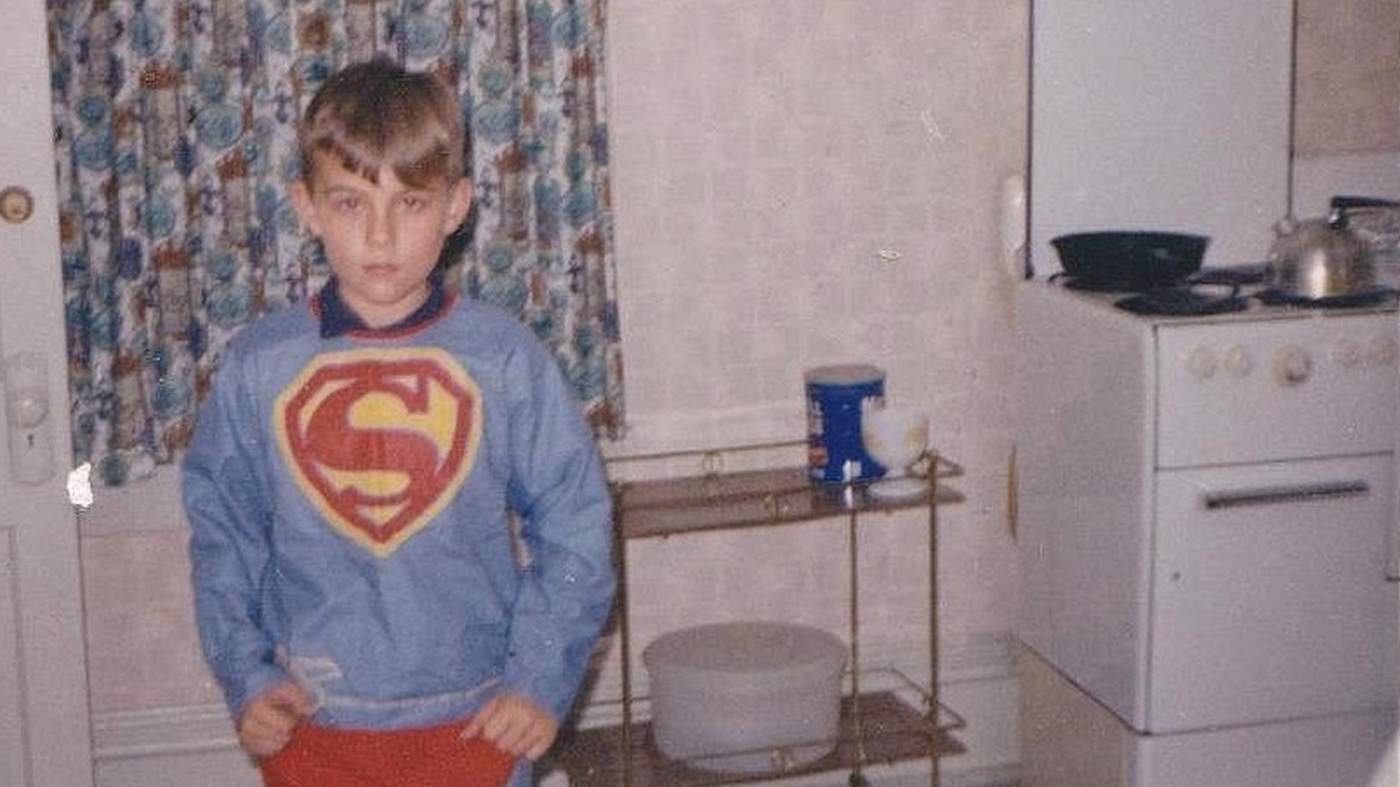
Sent to live with his grandmother after his parents’ divorce, Randy tries to conjure his superpowers. Contributed photo
This time of year I tend to hope my grown children will overlook Father’s Day, that they’ll let that square on the calendar slide past unnoticed so I won’t be subject to their evaluations. Seemed like he wasn’t around much. Even when he was, I got the feeling he existed half in another world.

I knew a guy like that. Maybe my own dad simply lacked the gene that confers paternity skills, and passed the lack on to me (along with the introspective-loner gene and the DNA for drinking). Convenient excuse, if so. I’ve searched my father’s life for parallels with mine, clues that might help me figure out why I could not succeed — I had a point to prove — where the primary men in my family failed.

Here’s 62-year-old Randy today, son of Tom and Vera. Randy, father of Miranda: an impish wit and mom to three herself, busy remaking her world. Father of Skyler: tender heart, versifier, laughing down his solemn road. Father of Jamie: academic whiz, women’s-rights activist, all-around dynamo.

What do his kids think of him? Not thumbs-up or thumbs-down, not “positive” or “negative,” but in consideration, giving due weight to the all but imponderables: that a life separate from theirs strove to make its own way; that it sought meaning and asked questions, gaining answers that satisfied briefly when at all; that it could only preside over itself as age took over, helpless like any being.

Philosopher Martin Heidegger said we don’t see the hammer while pounding nails. Only when the tool breaks do we perceive it — a thing full of mystery even so, true nature hidden. To be recognized beyond one’s usefulness, what a gift from child to parent or parent to child. From anybody to anybody. Writer Julio Cortazar might have been talking as much about people as things when he said that, “without revealing themselves they seem to be signaling to us, gesturing to us so that we go looking for them and meet them halfway.”

And here’s Randy’s father, Tom, back in 1961. He cannot coax Vera to try again, and their official split makes page 11 of Rockford’s weekly tabloid, with a blurry photo of her as she leaves the courtroom, clutching a book. The “comely working girl” testifies that Tom grabbed her wrists, slammed her against a refrigerator and punched her in the face. (Her lawyer coached this necessary lie, my mother assures me. Mental cruelty as grounds doesn’t exist, nor does no-fault divorce — only desertion or violence made the grade. It will be easier when my turns come.)

I settle with my abandoned grandmother Madeline, who will raise me by herself. Mom’s a working girl indeed. She chain-smokes and dry-hacks her way through chores, typing and filing in a dim factory’s front office, fretting over pay and prospects.

Occasionally Mad and I see Dad driving around town, gaunt and disconsolate. “I always liked Tom,” my grandmother sighs. A few times we spot her husband, too, with his new lady in the passenger seat. “That slut,” Mad says.

I’m left to roam the neighborhood at will. Nights I ride my bike all over town. Picture the lad pumping hard, hunched over the butterfly handlebars, passing through a streetlamp’s cone of silver light. I park outside my mother’s apartment and from the sidewalk fix on the second-level windows, shades drawn.

Sleepy at school, I struggle to keep my eyes open. This becomes more difficult when they land on anything broadly dark in color — such as the blackboard, where the lessons manifest. I rub my hands together, forming threads of grit, then roll them into balls and mash them onto the paper. I get bad grades.

In Mad’s view, school ought not to be required on days when I cannot face the rigor. Many are those days, and she happily writes the next-morning note. My bike doubles as an airplane: I pop a wheelie and the sidewalk becomes terrain, the far-down earth where people suffer. In schools.

During these pre-puberty years I fantasize a father figure in just about every adult male I encounter. Uncles who marry into the family make for ripe prospects. There’s Bob: athlete, lay preacher and Boy Scout leader. When Bob trots onto the field of our life, pumping his fist in the air, none of us knows quite what to do. There’s Ted, the gruff Korean War veteran with his gory combat stories. As soon as our tribe’s boys reach legal age, Ted introduces them to cigars, the billiards hall on Seventh Street and Park Art Cinema, where movies stretch the definition of art.

Light uncle, dark uncle.

There’s also Mr. Calacci, principal of P.A. Peterson School, who looms large and princely in my perhaps-inevitable brush with the law. Here’s what happens: I walk with two of my cousins (dark uncle Ted’s kids) into an unlocked electrical-supply warehouse — it’s not only unlocked, but the front door stands wide open — from which I take nothing, and a few days later we all get arrested. Other boys, warehouse trespassers themselves, have squealed on us.

Which is how, at 10 years old, without fuzz in my armpits or anywhere else, I am declared a juvenile delinquent.

In his big office, which smells of wood and leather, Mr. Calacci waits until I can make myself meet his gaze. “I’m always on your side, but you must not lie to me,” he says in a deep, smooth voice like on the radio. “If you lie to me, I can’t help you.”

I am stunned. How can the potential for me to lie co-exist with his promise of grown-up support? Is this what fathers do?

My mother has enlisted Mr. Calacci’s guidance on my behalf. The male influence. Privately I entertain a scenario in which Mr. Calacci — the tall, olive-skinned dreamboat over whom all the women teachers openly swoon – falls for Mom. She seems already under his spell, like the rest.

Mr. Calacci’s married, sure, but I understand that such arrangements can change. I envision our home together. His patient, steady gaze. Every day. What would I call him? Not “Mr. Calacci,” surely.

He stays married. My criminal case blows over, the delinquency record expunged after I somehow avoid committing an arson, bank robbery, etc., for six months. Mr. Calacci and my mother return to their posts.

To show her appreciation, Mom donates to the school a framed print of “The Tragedy” by Picasso. You may know the painting, which depicts a father, mother and son at seaside, mournful. “The man and woman are turned inwards in an inherently familial pose, but the distance between them and their downcast eyes reveal their inability to comfort each other,” Brother Reginald M. Lynch, a Dominican friar, observes in an academic journal. “The child, too young to understand the meaning of his own experience, places a hand on the man and looks pleadingly in the direction of the woman.”

Her token might still hang in Mr. Calacci’s office if he had not retired long ago, if the building had not since been converted to apartments. (The P.A. Peterson complex draws snarky reviews at a real-estate website. Radiator pipes bang loud in winter “every second of the day and night, enough to drive you INSANE, and don't expect any sympathy, it is normal at this place,” one tenant complains. I remember those resonant clangs, like someone with a crowbar trying to escape from the boiler room.)

I could rent a flat in the same structure where I once attended grade school. I could occupy, maybe, part of the fourth-grade classroom where pale, skinny Mrs. O’Halloran with her matching milk-white hair — we called her Mrs. O-Hollerin’ — yanked me out of my chair and shook me like a rag doll, screaming, because I smeared dirt balls on paper instead of heeding her tedious tutelage. Mr. Calacci would not have tolerated the wacky O’Hollerin’s meanness, if he’d known. He’d have protected us.

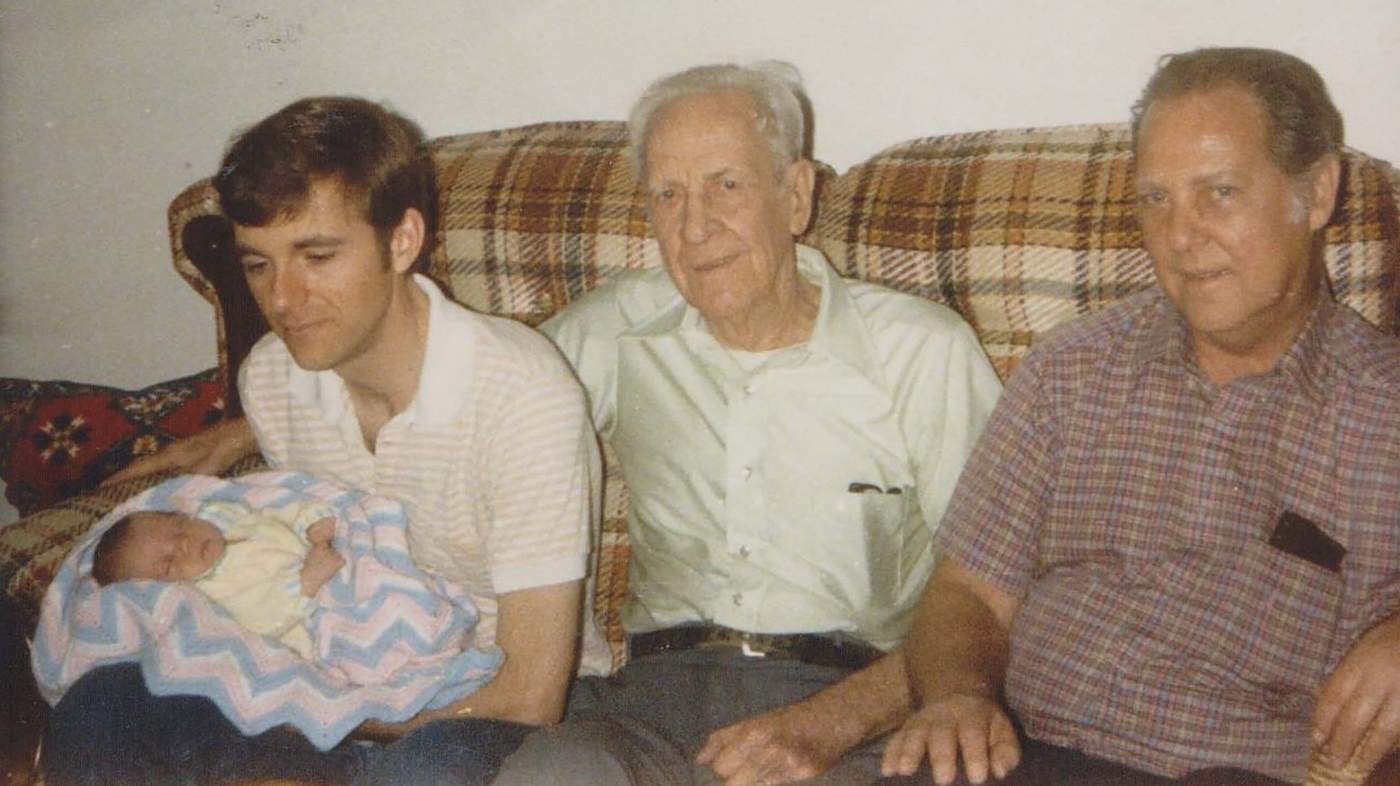
Randy holds firstborn child Miranda for a portrait of four generations with his grandfather Ernest Gardiner (center) and father Tom Gardiner. Contibuted photo
Post-divorce, my father quits his job as a bank teller, embarks on a term of wandering that takes him to the outback of Australia, where he mines for opal and lives in an underground dugout. It will fascinate me later that my vocation, too, is “teller” — not handling the coin of the realm but using words as currency. Dad, as a hobbyist, cut and polished opal on gear set up in the garage: circular saw, grinding wheel, dop sticks. Now he’s to harvest the rough product himself, directly out of the desert limonite that embeds it.

He sends me airmail from Coober Pedy, flimsy envelopes with stripes. I imagine him crawling in tunnels on his belly to plant the dynamite. Scurrying out before the blast.

From Mad’s ancient encyclopedias, I learn that the iridescent colors of opal are made by water trapped in silica. Because of liquid in the stone, opal is known as unstable, prone to develop cracks for no apparent reason — not unlike my mother has described Dad. Sometimes, practically overnight, a valuable opal resting in a drawer will become riddled with hairline fractures, like a windshield struck with a baseball bat. The term for this is “crazing.”

Just as I enter sixth grade, my mother sits me down with news. The man who’s been courting her for several years – the square-jawed, pipe-smoking older gentleman who is also her boss — has asked her to marry. They’re eloping to Las Vegas.

My new stepfather, James C. Osborne, has dropped anchor.

I already like him. He brings me on dinners out with Mom: previously impossible-for-us feeds (linen tablecloth! Fancy stemware!), during which I develop a taste for filet mignon. When I order the most expensive item on the menu, he doesn’t blink.

Jim relocates us to rural Byron, a town about 14 miles from Rockford. I’m uprooted from Mad’s place and installed in a middle school packed with farm kids. Teachers include the usual sadists with a few kind educators that I quickly glom onto, mostly in the English department. The males, I notice, do not exert the magnetism on me as adult men did before. They don’t spur the constant speculation about their fitness as a father to me. Because now I’ve got one. The aroma of his pipe tobacco – Mixture No. 79, which smells like a licorice vanilla campfire — fills our house.

Of course the matter is not as simple as that. I’m thrilled to have my mother back, too. Yet I don’t have her at all, not entirely, not even for the most part. He has her. In that bedroom down the hall.

What’s the situation like from Jim’s perspective? With two adult daughters, Mom says, he has always wanted a son. He mounts a basketball hoop for me on the tree next to our driveway. He arranges for a set of World Book Encyclopedias – new. My birthday gift is a .22 caliber rifle. Jim’s not overcompensating; I want all these things (except for the rifle, which he thinks a man ought to have so I learn to shoot it anyway).

He also bestows my most prized object, an Adler electric typewriter.

From that era survives an unsent letter to my father, composed on the Adler. I recognize the Adler’s typeface, and the uniform impression of the keystrokes, so unlike my manual Royal, with its smudgy smacks and misalignments, but also loved. “I don’t have any cheery weather reports,” the letter begins, “because I think it is better to try to communicate and fail than to not try at all and still not get through. I don’t want to mail you recent history reports. You aren’t interested, probably. I know I’m not, and I’m right here as it happens.”

What amazes me most about the letter is that, although written about 45 years ago, it sounds almost exactly the way my letters sound today.

I can’t mail it to him, because I can only speculate about where he is. “Our situations are different, in that you have found a lookout point from which to search and I don’t even have that much yet. I am bouncing myself off walls instead of people. But I can’t stop bouncing off walls until I find some people who aren’t as hard as the walls.” School is “terrible. It is worse now than ever, because I have stopped just tumbling thru the homework and have begun to think about it. Now I can see how school can and will damage me more and more as I go on.”

None of this could I have said to Jim. We have an opulent life, though — suddenly there’s money. Jim’s favorite Sunday dinner ritual involves loading us into his barge-like Cadillac and traveling for hours, up into Wisconsin or south to Timmerman’s Supper Club near Dubuque. Atop a rocky bluff beside the Mississippi River, Timmerman’s exemplifies the vanishing Midwest supper-club phenomenon. Relish tray, shrimp cocktail, prime rib au jus. A side of cottage cheese isn’t out of the question here. Dance floor, live band. During the long smooth ride back, overfed and mentally adrift, I’m stretched on the plush backseat upholstery of the Cadillac of Jim. He rescued us.

Much later I find out that Jim tried to adopt me but needed the legal go-ahead from my father. Somehow they found him, and he refused. Near the end of his life, Dad tells me that he wanted to save the Gardiner name. I was the last male. A lawyer instructs Jim and Mom that if they use the Osborne name on my school documents and everywhere else, it will in time become legal. They do and it doesn’t, exactly. But my driver’s license, Social Security card, passport, marriage licenses and divorce decrees bear Jim’s last name.

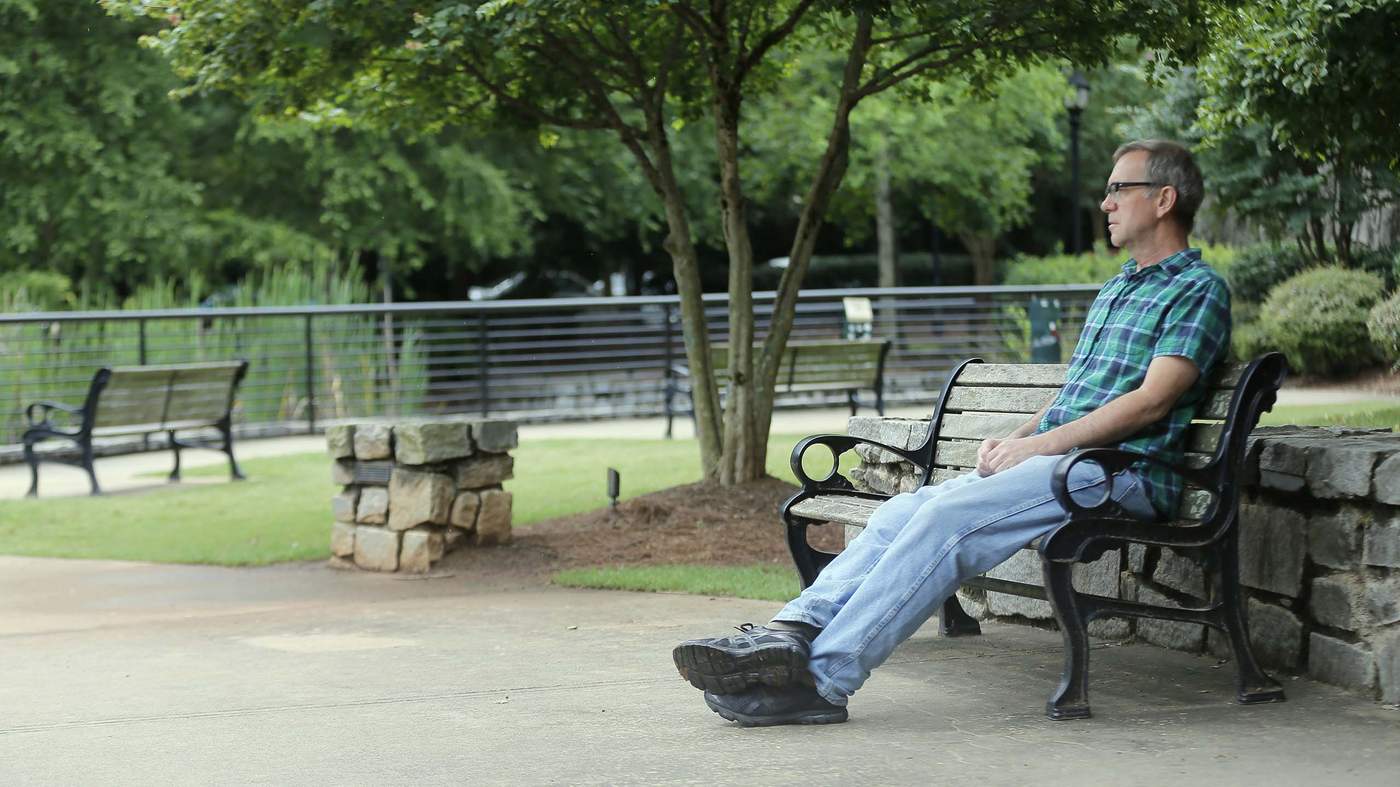
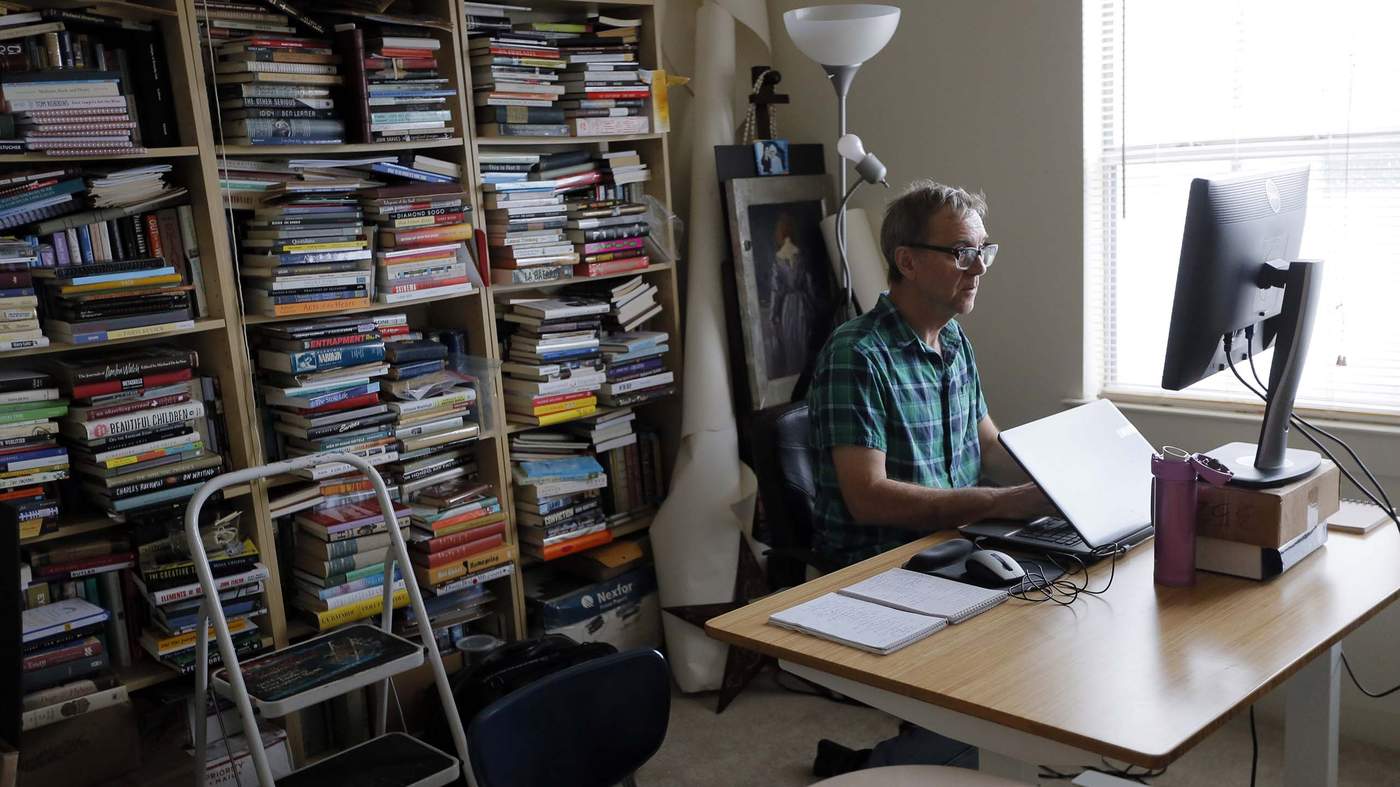
Writer Randy Osborne at work in his home office in the Inman Park neighborhood of Atlanta. On this Father’s Day he ponders the long shadow cast by a legacy of fathers who don’t stick around for long. Bob Andres /bandres@ajc.com
In the midst of writing this essay, my girlfriend Joyce and I fly to Austin, where my son Skyler graduates as a Michener fellow in poetry at the University of Texas. As we sprawl in the hotel bed the night before, I spill my regrets. I was absent for too much of the kids’ years, I tell her. Maybe my freakishness, fundamentally warped nature — whether because of my own history of nurture or some deeper problem — has ill fit me as a father.

This has been a general topic for us lately, fathering. Joyce never knew her dad. Planted his seed and went on his way, one of those. I ask if she wants to locate him. No. Yes. Maybe. “If he was interested in me, he knows where to find me. I didn’t go anywhere.”

Another question, obvious, surfaced early in our time together. Did we want children of our own? Joyce is more than 20 years younger than I, which means not only that I’m old enough to be her father but also that the odds favor her outlasting me as a parent. Thus we would be making a child who’s likely to be, for a sizeable period of his or her life, without Dad.

If this isn’t complicated enough, a newborn baby that we didn’t create entered our universe in April. She is Leila, the fruit of Joyce’s brother and his girlfriend, two people more troubled than average. As a result, they lost custody. Joyce’s parents, who are my age, watch over the child. Their adoption of her is underway.

Will Leila ever know her natural father? Should she? We ask ourselves if we’re ready, should the duty beckon. If anyone ever is ready. We’ll take her.

For now, we stare at the hotel-room ceiling. “Bottom line, I’m afraid of Skyler’s speech tomorrow,” I tell Joyce, but only in my head.

The poetry reading and the banquet go well. It’s time for the graduates — at an outdoor lectern situated under an enormous tree — to say, one by one, their thanks and farewells. With us in the audience are the parents of Sami, Skyler’s first serious girlfriend. They’re down from Wisconsin to watch the last collegiate hurrah of this man their daughter followed to Texas.

“I met you when I was falling apart,” Skyler says to them in the speech. “Your heart and your home are a refuge to me.”

Where was your father during all this, people must be asking themselves.

I was calling him on the phone, I think to reply. I sent parcels of books and airplane tickets to wherever I was – Denver, San Francisco, Atlanta.

“I want to thank my Dad and Joyce,” Skyler says, “for showing me the artist’s life, and giving me permission to write, to just go crazy.”

Somehow I hear the word "crazing" instead, just go crazing, and I sense a precious thing with a webwork of fissures that’s about to shatter, and I want to run to the lectern, grab him. Squeeze him into an ever-intact piece.

What occurs, though, is that Skyler completes his talk to polite applause. Students hug, promise to stay in touch. Group photos are made.

The next day Joyce and I are on the couch at Skyler and Sami’s apartment, on our second glasses of wine, when Sky breaks out the printed version of his Michener thesis: a book of collected poems. So that we can heft the volume and know its physical weight, he says, handing it over.

Joyce flips through. On the second page, we see at the same moment, the book is dedicated to me. She sucks in a small breath. Sky, cross-legged on the floor, catches me when I spy the line. His face upturned to me.

“There was never a question,” he says. “It couldn’t be anybody else.”

I didn’t encourage him in poetry, but I want each of my kids — Skyler, Miranda, Jamie — to become the sort of person able to sense the unspoken currents that pass between oneself and others. Savor a saunter in the bee-loud glade if you’re inclined but also take quick joy in the way, when you tug the T-shirt off the hanger, the hanger flies up sideways and hooks on whatever else you might have worn, like a pinned butterfly or a frozen bat. Miss nothing, I mean.

Later we’re walking to dinner, Sky and Sami ahead of us, so entwined they can’t walk straight, cackling. A balmy Texas evening comes on. In the twilight Sami glances over her shoulder at us in that heart-stoppingly casual way she has – lithe and big-eyed. He will never let her go.

I flash back to the 1970s, when I’m 18 and in love with Sue, my first serious girlfriend, my Sami equivalent. The point in our relationship has arrived where both sets of parents have finished their scrutiny and implicitly nod approvals. We begin – I begin, anyway — to imagine what our kids will look like. Girl or boy, doesn’t matter, especially the first one, I want to tell her and almost can. In my rattletrap Chevy Vega, I take her on a special date to (where else) Timmerman’s Supper Club.

By way of dancing, then as now, the best I can do when fueled by enough champagne at weddings is flail and lurch about convulsively. Sue persuades me: a special date, after all. We traipse out on the floor for a slow one.

Pressed into me, she is everything. Disbelief at my luck hovers like vapor and then swirls away. Below the rocky bluff we’re perched on moves a vast river, where fish and frog life teem under the surface and along the shore. She is everything.

Not long after this, she will break up with me in a letter from England. Eventually she will become a librarian in Dubuque. She will marry someone else — a good father to the children they’ll have together, she informs me. We stay friends.

In this moment on the dance floor, the future has not yet cast its shadow backward to haunt our present flesh, so near under our clothes. She is everything. It feels real. “Move your feet,” she whispers. “Move your feet.” And I do.

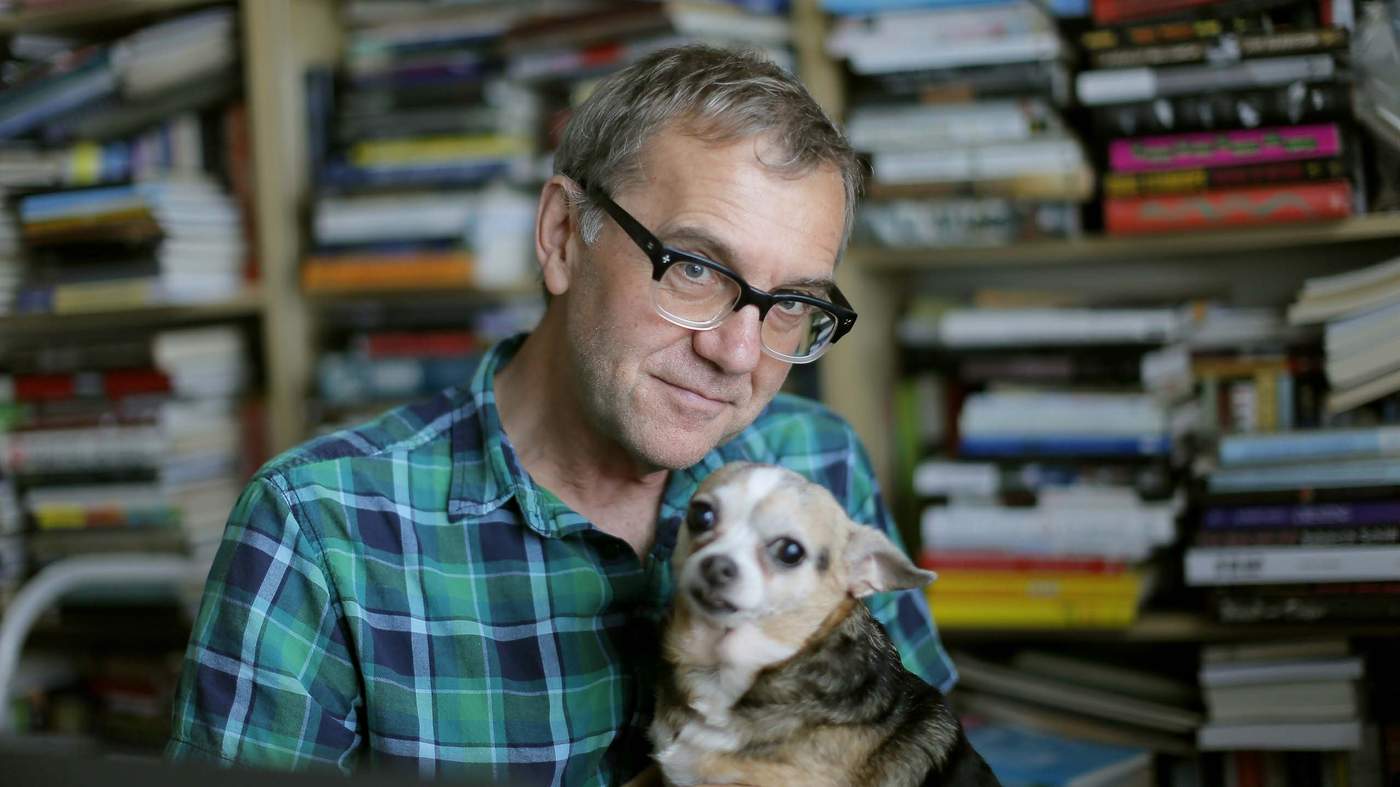
Despite regrets over his absence as a father, Randy, seen here in his home office with his dog Maggie, takes comfort in knowing he helped inspire son Skyler’s creative life. Contributed photo

ABOUT THE STORY
I met Randy Osborne around the time he co-founded Carapace, the Moth-inspired storytelling event held at Manuel’s Tavern every month. I’ve been dazzled by his literary writing style ever since. Fatherhood is a recurring theme in his work, so I asked him to write a Personal Journey for Father’s Day, and he didn’t hesitate. The result is a gorgeous, nuanced essay about flawed fathers doing the best they can.

Suzanne Van Atten
Personal Journeys editor
personaljourneys@ajc.com


ABOUT THE WRITER
Randy Osborne is an essayist whose work has appeared in Salon, The Rumpus, Full Grown People and other outlets. His work has been nominated for a Pushcart Prize and featured in the notable section of “Best American Essays” in 2015 and 2016. He lives in Atlanta, where he recently finished a book-length collection of essays. He is also a staff writer covering biotechnology for BioWorld Today, an Atlanta-based newsletter.

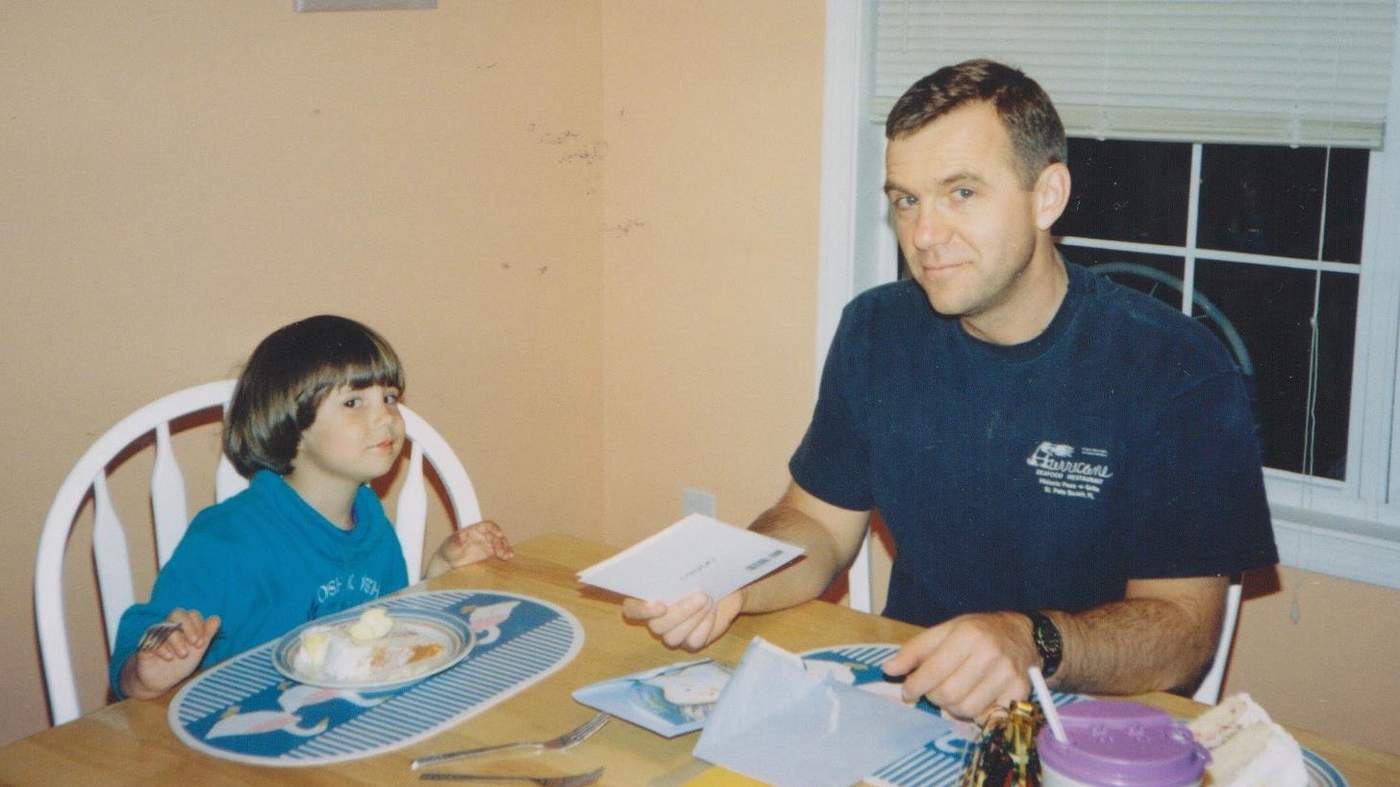
Randy on his birthday with his daughter Jamie. Contributed photo