


Pastures of plenty
How White Oak Pastures has taken family farming from sustainable to regenerative.


Harris is the fourth generation of his family to run the farm.
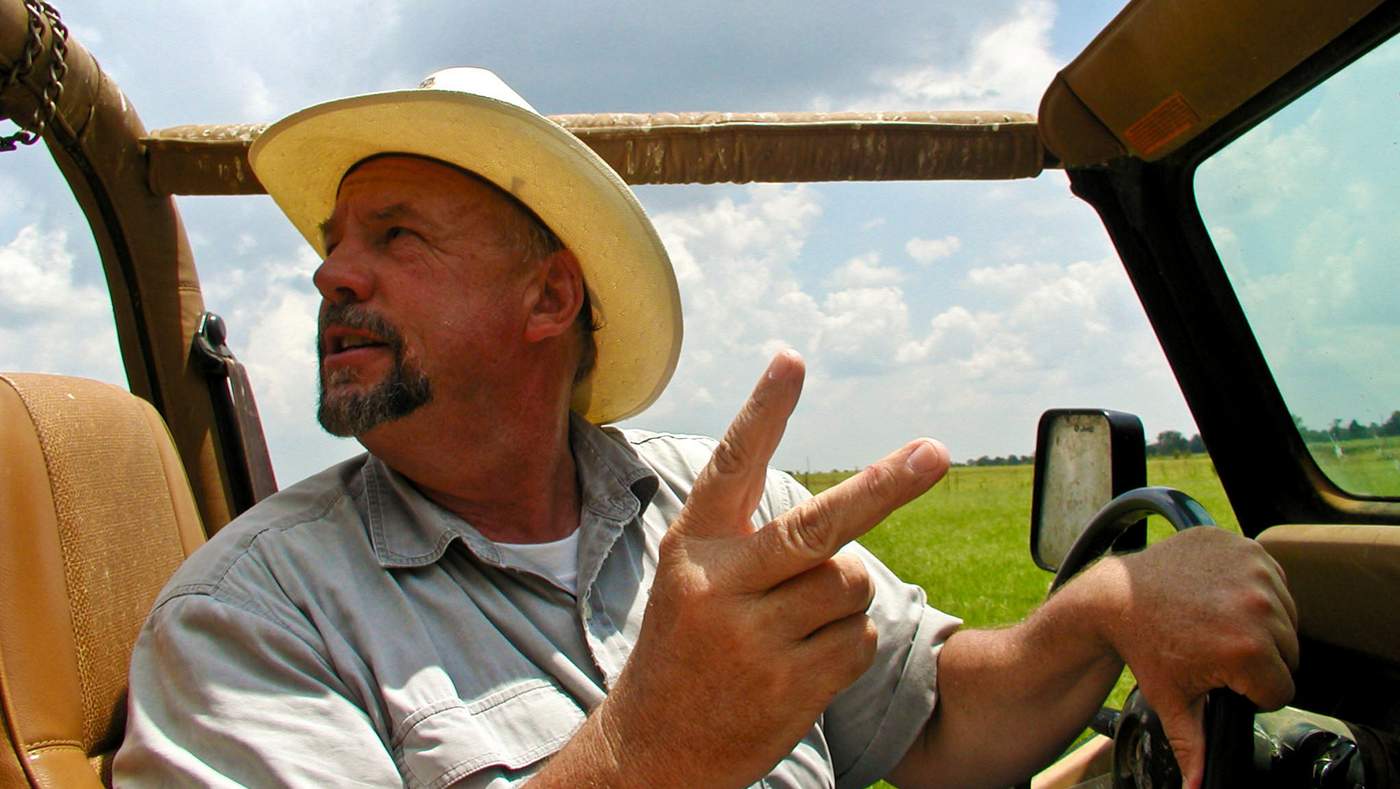
Photo: Harris surveys a herd of cattle on the farm. Brant Sanderlin/AJC
Out to pastures
All this was running through my head late in May as I drove in the gate of the 15-acre main compound of White Oak Pastures, a 2500-acre farm just a few miles from the Alabama state line in southwest Georgia.
The land that is the heart of White Oak Pastures has been in the Harris family since 1866. Evolution over 100 years and four generations turned a farm that raised cows, pigs and chickens into a successful full-time cattle operation.
In 1995 Will Harris III decided he could do better by his animals and be a better steward of his land if he adopted practices closer to the farm’s origins, raising multiple species of animals and using them to improve the land.
“Early on my goal was to squeeze more beef out of this farm at the lowest possible price,” Harris says. “Today I think about what we can do to make those cows do better. To improve the land. To help someone do better. My farm is an extension of my home and the people are an extension of my family.”
Over the next twenty years he moved from raising just cattle to raising ten species of meat animals, each species rotated across the property to benefit from and enrich the land. He rejected grain feeding, hormone implants and antibiotics. He prohibited the use of chemical fertilizers or pesticides. He built an on-farm abattoir so the animals could be slaughtered close to home – first one for red meat animals and then another for poultry. He decided the farm would grow organic vegetables fertilized with compost made from the animals they slaughtered.
Today, visitors can tour the farm and see ten species of animals living out their lives in the pastures and woods, enjoy a meal or three with the farm employees in the on-farm restaurant and stay in one of the farm cabins waking to the sight of goats munching on undergrowth outside your door..
The grand tour
Harris’ business card identifies him as “Herdsman and Land Steward,” and as he showed me around the farm from his 2015 Jeep Wrangler, nothing seemed to escape his keen eye.
Not the three bald eagles sitting on a 20-foot high bank of GDOT-gathered sand.
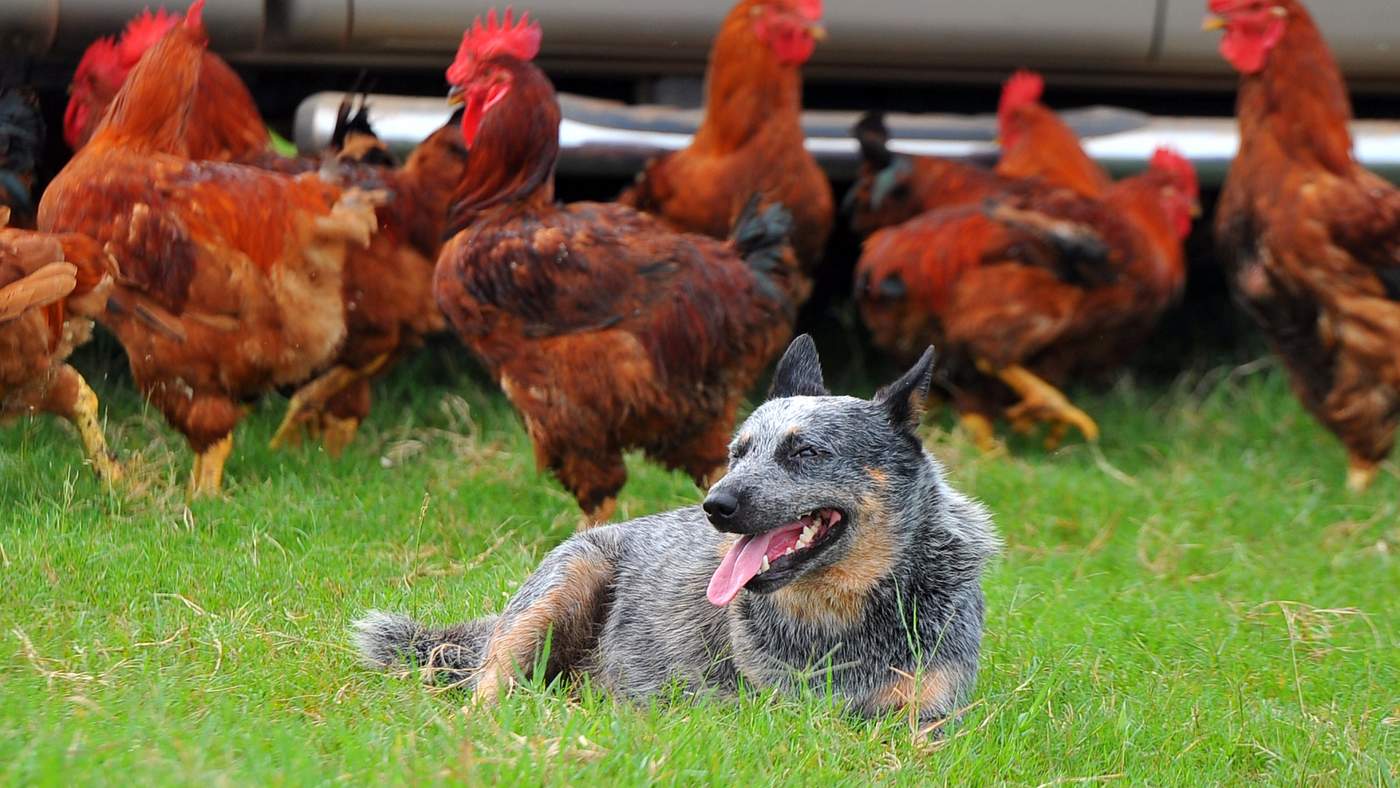
Not the plumy tails of the dogs patrolling the farm, where I see nothing but grass, trees and fences.
Not the baby calf born between the time we drove out the farm gate towards Bluffton and our return an hour or so later. He explained, “I saw the mama lying down when we drove out and thought she might be giving birth, but I didn’t want to say anything in case I was wrong.”
He started our tour with a succinct description of the White Oak Pastures business operation. “Our primary business is pasture-raised meat: five meat species – cow, sheep, goat, pig and rabbit – and five poultry species – chicken, duck, goose, guinea hen and turkey. In both cases, we process the animals here on the farm in two USDA-inspected abattoirs that we built, each animal hand butchered by a man or a woman with a knife.”
Moving on from the main farm buildings, Harris pointed out muscadine vines, nut and fruit trees, mushroom logs, bee hives and the flowers that grow in rows along with the organically-raised vegetables for the farm’s community-supported agriculture (CSA) program where customers buy “shares” at the beginning of the growing season and receive in return a box or bag each week with what’s being harvested that week at the farm. He showed me a grain silo that’s been turned into housing and wastewater holding ponds that recycle the water for the farm’s irrigation system.
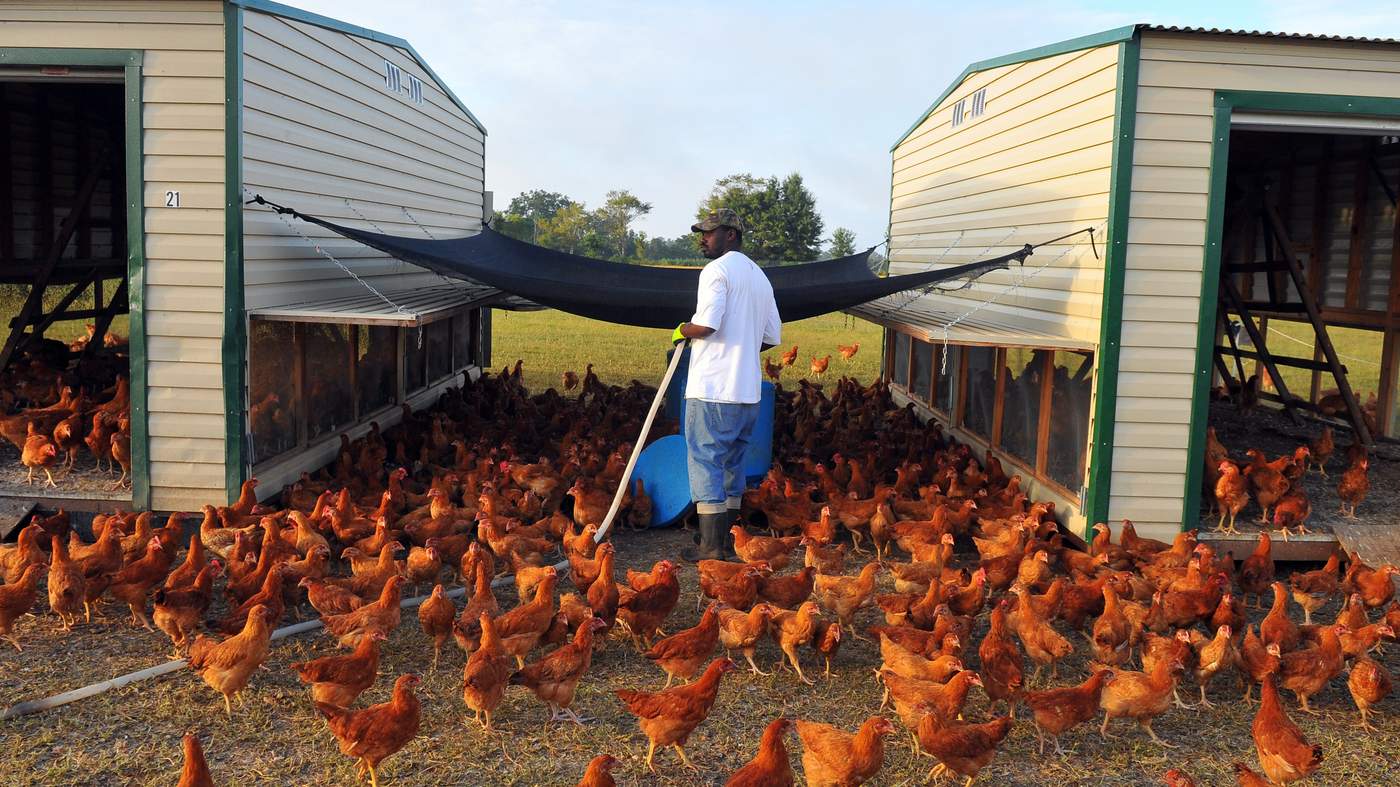
We drove by the portable chicken coops where hens can lay their eggs when they’re not pecking around the pasture eating insects and weeds. The sight of a group of hens scrambling after one of their mates who caught a rat disabused me of any notion of chickens as vegetarians.
We drove by fields where the heifers are hanging out, including that mama and her new baby. The bulls are in another field across Route 27 and on occasion, the bulls and heifers get to mingle with the result being more of those baby calves.
We drove by woodland where hogs lounge in the shade, sows with their babies. When we pull up to a group, they immediately come to the fence looking for a treat. “All the animals here are certain we are their servants,” Harris said. We saw a group of Iberian pigs, a new project for the farm with hopes of offering some special cured meats in a year or two.
“We’ve created a place where the animals can express their instinctive behaviors,” he said. “Cows were born to roam and graze. Hogs were born to root and wallow. Chickens were born to scratch and peck. If they’re in an environment where they can’t express those behaviors, it’s inhumane. The fences keep them in and, along with the dogs, keep the harm out. We are endeavoring to emulate nature and protect our animals along the way.”
For these animals raised to become dinner, “along the way” ends ultimately at the abattoir; slaughterhouses built as part of the commitment Harris has made to “treat our animals with dignity and respect from the day they are born to the day they are slaughtered.”
“George Washington Carver is one of my heroes. My favorite quote is something like, ‘In nature there is no waste.’ We endeavor to run this farm as near a closed loop cycle as we can. Each animal goes in and as it is butchered, some goes out that door as an edible product, some goes out that door to become a pet product and what can’t be used in those ways comes out this door to be turned into compost.”

Photo: Harris checks the compost. Brant Sanderlin/AJC
Hybrid vigor
Harris makes a point of saying, “I never had an original idea in my life. The things we’re doing are all being done in other places.”
He made his farm one of the most successful in the country by taking original ideas from across the globe and making them work together in southwest Georgia.
For example, the farm’s composting system is based on a method created by Cornell University, designed to compost dead animals in a CAFO (confinement animal feeding operation). “We don’t have many dead animals, but we do have a lot of dead animal material. The idea is pretty simple. You make a lasagna: a layer of wood chips, a layer of carbonaceous materials – in our case, peanut shells – and then a layer of the meat materials. Done right, there’s no smell. If I see buzzards around it, I start to fuss.”
He’s found a world of kindred spirits as part of the Network of the Savory Institute, brainchild of Zimbabwean biologist and farmer Allan Savory who recognized that rotational grazing was a way to use livestock to restore that country’s grasslands to health. White Oak Pastures now serves as a Savory Hub, providing Holistic Management training and support for farmers, ranchers and land managers across the United States.
Harris firmly believes today’s agriculture must go further than being merely sustainable; it must be regenerative, instead. His influence is felt at nearby Andrew College in Cuthbert, which offers an Associate’s degree in Regenerative Agriculture. Students intern at White Oak Pastures using the theories of the Savory Institute and when they graduate, they’re guaranteed a job offer.
Moving from a cattle farm to a multi-species operation meant going from three minimum wage employees to an operation with more than 120 on staff.
Meanwhile, visitors from across the globe come to see what he’s doing and take the lessons back home.
Free range chickens are watered at White Oak Pastures. Photo: Brant Sandelin/AJC
Farm to kitchen
I wondered aloud how many farms like White Oak Pastures the future will bring.
“There will be as many as the consumer is willing to pay for,” Harris said. “If 10 percent of consumers want chicken that’s GMO-free, pastured-raised, and are willing to pay for it, then 10 percent of the farms will be like this. It’s all up to the consumer.”
Terry Koval, executive chef of Wrecking Bar Brewpub in Atlanta’s Inman Park neighborhood, has a commitment to working with local farmers and subscribes to the same ethos as White Oak Pastures. Koval is known for his ability to turn unconventional ingredients into delicacies, with Beef Heart Tartare being a mainstay on his menu.
“I purchase product from the Harris family because I know they care about animal welfare and take pride in how they raise and slaughter their livestock,” says Koval. “They operate like a small family business and that is important to me, my chefs and guests at the Wrecking Bar.”
Many customers appreciate this difference as well, including Lauren Carey, executive director of the Peachtree Road Farmers Market and mom to a toddler who’s already made two trips to White Oak Pastures. “My daughter loves telling me she’s eating Farmer Will’s ground lamb; and the dogs devour their pet treats whether dehydrated chicken feet or cow trachea,” says Carey. “Our whole family enjoys knowing that nothing from those animals is going to waste.”
If you’re lucky enough to visit White Oak Pastures, come prepared to stock a cooler with meat you can feel good about enjoying. You’ll be doing your part to make sure the animals didn’t die so you could eat just that tenderloin.
Photo: Brant Sanderlin/AJC

SEASON CYCLE
Will Harris explains holistic management as using the four cycles of nature to shape the land.
Water: “We get 54 inches of rain here and every drop wants to go to the sea. We need plants to hold the water and build organic matter.”
Energy: “Every day the sun shines on this land the plants are photosynthesizing to trap that energy. Grass photosynthesizes differently than tree leaves. Having a range of plant material maximizes the use of that radiation.”
Carbon/mineral cycle: “The small stones in the soil are weathering and as they break apart, they give off a treasure trove of minerals. The only way to harvest that is to have plants take it up. While those plans are picking up those minerals, they’re pouring carbon into the ground.”
Plant cycle: “When you clear the land it longs to return to forest. There are four ways you can stop that. First is by tilling. That’s the worst, causing erosion and destroying soil biology. You can spray with chemicals. You can mow it, which uses fossil fuels. You can burn it. Or you can graze it. That’s the only option where you’re working with nature and using animals to do it.”
Please confirm the information below before signing in.