By Craig Schneider
The Atlanta Journal-Constitution
The U.S. Supreme Court revolutionized the institution of marriage Friday to include same-sex couples, enshrining in law a monumental advance in gay rights driven by a rapid shift in American culture.
The high court ruled 5-4 that same-sex couples have a constitutional right to marry, and that all 50 states must recognize the spousal rights of those who’ve already tied the knot.
A huge moment in American culture, the decision signifies an even more radical change here in Georgia. The state was one of 14 states that dug in its heels in rejecting same-sex unions. While gay marriage has been legal in New York, California and 34 other states, it was, by many standards, a rejected idea in Georgia.
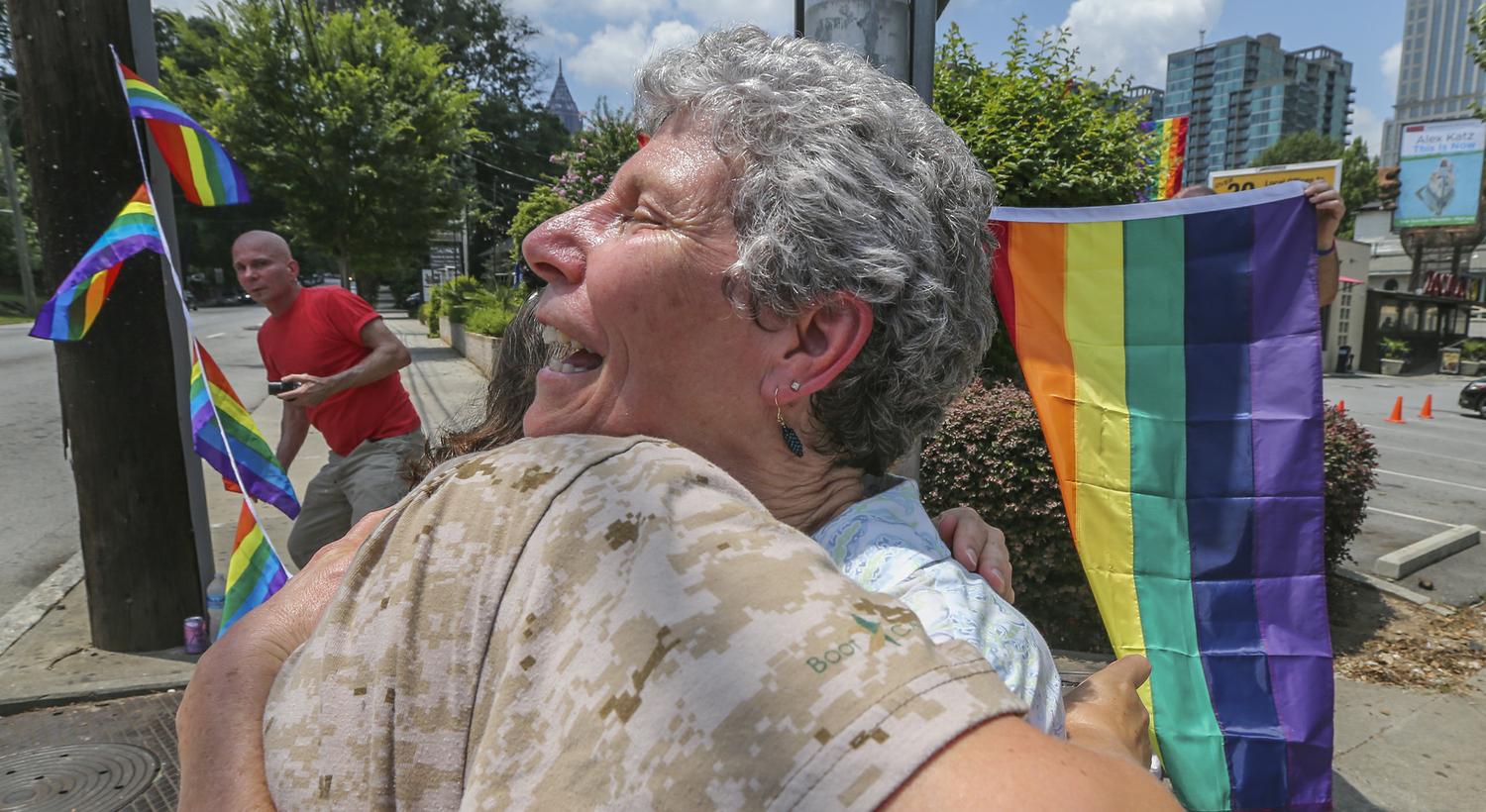
That changed Friday. Gay and lesbian advocates immediately took to the streets in celebration. For them, Friday was a day of validation and vindication, filled with tears of joy and, in some precincts, hurried marriage vows.
For those who oppose the legalization of same-sex marriage, it was a defeat of biblical proportions. Many pastors said the court has defied Holy Writ, and they would not officiate at gay marriage ceremonies. Some Georgia officials branded the ruling an intrusion into states’ rights and vowed that the battles in this culture war would continue. For instance, they said, they would promote legislation next year that would, at the least, protect merchants from having to provide goods for gay weddings.
Writing for the majority in the historic ruling, Justice Kennedy said, “The Fourteenth Amendment requires a state to license a marriage between two people of the same sex and to recognize a marriage between two people of the same sex when their marriage was lawfully licensed and performed out-of-State.”
"A little more perfect"
Chief Justice John Roberts and Justices Antonin Scalia, Samuel Alito and Clarence Thomas dissented.
Roberts wrote toward the end of his dissent, “If you are among the many Americans — of whatever sexual orientation — who favor expanding same-sex marriage, by all means celebrate today’s decision. Celebrate the achievement of a desired goal. Celebrate the opportunity for a new expression of commitment to a partner. Celebrate the availability of new benefits. But do not celebrate the Constitution. It had nothing to do with it.”
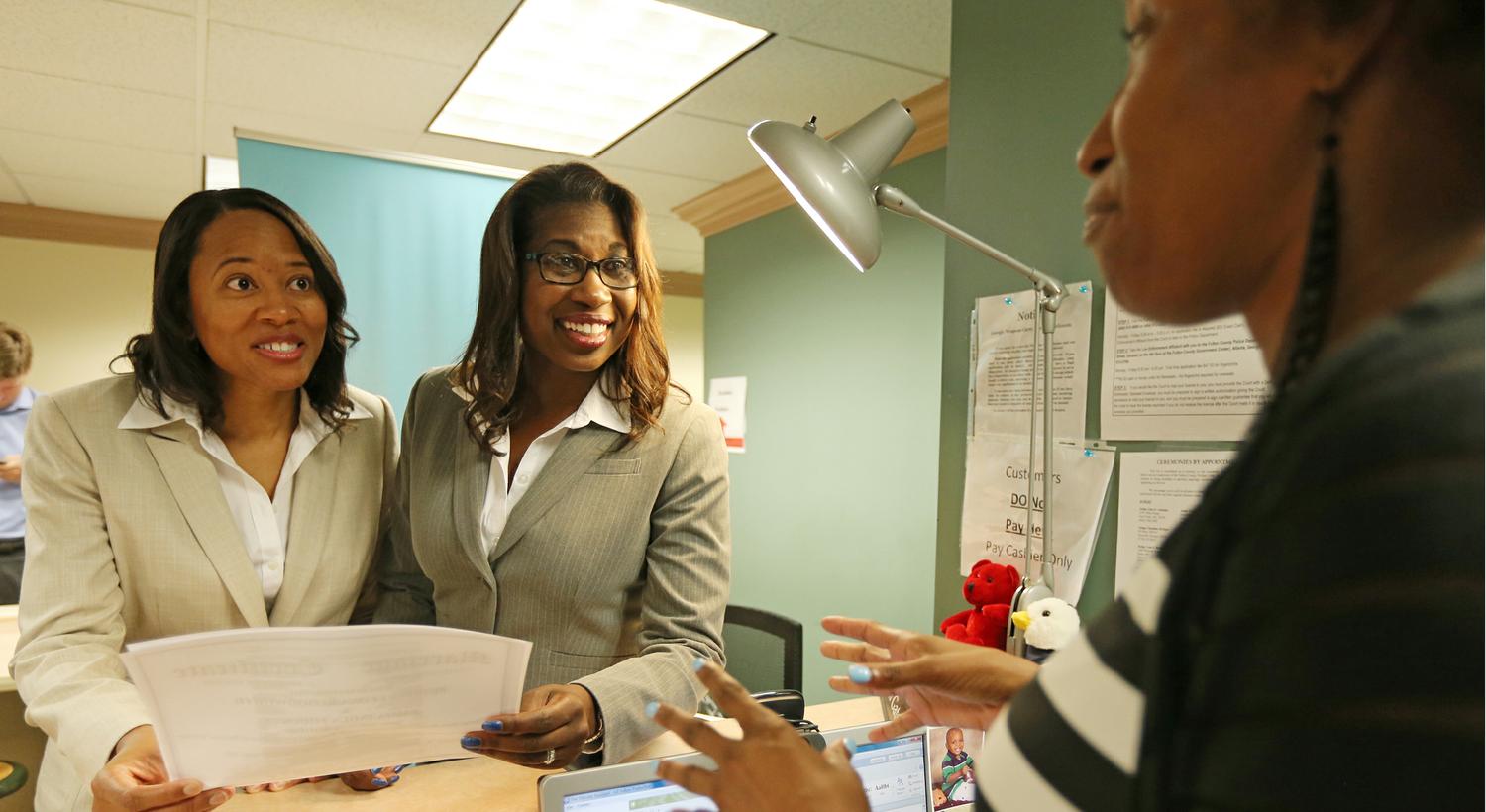
Within minutes of the decision’s release in Washington, Emma Foulkes and Petrina Bloodworth of Atlanta received the first marriage license for a gay couple in Fulton County. The couple, who have been together for 10 years, obtained their license at the Fulton County Probate Court.
They posed for photos, exchanged vows and were pronounced “wife and wife” by State Court Judge Jane Morrison.
“We were going to run someplace else and get married,” Foulkes said. “But our son was in college and we wanted him to be home to see this. And we wanted to see the country move in the right direction.”
In Washington, several hundred people waving signs and flags let out their own victorious rebel yell in front of the court as word spread of the decision, via smart phones, word of mouth and contagious cheering.
The crowd then sang a brief rendition of the national anthem, followed by “USA,USA” chants.
President Obama declared that “our union is a little more perfect. That’s a consequence of a decision from the Supreme Court, but more importantly it is a consequence of the countless small acts of courage of millions of people across decades who stood up, who came out, who talked to parents, parents who loved their children no matter what, folks who were willing to endure bullying and taunts.”
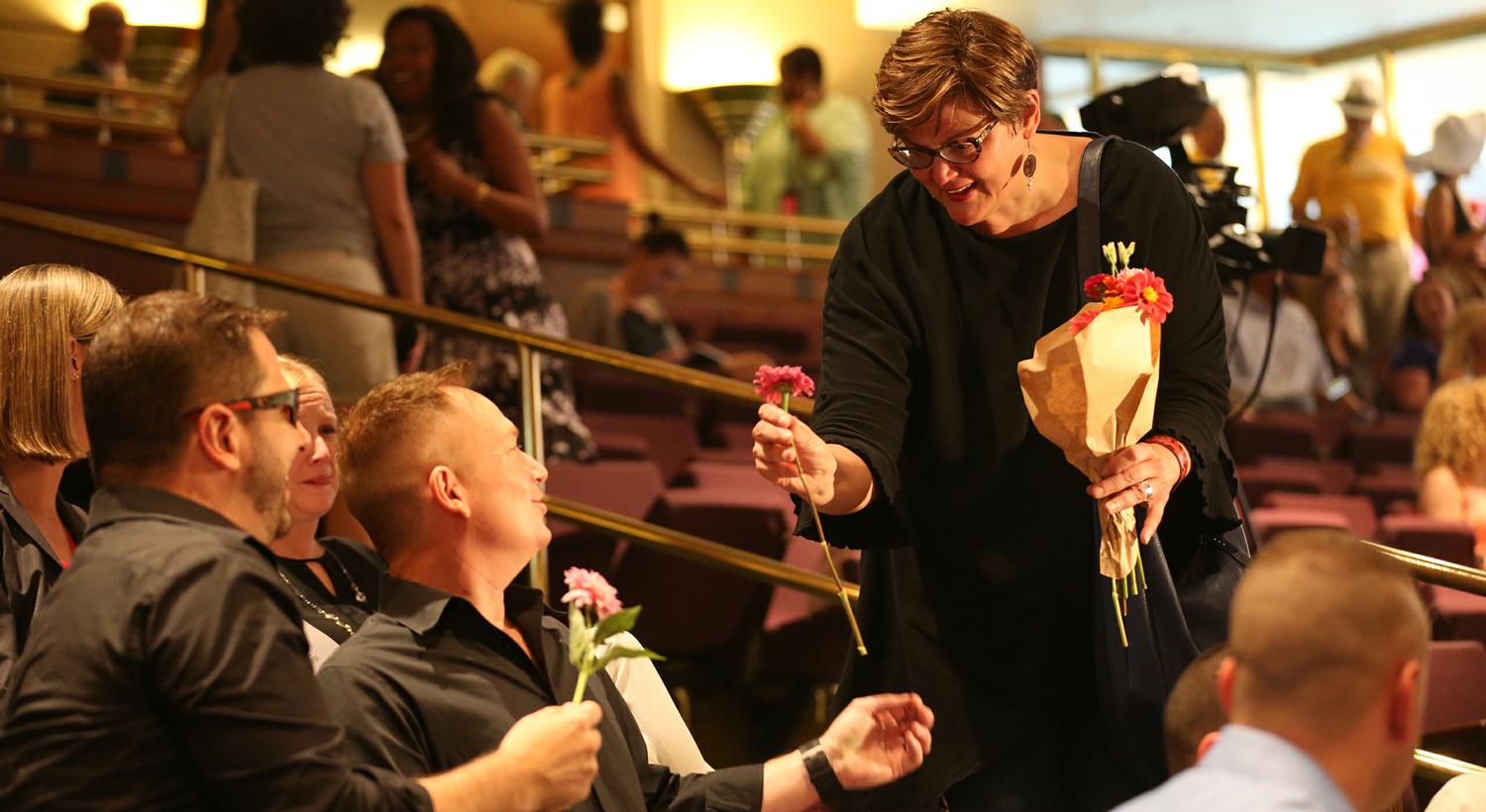
Here in metro Atlanta, a surge of celebration drove people onto the streets, to the corner of Piedmont Road and Tenth Street, a site of prior gay liberation gatherings, and a mass gathering at the civil rights museum in Atlanta.
"A gross infringement"
Reaction was much more muted at the state Capitol.
Lt. Gov. Casey Cagle, a Republican, acknowledged the decision but was in no mood to celebrate it.
“My faith teaches me that marriage is between a man and a woman,” Cagle said. “I also understand the role of the Supreme Court under our Constitution. As we navigate this challenging issue, we must do so in a way that respects the deeply held religious beliefs of many like myself while also upholding the rule of law.”
U.S. Rep. Doug Collins, R-Ga., sounded a similar note.
“I am disappointed that the court has overstepped its boundaries once again,” Collins said. “Many states have already voted to keep the definition of marriage to one man and one woman, and the court’s decision is a gross infringement on American democracy.”
The Supreme Court decision culminates what has been a rapid-fire acceptance of gay and lesbian lifestyles, driven by sympathetic movies, television programs and media reports that portrayed same-sex relationships with all the complexity and normalcy of heterosexual ones.
Extraordinary evolution
Attitudes toward gay marriage, perhaps more than any other issue of our time, have undergone an extraordinary evolution in this country in just 20 years, from broad condemnation in the 1990s to broad acceptance today.
In addition, the Supreme Court sowed the seeds for this decision in a 2013 ruling that struck down part of the federal anti-gay marriage law that denied a range of government benefits to legally married same-sex couples. Since then, numerous federal courts across the country cited that decision in striking down bans on same-sex marriage, and the number of states permitting it grew rapidly.
A growing number of Georgians have shifted their opinion from a decade ago, when 76 percent of the state’s voters approved the constitutional ban. A 2013 Atlanta Journal-Constitution poll found 48 percent of Georgians in favor of gay marriage versus 43 percent against.
Georgia Attorney General Sam Olens said the Supreme Court decision “requires Georgia to recognize same-sex marriage in the same way it recognizes marriage between a man and a woman.”
Still, the battles are hardly over. The court’s decision is expected to provoke a sharp response from many conservative lawmakers in Georgia, who predict sustained legal and political combat in 2016 and for decades to come.
Within several months, the ruling is sure to fuel the fight for “religious liberty” legislation that has failed to pass the last two years amid opposition from business interests. It’s also likely to spur a new wave of election-year proposals aimed at protecting those with moral objections to same-sex weddings.
Social conservatives are branding a potential nationwide legalization as a “Roe v. Wade for marriage.” They forecast a campaign that mirrors the continued fight over the Supreme Court’s abortion ruling 42 years ago.
Contributing reporters: April Hunt, Arielle Kass, Aaron Gould Sheinin, AndriaSimmons, Dan Klepal, Ty Tagami, Daniel Funke, Kristina Torres, Greg Bluestein,Daniel Malloy, Rodney Thrash, Janel Davis, Katie Leslie, and Kendall Trammell.






Please confirm the information below before signing in.