


Heroin’s trail of death
Atlanta’s heroin epidemic brings four lives into collision as a 9-year-old boy is killed.
Now three families must grapple with why it happened.
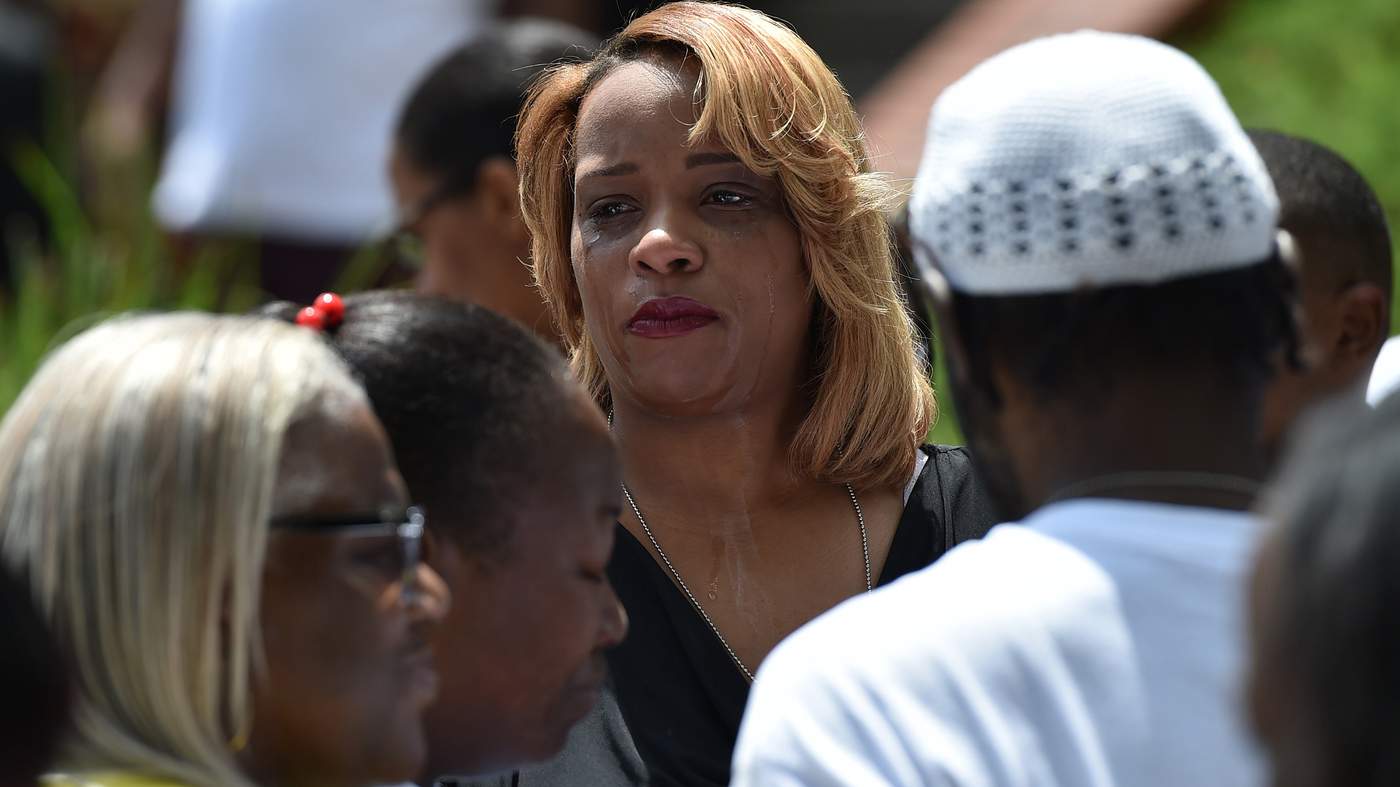

Samarah Bagby, 8, stares at a candle during a vigil for Isaiah Ward in April. Ward was allegedly hit and killed while walking on the sidewalk with his brother and a friend. (Ben Gray / bgray@ajc.com) PREVIOUS PHOTO: Michelle Ward cries at the funeral for her son. (Brant Sanderlin / bsanderlin@ajc.com)

By Jeremy Redmon
The Atlanta Journal-Constitution
Isaiah Ward was a skinny 9-year-old who lived in his imagination, waited up late for his mom to get home from her night shifts at Wendy’s and relished going to school. That day in April, he set out on foot with his older brother to buy a snack at a store a few blocks up Joseph E. Boone Boulevard, a bleak route lined with boarded-up buildings, shops girded with iron bars and sidewalks piled high with discarded mattresses.
Ryan Lisabeth is an unemployed 28-year-old with a long history of heroin addiction, criminal convictions and second chances. That day in April, he had ventured into Atlanta, far from the affluent and verdant horse country where he grew up in Cherokee County. Police allege he bought heroin just off Joseph E. Boone Boulevard and injected it. Then he turned his red 2009 Toyota Corolla onto Boone and began driving toward Isaiah Ward.
Isaiah’s and Ryan’s vastly different worlds were about to collide — their lives drawn together by a nationwide heroin epidemic that lures suburban and rural addicts to inner-city drug markets. Minutes after his heroin injection, police say, Ryan’s Toyota leaped the curb and plowed into Isaiah, his older brother and their friend as the three walked on the sidewalk. Isaiah died. His 13-year-old friend is struggling with a traumatic brain injury. And Ryan is facing vehicular homicide and driving under the influence of heroin charges and has allegedly been receiving death threats in jail.
Their encounter happened against the backdrop of a desperate battle against drugs in Atlanta. Last year, Fulton County led the state with 104 deaths tied to heroin or fentanyl. Less than three weeks before Isaiah’s death, President Barack Obama appeared at a summit in Atlanta to spotlight the epidemic. Tackling the deadly problem, he said, is one of his administration’s top priorities.
Arrests for drug-related offenses in Isaiah’s neighborhood and across the city fell substantially between 2014 and 2015 as authorities cracked down on dealers and demolished blighted houses, though some categories of heroin-related arrests rose slightly. Atlanta police don’t keep statistics on where the people they are arresting are from. But city residents and activists say many of those coming to buy drugs in their neighborhoods are outsiders. Some are showing up at a free needle exchange program that operates near the site of the April 15 incident.
“They are coming from all the metro Atlanta counties,” said Mona Bennett, associate director of the Atlanta Harm Reduction Coalition, a nonprofit that is operating the needle exchange partly to help prevent the spread of HIV, the virus that causes AIDS. “They are coming from near the Georgia-Tennessee and Georgia-North Carolina borders. We have some people coming from Tennessee. We have had them come from Augusta, Columbus, Savannah – all points.”
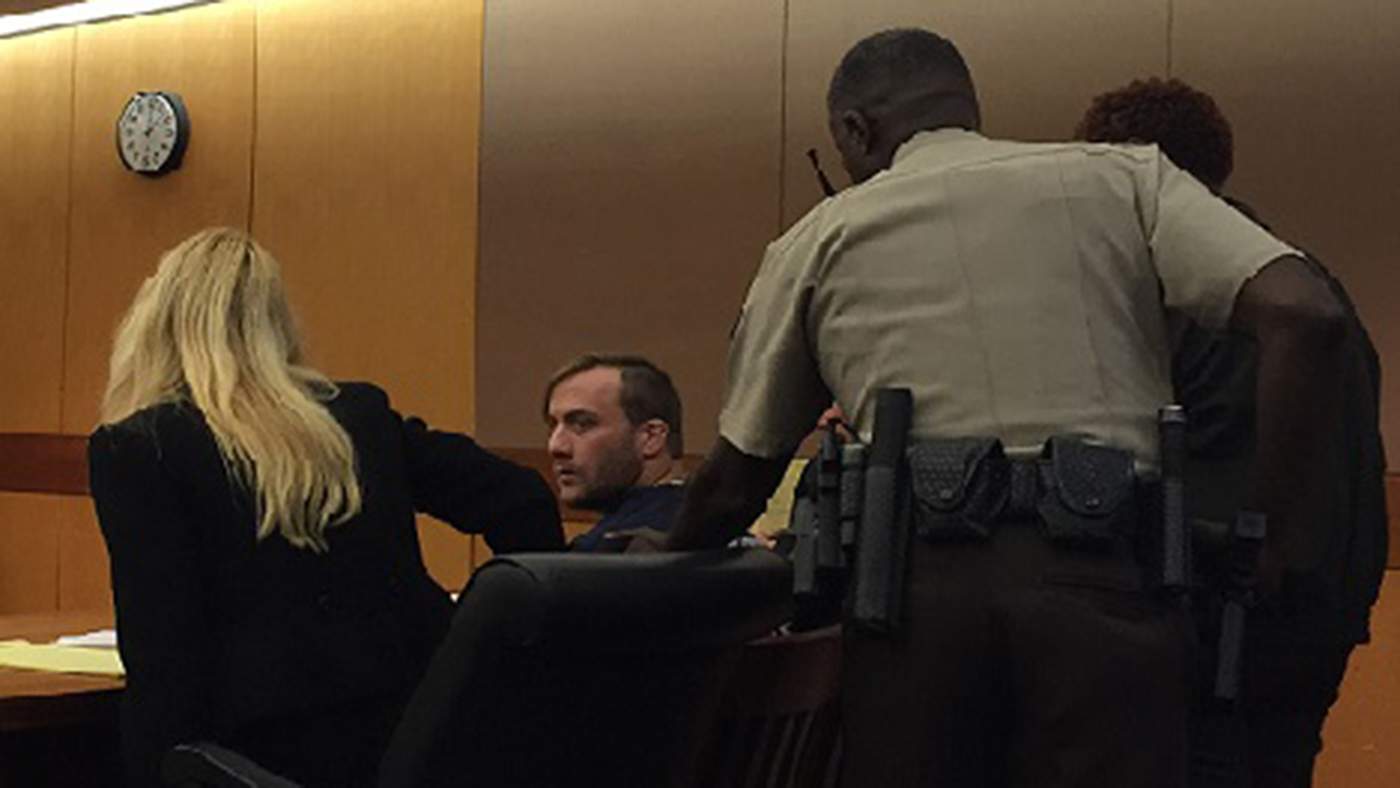
Ryan Lisabeth gets up from his seat in a Fulton County courtroom. (Jeremy Redmon / jredmon@ajc.com) PREVIOUS PHOTO: A young mourner holds a candle at a vigil for his friend Isaiah Ward. (Ben Gray / bgray@ajc.com)
Timothy Hood, 13, is expressionless as his mother Teresa Lawrence welcomes Timothy home from rehabilitation. (Hyosub Shin / hshin@ajc.com)

Timothy doesn’t remember the accident. Holding a conversation remains a challenge for him. His mother hasn't told him yet about the death of his friend. (Hyosub Shin / hshin@ajc.com)

Michelle Ward speaks in her lawyer's office about her son Isaiah's death. (Brant Sanderlin / bsanderlin@ajc.com)

A young child with an old soul
Michelle Ward is crying in her attorney’s conference room on the 42nd floor of a gleaming office tower in Atlanta. The tears come steadily as she reminisces about her son, Isaiah, her baby. She named him after the biblical prophet who predicted the coming of Jesus. Isaiah means “God is salvation.” Of her four children, she says, he was the closest to her.
She remembers Isaiah as quiet and reflective — a young child with an old soul. Michelle would sometimes catch him staring off into the distance and would wonder what he was thinking about.
Isaiah snored loudly in bed, she adds, chuckling. He liked watching the “Teen Titans Go!” cartoon and would mischievously hide the remote control so his mother couldn’t change the channel. A pack rat, he refused to throw away anything, no matter how old or worthless it was. Michelle recently struggled with grief as she combed through his collection of tattered book bags. She sobbed as she recalled the weeks-old sandwich she found inside one. It had already turned green.
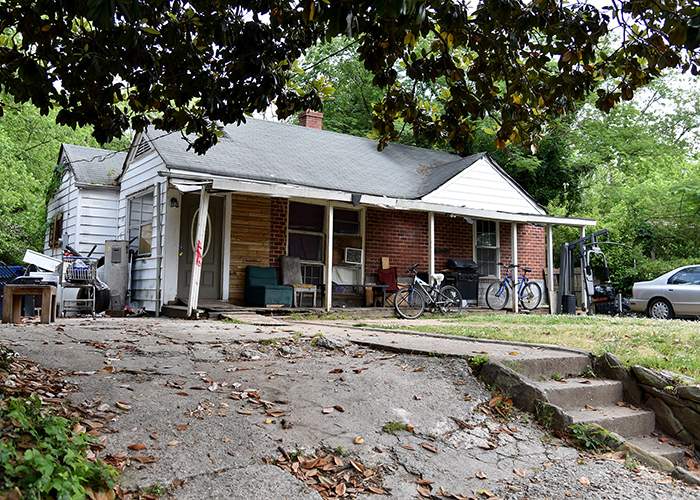
Michelle Ward, a single mother, has worked two jobs to support her family. They shared this rooming house on Tazor Street with other tenants. (Brant Sanderlin / bsanderlin@ajc.com)
A single mother like Teresa, Michelle has been holding down two jobs to support her family. Her boyfriend has been watching her kids while she works security at the Georgia Dome. From there she has been going to work at a local Wendy’s, preparing hamburgers, washing dishes and then returning home around 3 a.m. Isaiah woke up every time she walked in the door, no matter the hour.
“It’s like a time bomb,” she says. “Every morning, he is up at 3 o’clock, not just to go to the bathroom. He is up. And if he sees me and he sees that Wendy’s bag, he would be like, ‘Mom, do you have a cheeseburger for me? Did you bring me a Frosty?’ And he would not go to sleep until I would give him something out of that bag.”
They lived in a dilapidated rooming house on Tazor Street, sharing a bathroom with tenants who rented the three other rooms there. The house sits just off Joseph E. Boone Boulevard. Though there is drug dealing in the area, Michelle says she and her kids have managed to stay out of harm’s way by keeping to themselves. She says she has no sympathy for Ryan Lisabeth. At an emotional candlelight vigil for her son last month, she said she hopes he goes to hell.
“I kissed him on the lips. But I never said goodbye. And I meant not to say goodbye.”
On the night of the accident, Michelle says, Isaiah was on his way with his older brother Roland to the Green Grocery Store a few blocks away. The shop sells Isaiah’s favorite spicy snack: Takis Fuego. Packaged in festive purple bags, the rolled corn chips are seasoned with chili peppers and lime. The brothers never made it to the store.
Roland suffered a broken leg and broken pelvis in the accident. Isaiah got the worst of it: a broken spine and bleeding from his brain. His wounds were so grievous that Michelle didn’t recognize his face.
The doctors pronounced Isaiah brain dead, and he was taken off life support two days after he was hit. Michelle let everyone else say goodbye to him first. Then she went into his hospital room and held his hand, urging him to wake up like he would every time at 3 o’clock in the morning when she would arrive home from Wendy’s.
“They kept telling me, ‘Go ahead. You can touch him,’” she says. “I kissed him on the lips. But I never said goodbye. And I meant not to say goodbye.”
A man strolls by the memorial of flowers, stuffed animals and melted wax from burning candles on the Joseph E. Boone Boulevard sidewalk in April. (John Spink / jspink@ajc.com)

Please confirm the information below before signing in.