


Mom on
a mission
Stephanie Stone was thrust into action
by the senseless death of her son.
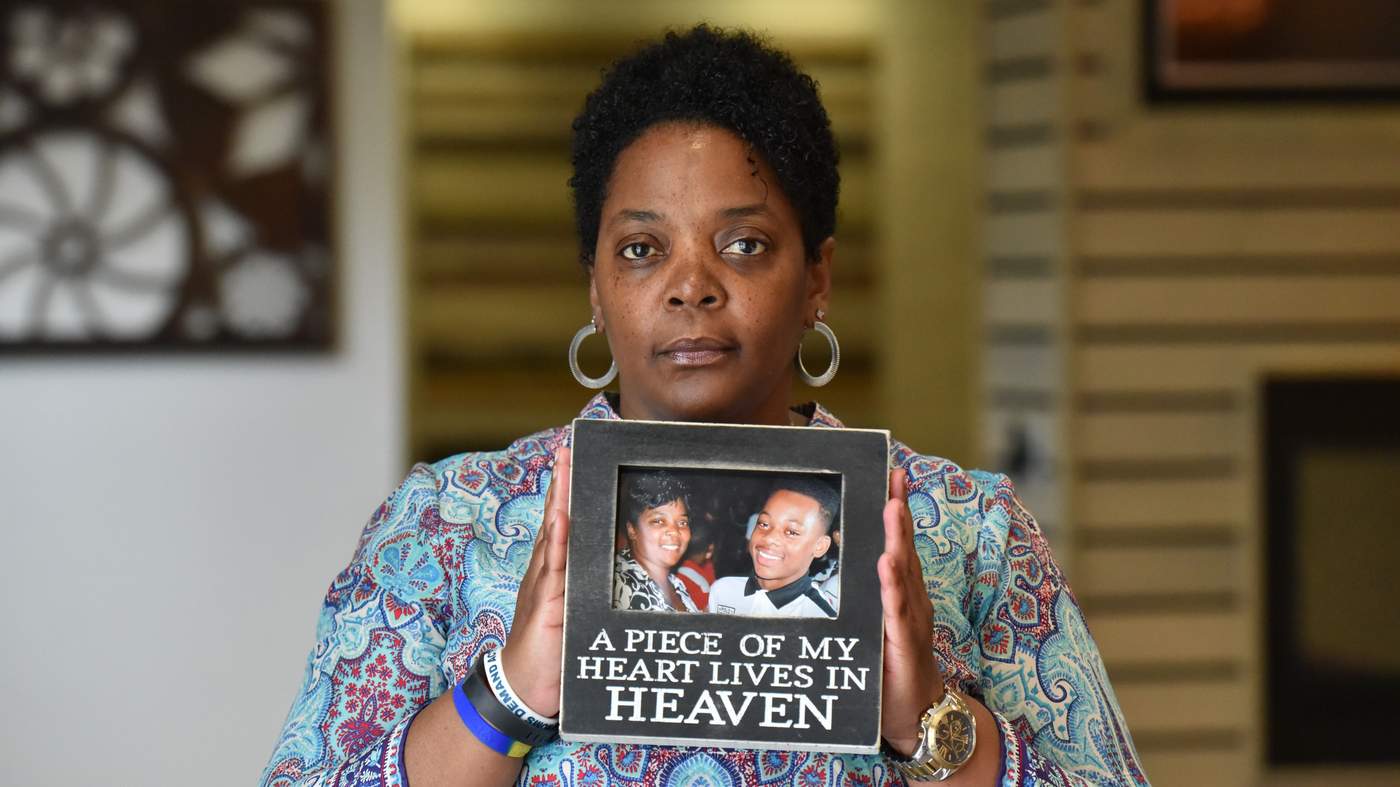

It’s six days before Christmas 2012, and Paul Sampleton Jr.’s mother is somewhere between Sandy Springs and Grayson, racing home from work. She’s been told only to get there as fast as she can.
Not knowing what else to do, Stephanie Stone calls 911 as she drives.
“Please tell me nothing has happened to my son,” she pleads. “Please, lady, please.”
Something has happened. Something irreversible.
Paul is dead, bound and bloody on the hardwood floor of his mother’s kitchen. A 14-year-old boy with three slugs in his head. His mother’s frantic sprint home began with a call from his father, who’d found the body.
Paul Sampleton Sr. is still on the phone with his own 911 dispatcher when Stone calls on the other line.
“Steph. Steph,” he says. “Please come home right away. Please. Please, I can’t tell you nothing. Just come here please. Please come on.”
2
Precious portals
Pictures, Stephanie Stone is fond of saying, are portals to our existence — they prove we were alive. And she has hundreds of pictures of her son, enough to do “throwback Thursday” until she’s 100.
He liked posing for them.
“Maybe he was just vain,” she jokes.
Stone, 47, wears double-hooped silver earrings, a white Tommy Hilfiger sweater and a scarf in shades of greens and pinks and blues. She’s sitting on a faux leather couch that looks out on the pool of a modern apartment complex near Atlantic Station. Home, post-Paul.
She flips through her phone, struggling to find the perfect photograph.
The fact that she can’t take any more makes her sad. This would’ve been “Paul’s year” — 18th birthday, prom, graduation, college. Plenty of excuses to create more portals.
But looking at the photos she does have is a joy. They remind her of their special Thursday night dinners out at Chili’s or Longhorn, of their summer trips to Orlando or Nashville or the Bahamas, of a child who grinned mischievously and punctuated even their tersest conversations with a begrudging I love you, Mom.
Although Paul’s parents separated when he was 4, his father was an active and loving presence in his life. But Stone and her son lived together, and when she looks at the photos she thinks of what she always told him: It’s you and me against the world, kid.
“I never imagined it would be just me,” she says now.
She still travels — Italy, Dubai, Las Vegas — but with friends, not Paul. She still goes to work, in the business office of a healthcare company, but there are no requests for Chick-fil-A on the way home. She doesn’t sit at her kitchen table anymore because Paul’s not there.
This is Stephanie Stone, the grieving mother whose life was changed by three bullets.
But from those bullets another Stephanie Stone was born, too: Stephanie Stone, the activist for Moms Demand Action for Gun Sense in America. A strong, outspoken woman who spends her time counseling other survivors of gun violence and advocating for responsible gun ownership and an end to senseless violence.
A woman who spent Mother’s Day weekend leading hundreds in a march across New York City’s Brooklyn Bridge.
“I never envisioned this to be my life,” she told the crowd, which included actresses Julianne Moore and Melissa Joan Hart.
“I never imagined a life without my Paul. I didn’t ask to become a member of this club with a lifetime membership. However, I’m determined to make a difference as best I can, so there will not be any more new stories to share about innocent lives being stolen as a result of gun violence.”
Stone, second from right, was joined by actress Julianne Moore, among other activists with Moms Demand Action for Gun Sense in America in a march across the Brooklyn Bridge Mother’s Day weekend. Contributed photo.

Stephanie Stone speaks at a Moms Demand Action for Gun Sense in America rally in New York City. Courtesy of Moms Demand Action for Gun Sense in America

Stephanie Stone speaks to a crowd before an Orange Walk to end gun violence, Saturday, Dec. 12, 2015, in Atlanta. Branden Camp.
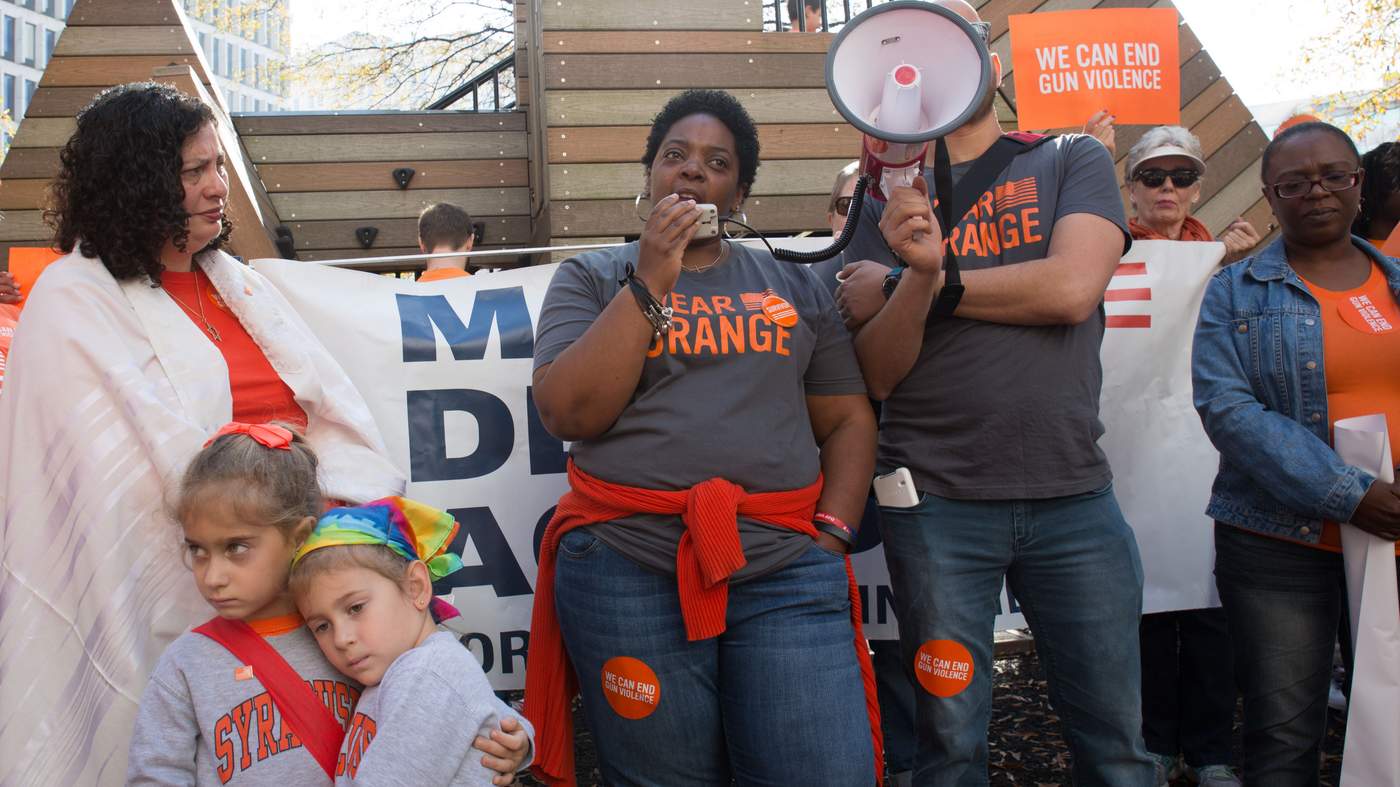
Photo: Stephanie Stone speaks to a crowd before an Orange Walk to end gun violence, Saturday, Dec. 12, 2015, in Atlanta. Branden Camp.
5
Grief and guilt
Even three-and-a-half years later, the questions stay with Stephanie Stone
.
What if they hadn’t left Covington and moved to Grayson? What if she’d just driven Paul to Stephenson High School in Stone Mountain, where he had worked out with the football team, instead of letting him take the bus to Grayson High School? What if she hadn’t bought him the sneakers he loved, the nice clothes he wanted, which made him a target?
On the day Paul was murdered, at the end of her frantic drive home, Stone pulled into her neighborhood and saw yellow tape and police cars. She zoned out, her soul gone. Things were happening around her, not to her. It didn’t compute and it wouldn’t sink it.
Still hasn’t, in a lot of ways.
For a long time, Stone didn’t want to talk. At all. She admits she still cries, and above all gets lonely. But she doesn’t like to discuss her bad days. She can’t properly articulate her feelings, she says. It’s a daily battle, she adds.
But it’s a battle that, in its own way, keeps her going.
Three months after Paul’s murder, Stephanie Stone found the Facebook page memorializing Jordan Davis — a 17-year-old boy shot and killed in a gas station parking lot in Jacksonville, Fla. An argument over loud music.
Within a day or two, she was on the phone with Davis’ mother, Lucia McBath, who lived in Marietta. Their first conversation was long and emotional. Stone had never talked with another mom who’d lost a child to gun violence.
“I just listened and listened and listened,” McBath recalls.
McBath was involved with Moms Demand Action for Gun Sense in America and Everytown for Gun Safety, a pair of intertwined national organizations. She’d begun telling her story —Jordan’s story — at various events and marches and rallies.
From that first phone call, Stone followed her lead. And blossomed.
“I was speaking with her in the wake of utter despair,” McBath says. “And I’ve watched her ... grow into being able to channel that into something that’s really beneficial.
“She’s not doing this just for Paul. She knows there are a lot of other hurting mothers and parents out there. And that’s who she’s doing it for.”
Stone knows mothers — and fathers and grandparents and brothers and sisters — like her are created every day. Her son’s death showed her how easily guns can fall into the wrong hands, and what can happen when they do.
6
Crusade for safety
To be clear, Stephanie Stone does not like guns. She did not before her son was killed, and certainly does not now.
She calls Georgia’s gun laws “wicked,” and rejoiced when Gov. Nathan Deal vetoed the state’s campus carry legislation last month — the day before what would’ve been Paul’s 18th birthday. Guns make her uncomfortable, and she believes they give people a false sense of power.
But her crusade is not about taking folks’ guns away, she says. She’s careful to avoid the word “control,” and focuses on what she — and “Moms and Everytown” — believe could be attainable.
Store your guns properly, she says. Put locks on them. For the love of God, she says, don’t make them easily accessible to children. Don’t use guns to solve problems. And stop the senseless violence.
She peppers her conversations with mentions of recent gun deaths: The pizza delivery driver shot and killed near Norcross, a 14-year-old charged with the crime. The Atlanta activist shot and killed in his front yard, a 17-year-old arrested. The Wal-Mart security guard shot and killed in Lilburn. The former New Orleans Saints player shot and killed on a Louisiana highway. Several —several — children who shot and killed themselves.
“We’re not trying to control anyone,” Stone says. “Because you do have a right to bear arms. But we have a right to live, too. It’s about people being responsible with their guns.”
7
It’s OK to fall apart
In 2014, Larnell Sillah, Andrew Murray and Tavaughn Saylor were convicted of murder.
Stone sat in court for more than a week, listening quietly to the details surrounding her son’s death. She’d heard it all – sneakers, poorly stored guns, three shots to the head. Now the verdicts had come.
Prior to sentencing, Sillah’s mother addressed the court, using the opportunity to say her child did not commit murder.
Stone couldn’t take it and jumped to her feet.
“Well who committed it then?” she shouted. “Who committed it? Tell me?”
All three men were given two life sentences, plus more than 100 years, assuring they’ll die in prison.
❏ ❏ ❏
Grieving is not a linear process. Stephanie Stone has accepted this.
She refuses to live in the sadness, “because the sadness ain’t gonna go away anyway.” But she also believes it’s OK to fall apart sometimes.
In a lot of ways, it seems fitting for the mother of a murdered child to become a gun safety advocate. It’s also unnatural. Commiserating helps, but there’s a point of diminishing returns, a point where it can all become too much.
Points, plural, where you have to take a breath, a break from living in your tragedy — and the tragedies of others — over and over and over and over.
A few months back, a friend of Paul’s made a proposal — would it be OK if he approached the administration at Grayson High School and asked that a diploma be made for Paul? An empty seat at the ceremony, all that?
No, Stone said. And she wouldn’t be attending either. It’s not that she didn’t appreciate it, or that she’s envious or spiteful. On Facebook, she celebrated each graduation invitation she got. And, in fact, she went to the graduations of several of Paul’s childhood friends. It’s important to her to keep up with the kids Paul grew up with. “Staying in the village,” she calls it.
Going to Grayson High School, though, is too much.
“My intentions were to go, because I wanted to exude the strength,” she said a few weeks before the May 27 graduation. “But I don’t have to be strong that day. I don’t have to. And I realize that.”
And she doesn’t have to be strong any other day, either. Not if she doesn’t want to. She can cry. She can vent. She can say what she feels.
Last year Stone wrote letters to each of her child’s killers. Here’s what one said, in part:
“Next month, Dec. 19, 2015, will mark three years since I last saw my son Paul, a 14-year-old whose life was taken senselessly at the hands of you and your friends.
“I don’t know what you think about every day, but I can tell you what I think about. I think about my only child, a kid who would be a senior in high school right now, a kid who loved playing baseball and football, a kid whose friends looked up to him, a kid who wanted to go to Florida State and major in biology.
“A kid who never got his chance to get his driver’s license. A kid who will never get a chance to graduate or go to his senior prom. And kid whose smile was so infectious. A kid who loved his family... A kid who will never give me a grandchild. A kid who was determined, who did beat the stereotype that black boys are simply dopeboys, gangbangers and destined for prison.”
Stone doesn’t know if they read the letters, and she doesn’t really care if they did. Writing them was what she needed to do.
Stephanie Stone speaks to a crowd before an Orange Walk to end gun violence, Saturday, Dec. 12, 2015, in Atlanta. Branden Camp.


HOW WE GOT THE STORY
AJC staffer Tyler Estep covered the Paul Sampleton Jr. case extensively when he worked for the Gwinnett Daily Post, from the day of the murder to Paul’s funeral and the conviction of his killers. Over the course of those events, Estep occasionally spoke briefly with Paul’s mother, Stephanie Stone. But after he learned she’d become a gun safety activist — and with his own child on the way — Estep was compelled to dig deeper into her journey from a grief-stricken mother into a high-profile advocate for gun safety. It is a gripping story about loss and transformation.
Suzanne Van Atten
Personal Journeys editor
personaljourneys@ajc.com

ABOUT THE REPORTER
Tyler Estep is a member of the AJC’s local digital news team. He is a Gwinnett County native, University of Georgia graduate and former reporter at the Gwinnett Daily Post, where he won multiple awards for breaking news and feature writing. He lives in Decatur with his wife and 5-month-old son.

ABOUT THE PHOTOGRAPHER
Hyosub Shin was born and raised in South Korea. Inspired by the work of National Geographic photographers, he came to the United States to study photography and joined the AJC photo staff in 2007. Past assignments include the Georgia Legislative session, Atlanta Dream’s Eastern Conference title game, the Atlanta Air Show and the Atlanta Braves’ National League Division Series.

Please confirm the information below before signing in.