


Ossabaw
It's worth the extra effort it takes to get there


Ossabaw Island is close — only 20 miles below Savannah’s historic district — yet tantalizingly far away for most Georgia travelers.
No bridge joins the mainland to the exquisite barrier island once owned by indigo and cotton planters and Northern industrialists. No ferry crosses Ossabaw Sound to alightat Torrey Landing. Ossabaw is a state-designated Heritage Preserve that limits visitation to ensure its environmental and cultural excellence into perpetuity.
But if you’re one of the lucky few to explore the island’s white sand beaches, oak-shrouded byways or freshwater ponds favored by shorebirds, alligators and wild boar, you’re in for a treat. Added bonus: the 1926, pink-hued, Spanish-styled mansion that, until recently, was the home of Elizabeth “Sandy” Torrey West (pictured here in 2006) — the doyenne of Ossabaw whose love of nature and the arts imbues the island with its transcendent charm.
The Main House is off limits for now. Sandy, 103, left the island in May for a Savannah nursing home. She inherited the island from her father, who bought it 1924, and she sold it to the state in 1978 with the stipulation that she be able to live out her days on the island and public access to the island be limited to protect its ecological balance.
Photo: Long time Ossabaw Island enthusiast photographer Jill Stuckey explores the boneyard on the south beach where tree skeletons and stumps are left as a result of erosion.
There are three ways today to experience Ossabaw: day trips by boat; overnight stays by arrangement with the nonprofit Ossabaw Island Foundation; or hunting trips conducted by the Georgia Department of Natural Resources.
Boaters can drop anchor anywhere along the island’s 15 miles of pristine beaches as long as they stay below the “ordinary high water mark” and don’t head inland. The South End Beach is an awe-inspiring collection of dead trees that have succumbed to the inexorable rise of the Atlantic Ocean. More majestic than Jekyll Island’s Driftwood Beach, the bones of live oak, pine and cedar trees offer an eerie, yet beautiful backdrop for a long beach stroll.
Photo: Sensing danger a feral pig beats feet down Cabbage Garden Road on the north end of Ossabaw Island.
For sanctioned visitors allowed to broach the dunes and enter the maritime forest, a biodiverse wonderland awaits. Beyond the live oaks, cabbage palmettos and wax myrtles lies the cool, dark and swampy interior where the wild things roam.
Wild boar, brought to the island by Spanish explorers in the 1700s, lurk everywhere and require a full-time, rifle-toting state employee to keep their numbers in check. Deer are about as plentiful, as are armadillos. Watch your step — alligators snooze, eyes open, in the mossy swales and brackish ponds.
Photo: An osprey takes off from a tree top at sunset at Lower Egret Pond on Ossabaw Island.
Overhead, ibis, herons, wood storks, merganser ducks and bald eagles soar. Vultures, too, in search of the sniper’s handiwork.
The Ossabaw foundation organizes daylong and longer trips (minimum two night stays) at three primitive camp sites scattered around the island and two distinct lodges on the north end. Overnight stays grant visitors license to roam the 26,000-acre island.
Photo: Inquisitive feral donkeys stand outside the main house at North End Plantation as they wander freely on Ossabaw Island.
The Main House, in all its fading glory, isn’t open but is visually compelling with its pink stuccoed sides, red-tiled roof and wrought-iron balconies. An overgrown English garden with concrete statuary sits out back; the front lawn stretches to Ossabaw Sound. Close your eyes and imagine the Rockefellers, Carnegies and Reynolds, circa 1928, swishing cocktails or playing croquet as their yachts bob in the distance. Don’t be surprised if a Sicilian donkey sidles up alongside and brings you back to present-day unreality.
Nearby, three restored slave cabins hearken to the island’s brutal agrarian past. Built between 1820 and 1850, the sturdy tabby shacks evoke the plantation economy — indigo first, then rice — fueled, at its peak, by 300 enslaved Africans. The tabby material came from oyster shells discarded long ago by Native Americans who first settled Ossabaw.
Photo: A white tailed deer crosses the Main Road beneath a canopy of mossy oak at sunrise.
The oak-lined Main Road heads due south, bisecting the island and passing the Middle Place where much of the crops were harvested. The slave quarters have all but disappeared except for a shack or two occupied by water moccasins. It is near here, in a plain wooden coffin, where Sandy wants to be buried.
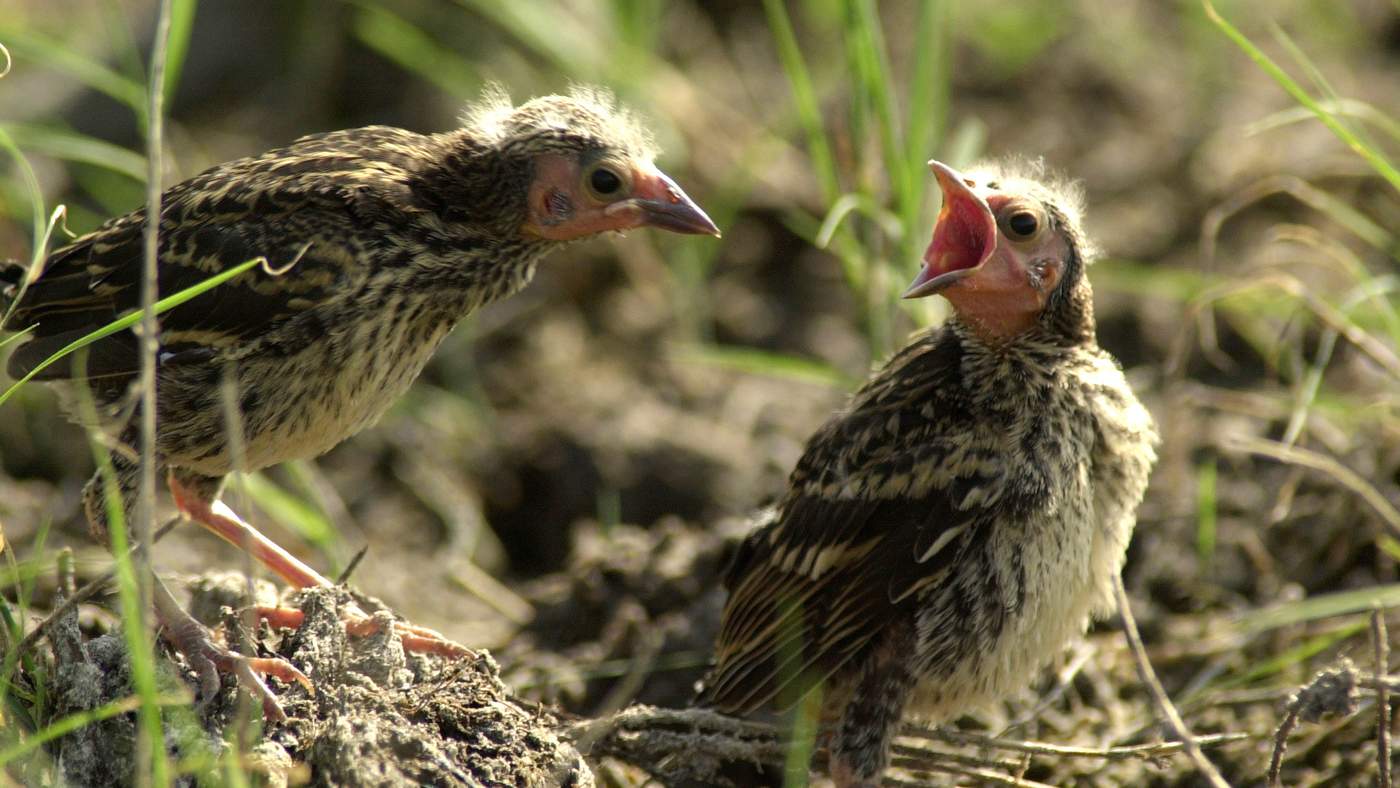
Red-winged Blackbird chicks chirp for their mother from a nest in the sand dunes at Bradley Slough on Ossabaw Island.
A young Southern Toad sits in a oyster shell along Cabbage Garden Road on the North End of Ossabaw Island.

Thousands of fiddler crabs line the banks of Newell Creek feeding at low tide on Ossabaw Island.

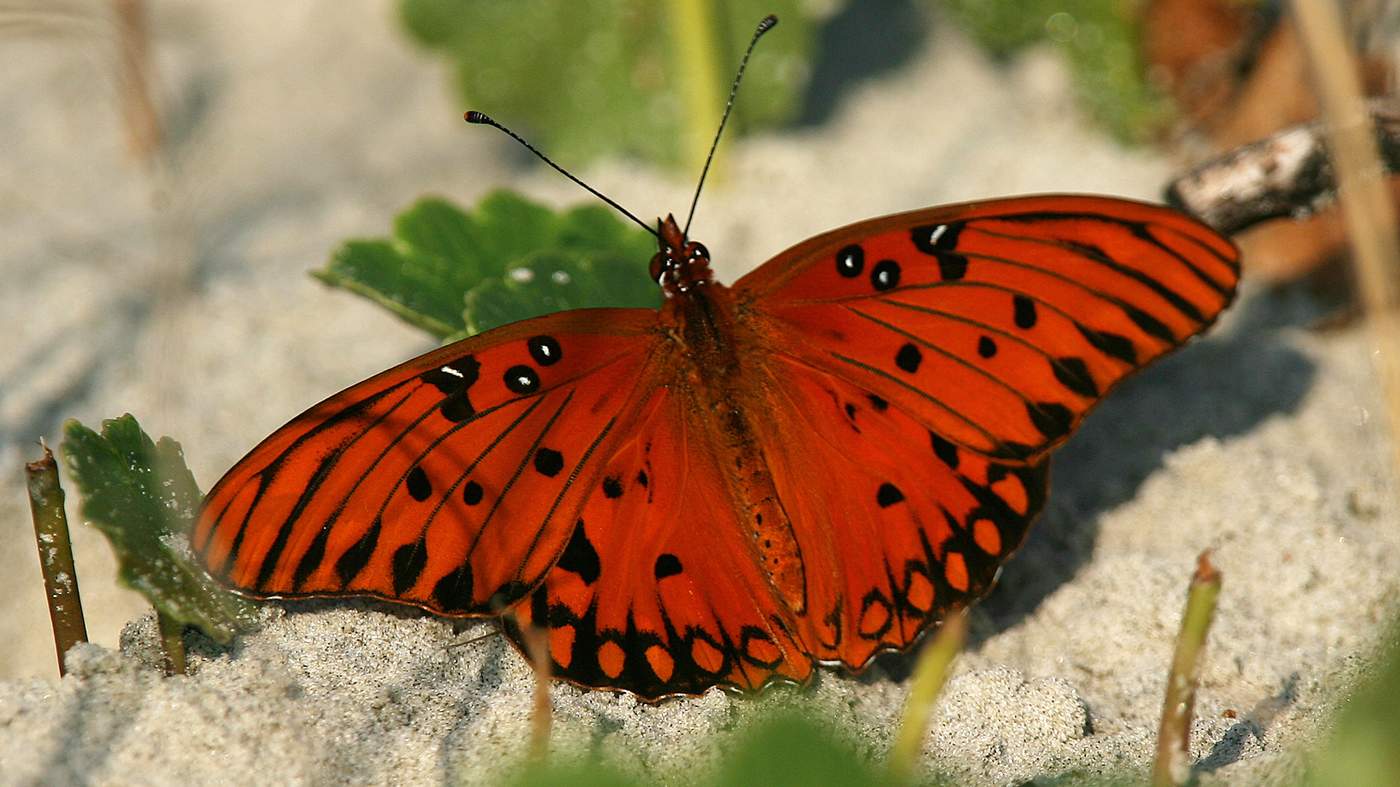
A gulf fritillary butterfly pauses to rest on the bank of a sand dune at South End Beach on Ossabaw Island.
Immature White Ibis, common in muddy pools and marshes, forage for acquatic prey during high tide at North End Field on Ossabaw Island.

Periwinkles, salt water snails that crawl up and down Spartina, graze on alge in a marsh just above a rapidly moving incoming tide on the north end of Ossabaw Island.

Dozens of Wood Storks, Great Egrets. and Snowy Egrets forage in a pond at Willows Road on Ossabaw Island.

A young American white tailed deer leaps above the tall grass in South End Field on Ossabaw Island.

Free ranging Sicilian donkeys graze in a field off Cane Patch Road on the north end of Ossabaw Island.

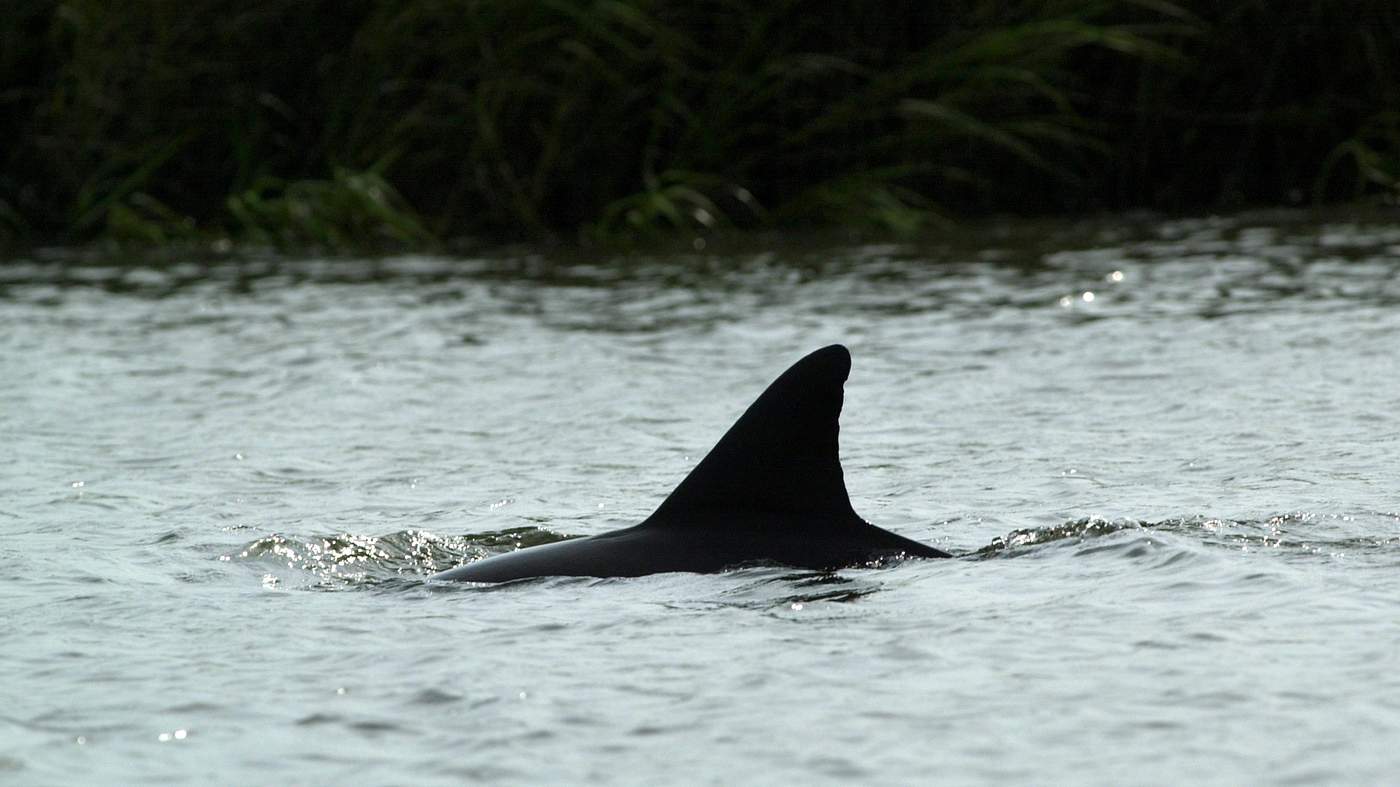
An Atlantic bottlenose dolphin makes it's way through Newell Creek at South End Field on Ossabaw Island.

Please confirm the information below before signing in.