


A new vision
for Pasaquan
A stunning, two-year multi-million dollar revival
breathes life , intense pigments into artist's works

The sun-bleached primary entrance of Pasaquan before renovation. Contributed by the Kohler Foundation.
‘Daunting’ restoration job
The Pasaquan Preservation Society, a private, nonprofit group that has been responsible for the 7-acre art environment since the early 1990s, worked hard to keep it operating. But the intense south Georgia weather, termites and other scourges eventually outpaced the upkeep funded through a not-always-steady stream of foundation and government grants.
Seeking rescue, Fussell approached the Kohler Foundation in the late ’90s. The Wisconsin nonprofit, an arm of the bath, kitchen and lifestyle company, had since the late 1970s become the preeminent preserver of vernacular architecture and art environments. But it declined, citing other projects at hand.
Today, Kohler Foundation executive director Terri Yoho admits she and other foundation officials initially found the prospect “daunting” because of its “extremely deteriorated” condition.
Still, a seed was planted. Three years ago, Fussell circled back. This time, Kohler said yes, believing that developing partnerships with restoration specialists better positioned it for success.
“Where do I start?” Yoho said, ticking off the major work the team faced. “Failing concrete, paint loss, drainage issues, termites, surprises behind and under every nook and cranny, weather, age of the art … I could go on. This was a challenging project — the largest and most complex we have ever taken on.”
Kohler brought in Parma Conservation of Chicago to handle painting and International Artifacts of Houston for object conservation and concrete stabilization work. They were joined by Columbus general contractor T.G. Gregory and a team of local tradespeople.
Calling Pasaquan “among the top art environments in the world,” Yoho said, “This is something that had to be preserved, and it is a project that could never have happened if we hadn’t been able to pull all this amazing talent together in one place.”
As part of the arrangement, the Columbus State University Foundation has assumed responsibility for the site, with Pasaquan Preservation Society’s 20-member board moving to an advisory role.
CSU’s mission statement for its new academic asset emphasizes education, preservation, interpretation and programming. Already, more than 70 students have been involved in cataloging St. EOM’s output, composing interpretive materials and other jobs.
The St. EOM story is a rich one to convey.
The mural on the side of the "Kiva", where some say they have felt the artist's ghost, or presence. This image was taken in 2005 prior to the restoration. See the next panel for an example of the transformation that has taken place at Pasaquan. AJC file photo.

The vivid colors come to life in the restored facades at Pasaquan.

By the time he moved back to his mother’s south Georgia farm in the mid-’50s following her death, he had spent two decades working out his one-man faith. Pasaquoyanism borrowed from ancient rituals and imagery — especially James Churchward’s 1920s-’30s books on the lost Pacific continent of Mu — to frame a view of a peaceful future.
St. EOM patched together Pasaquan in a similar manner, paced by the designs he saw in his mind and without a plan or the knowledge even of how to make things level.
But he was never exactly flying solo. Beyond the occasional hired helpers, Martin once recalled, he was guided by voices: “It always seemed there was a good spirit right by my side.”
The customers who wheeled into this fantastical compound, seeking positive predictions or at least lucky lottery numbers, assumed Pasaquan was mere stage setting for St. EOM’s fortune-telling business. Few had any idea that it was an artful expression of his bounteous belief system, which embraced notions of gravity-defying travel, tonsorial connections to the cosmos and even eternal life.
Tales about the infamous eccentric flew around Marion County. Some refuse to die even to this day.
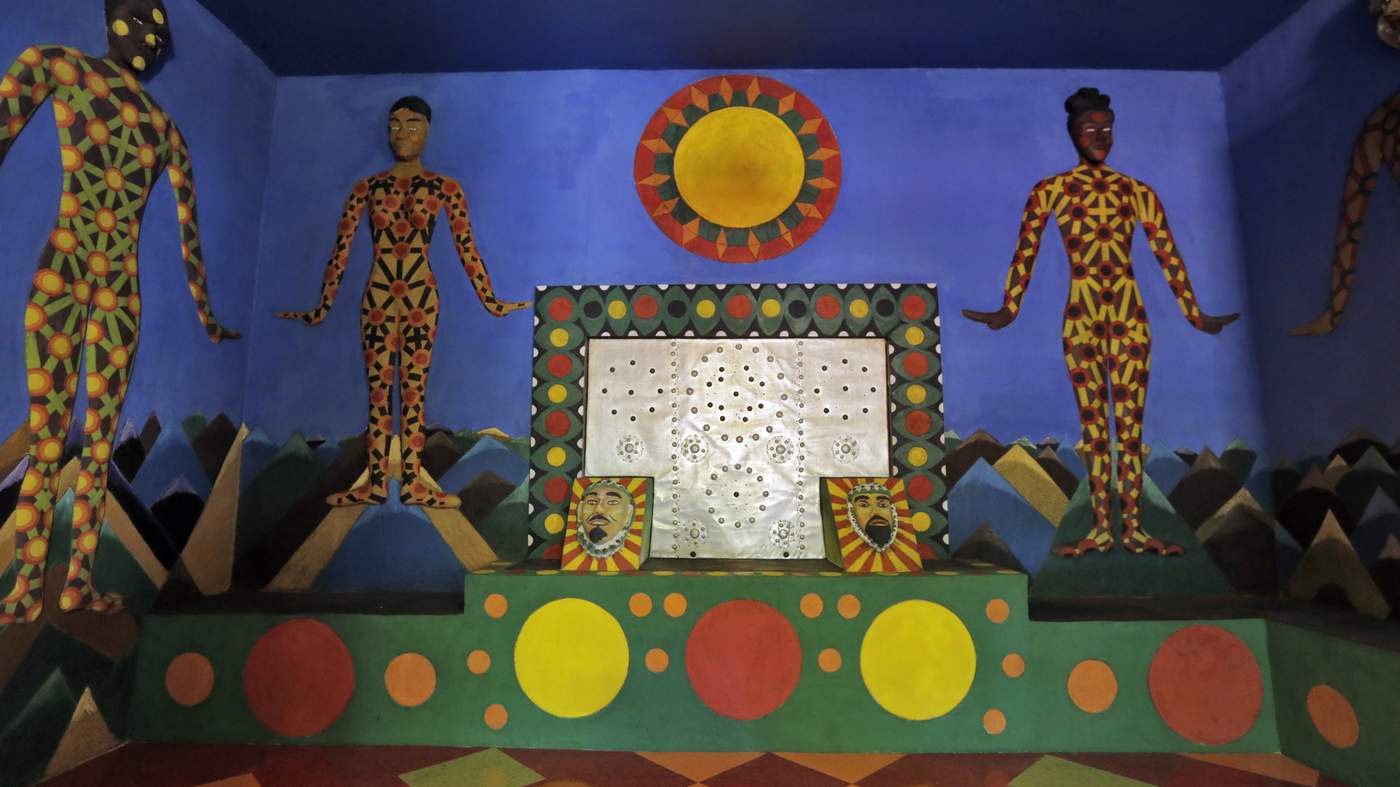
This room was Eddie's kitchen, which he used as a recording studio. The paintings depict Pasaquoyans wearing "Power Suits", which enable them to levitate.
Favorites rumors Pasaquan director Michael McFalls (pictured, at Pasaquan) has heard include the belief by some locals that bodies are buried in a round sand pit where St. EOM performed ritual dances; and that he would haul a dozen cats to Buena Vista and they would scatter until his chanting would command them back into the car when it was time to depart.
McFalls, a CSU associate art professor, and Pasaquan Preservation Society president Annie Moye chuckle about such stories. But at the same time, they believe the fanciful fiction and hard truths that surround the St. EOM legend demand to be told.
“I am not ashamed of any part of Eddie Martin’s story,” Moye said, “and I hope to encourage positive conversations where there once were awkward silences.”
She acknowledged that marketing Pasaquan to visitors will be more challenging in south Georgia than drawing crowds to Paradise Garden, the late Rev. Howard Finster’s Christian-grounded art environment in Summerville, in northwest Georgia. But a few businesses are opening on or near Buena Vista’s historic town square in anticipation.
“It’s put a little spring in our step,” said Marion County Chamber of Commerce president Debby Ford.
And what would St. EOM think about the renewal of Pasaquan and, with it, greater interest in his life?
“He would be amazed,” Fussell said “and he’d be critical, I’m sure. He was really kind of bitter about being neglected as an artist. He would say, ‘The world isn’t ready for me yet.’”
Thirty years later, remarkably, it may finally be.
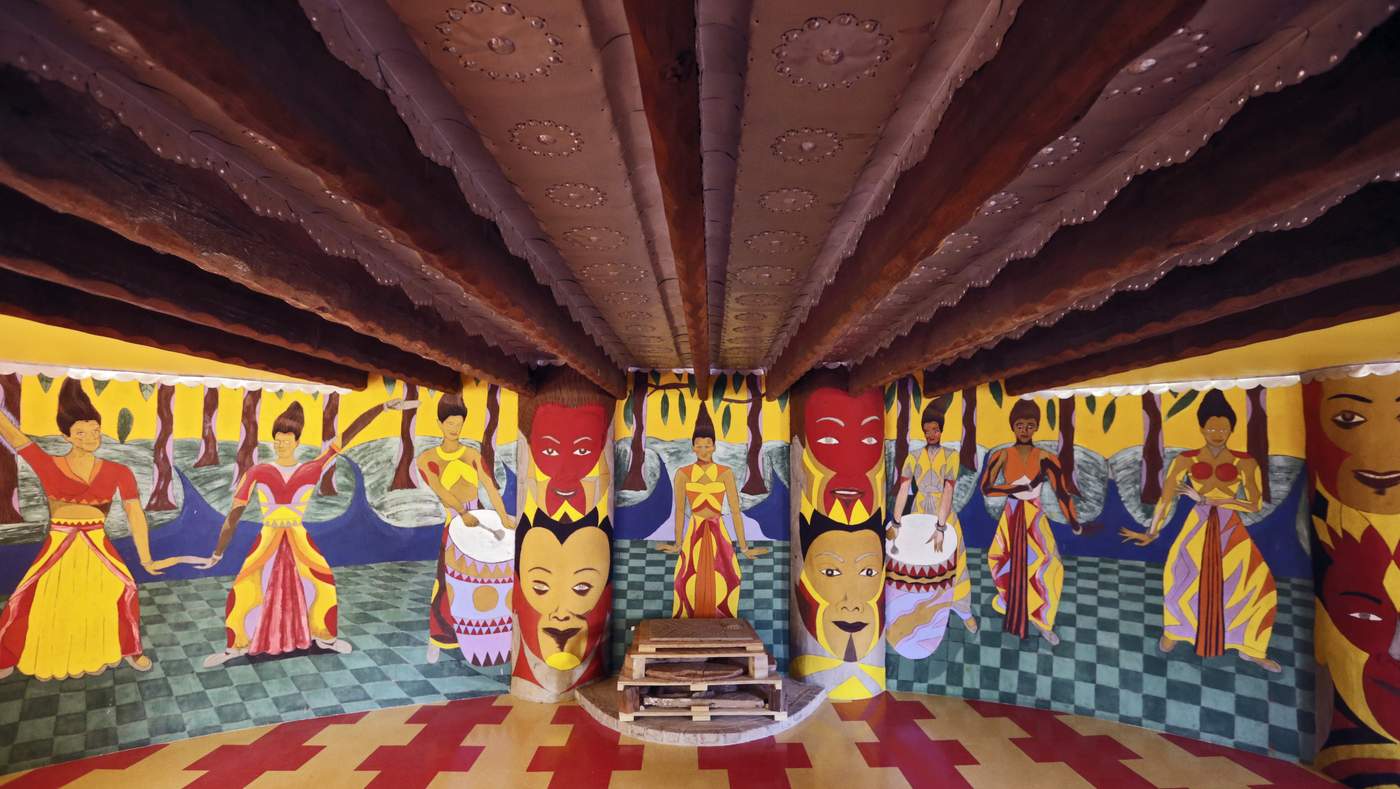
The mural in this room depicts Pasaquoyan muses of art, poetry and music. The metal work on the carved beams is prominent throughout Pasaquan.
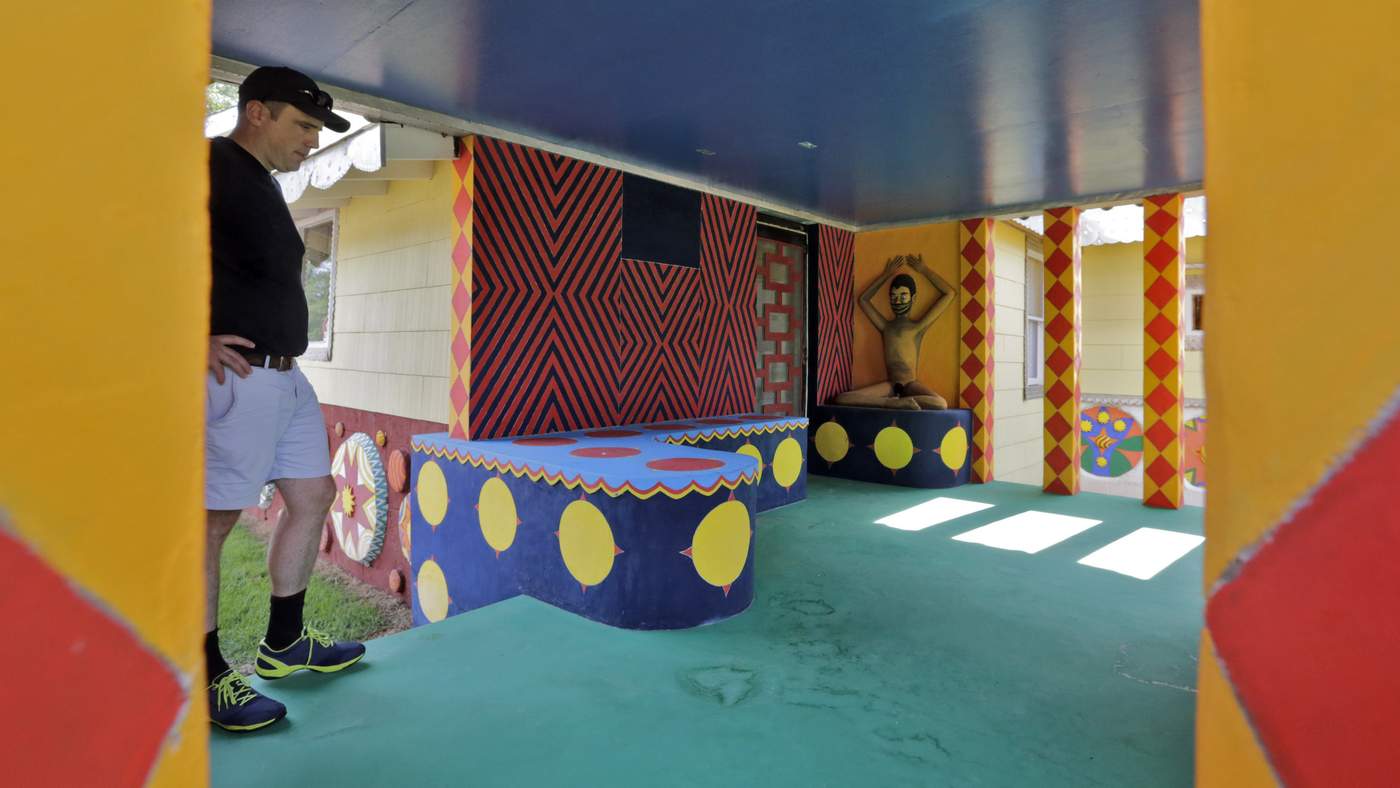
Michael McFalls, Director of Pasaquan for Columbus State University, on the porch, where the artist spent much of his time.
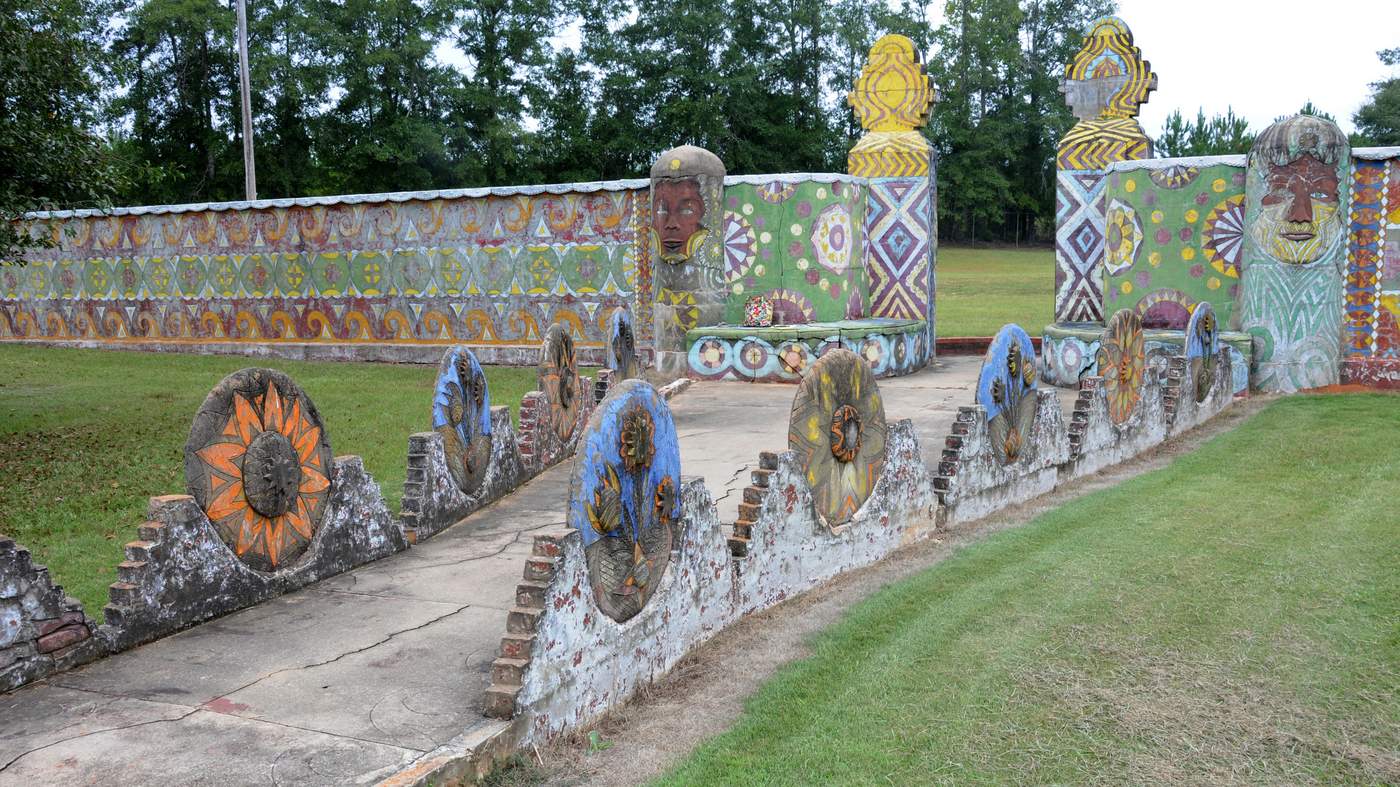
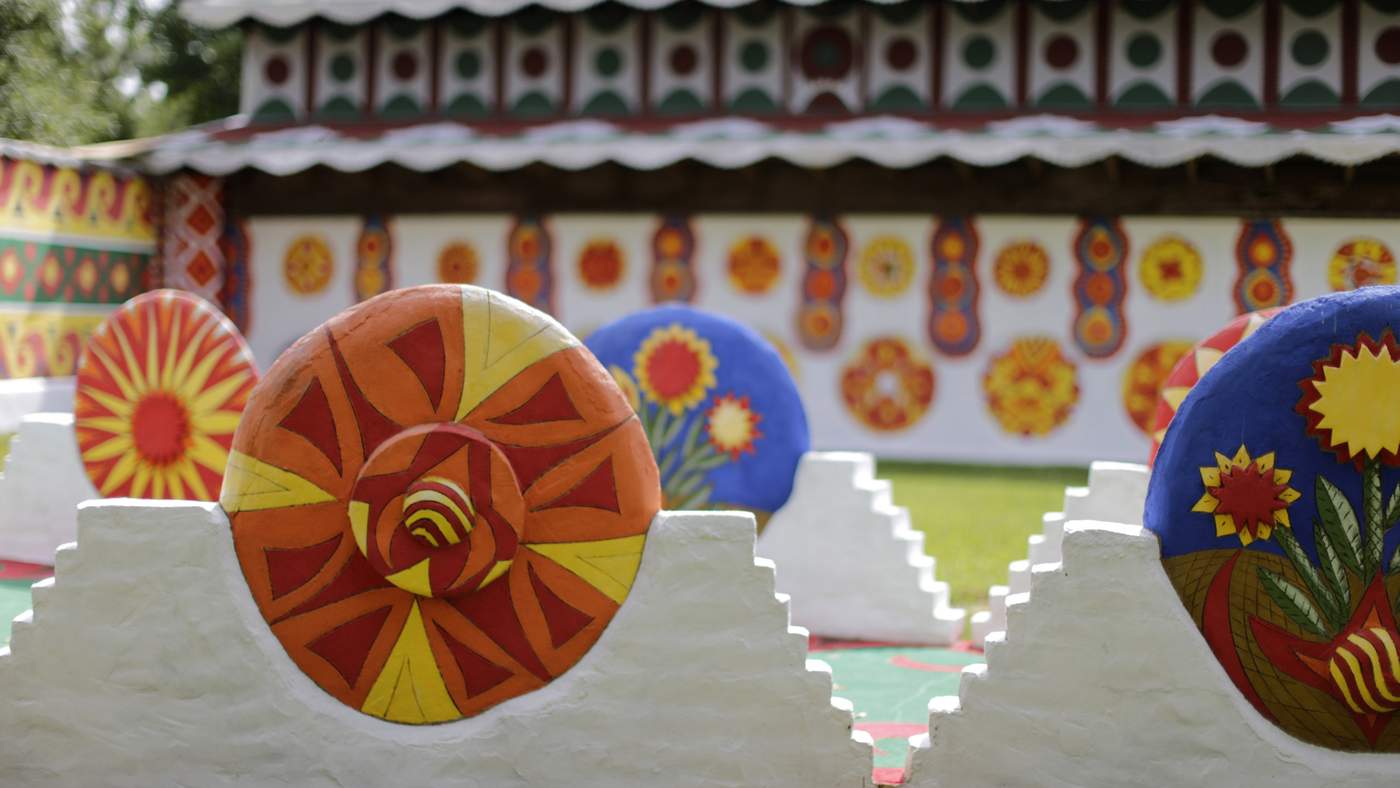
The grounds at Pasaquan contain 900 feet of painted concrete walls and totems.

Snakes are a common theme among the painted concrete walls and totems.

Colorful patterns adorn the painted concrete walls at Pasaquan.
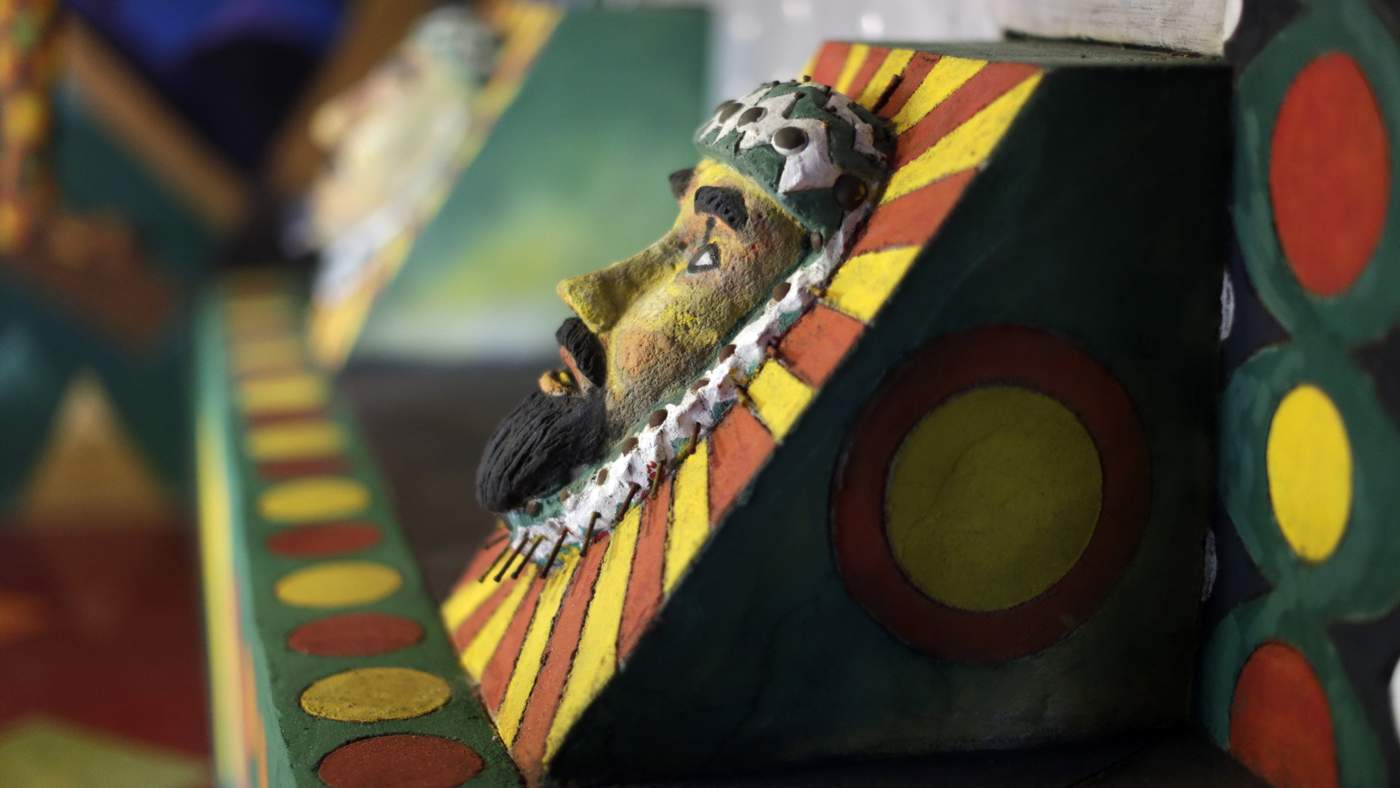
Pasaquoyan faces in Eddie's kitchen, which he used as a recording studio.
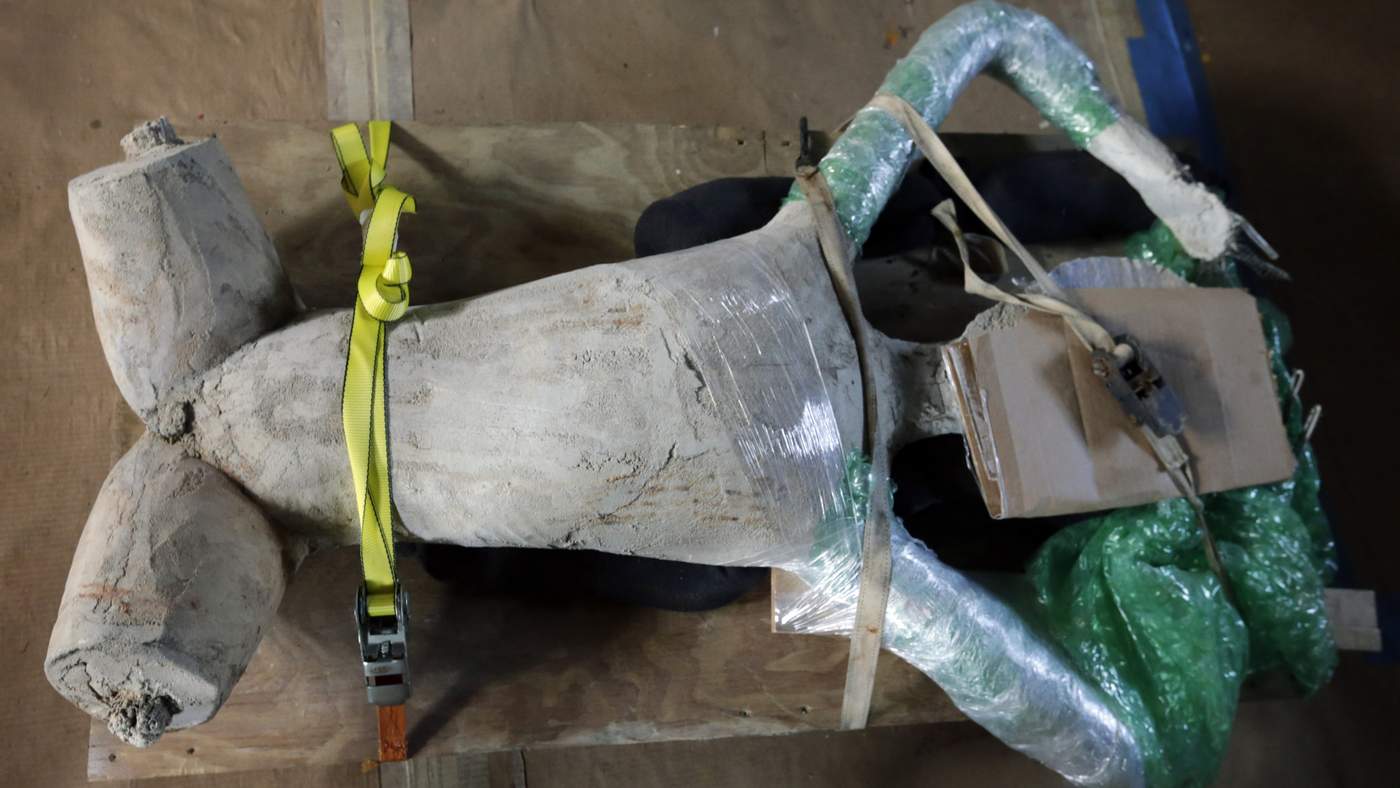
The restoration of Eddie's studio will include some unfinished pieces, which are still being unpacked.
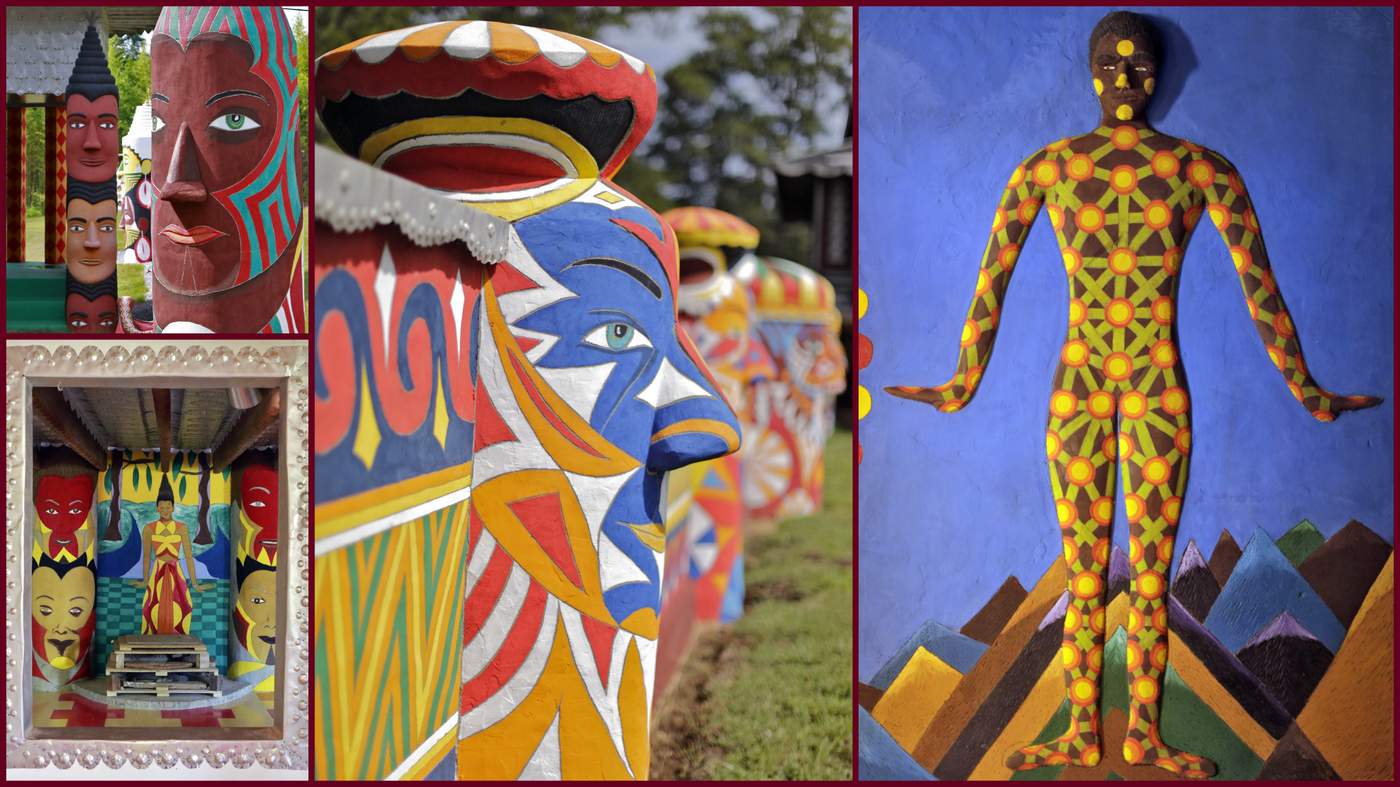
More of the beautifully restored images at Pasaquan.
IF YOU GO
Pasaquan
Opening celebration: 10 a.m.-6 p.m. Oct. 22. Free. Park in downtown Buena Vista and catch a free shuttle.
Visiting hours after Oct. 22: 10 a.m.-5 p.m. Thursdays-Saturdays (closed in December and July). Suggested contribution: $5, $3 seniors, $2 students. 706-507-8306, art.columbusstate.edu/pasaquan.php, pasaquan.blogspot.com.
Directions: From the Buena Vista town square drive north 1.4 miles on Ga. 41, then take a slight left onto Ga. 137. Go west 4.4 miles and turn right onto Eddie Martin Road. Drive 0.4 miles north to 238 Eddie Martin Road. Pasaquan will appear brightly on your right.
PASAQUAN EXHIBITIONS
”St. EOM’s Pasaquan Past, Present, and Future”: Through Sept. 4 at the Columbus Museum of Art. Guest curated by Columbus State University faculty and students, this exhibit offers viewers an introduction to Pasaquan and St. EOM and includes works on paper, jewelry and large concrete busts. www.columbusmuseum.com.
“In the Land of Pasaquan: Works by Eddie Owens Martin”: Oct. 28, 2016-Aug. 5, 2017 at the LaGrange Art Museum. Includes many never-before-exhibited works on paper and other items created by St. EOM, loaned by the Columbus State University Archives and Pasaquan. www.facebook.com/LaGrangeArtMuseum.
Please confirm the information below before signing in.