
After the storm
Volunteer trip to Puerto Rico reveals an
island still recovering from Hurricane Maria


Photo: Thousands of homes suffered varying degrees of damage while large swaths of vegetation were shredded by the hurricane's violent winds. U.S. Customs and Border Protection
When Hurricane Maria ravaged Puerto Rico for 12 hours last September, I watched the news in horror like everyone else. Although I am not of Puerto Rican descent, it felt personal.
I was 13 years old when my family moved from our quiet, suburban ranch house in Charlotte, N.C., to a high-rise apartment in San Juan for my father’s job. We only lived there a few years, but they were formative years. The island got under my skin in a big way.
Years later, I parlayed my love of the island into a publishing contract to write a travel book, which had to be updated often. Ever since then, I’ve returned nearly every year, traversing the island back and forth and up and down so many times, it’s as familiar to me as an old friend’s face.
I spent three weeks there last June researching my fifth edition and was ahead of schedule for meeting my deadline. Then Hurricane Maria slammed it with 155 mph winds, obliterating homes and knocking out water and power across the island.
For the next few days, I was glued to the news, watching videos of roofs taking flight and rivers rushing through towns. I tried to identify familiar landmarks in news footage and grew frustrated by conflicting reports. I cringed at headlines proclaiming the island had been “destroyed,” implying it couldn’t be repaired. And I cried like I’d lost a loved one.
I felt so utterly helpless. All I could think about was helping out. I donated money to various causes, but that wasn’t enough. I was itching to get down there to volunteer.
In early February, I finally did, and the experience left me humbled in the face of such resilience.
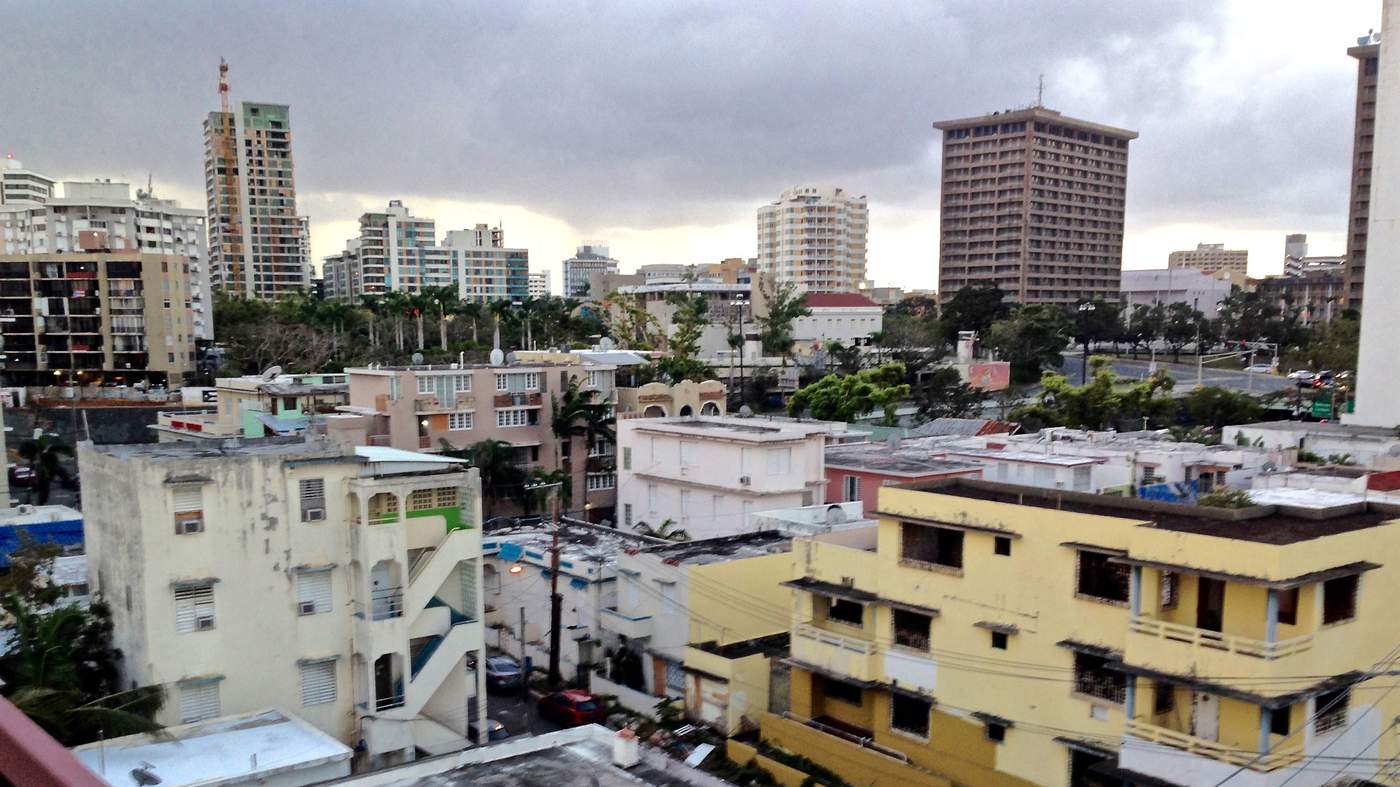
Five months after Hurricane Maria, pockets of Santurce, a working-class neighborhood in San Juan, still had no power. Suzanne Van Atten / svanatten@ajc.com
3
The great equalizer
Before arriving in Puerto Rico, I worked the phones trying to line up some volunteer opportunities for me and my traveling companion, Shelly Williams Kuras of Atlanta. I took it as a good sign that many of the organizations I contacted said they were transitioning out of emergency services into more strategic efforts that required Spanish language skills I did not have.
Then someone suggested I contact Banco de Alimentos, the food bank in Bayamón. Bingo.
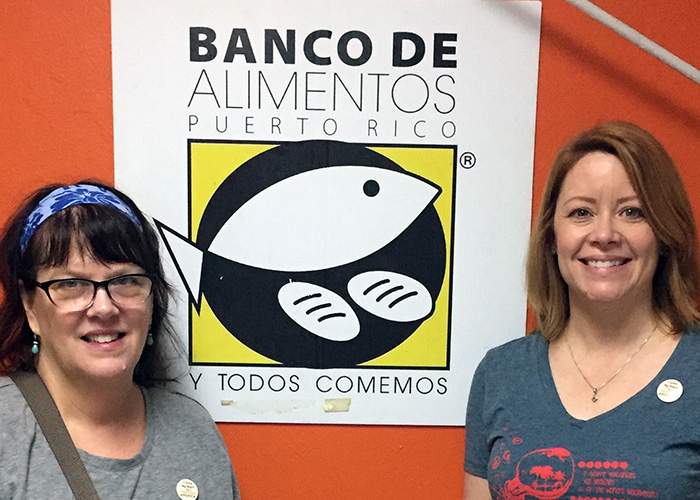
Suzanne Van Atten (left) and Shelly Williams Kuras at Banco de Alimentos. Contributed photo
We spent our first morning in Puerto Rico in a warehouse surrounded by the constant beep-beep-beep of rolling forklifts, the occasional shrill blast of an alarm and the hum of a dozen fans. Everything was covered in a fine dust that went unnoticed until it turned the tips of our fingers black. Assembly-line style, we filled plastic sacks with boxes of shredded wheat, macaroni, cereal bars; cans of pears and green beans; a jug of grape juice; a handful of Rice Krispies Treats; and something called “Snack Bites,” made from chicken sausage.
For 28 years the food bank had been serving those in need on the island. After Hurricane Maria, that included everyone.
“Even people with money needed the food bank because there was no food to buy in the stores,” said volunteer coordinator Valerie Martínez.
It was a story I heard often. Hurricane Maria was the great equalizer, erasing the distinction between the classes. Everyone, rich and poor, old and young, had to stand in line for food, gas, water, ice.
What surprised Valerie most after the storm, though, was the groundswell of volunteers who showed up at the food bank unbidden. Everyone, it seemed, wanted to help.
Joining us on the assembly line that day was 15-year-old Camila Ramos of San Juan, whose father worked at the food bank. She was skipping school so she could spend the day volunteering.
“We weren’t doing anything important today,” she said about missing class.
There were also several office workers from a local insurance company and Nelson Santos, 34, of Miami. It was Nelson’s first time in Puerto Rico, and he’d come for the sole purpose of volunteering. In fact, he’d spent the last two years traveling the world and doing volunteer work, including a two-month stint at a hospice in Myanmar, he said. His dream was to start a nonprofit that brought volunteers to disaster areas and housed them in homestays. He came to Puerto Rico to learn about disaster management.
Asked why volunteering was so important to him, he said, “It’s my passion, my life, my purpose.”
At 10 a.m. Valerie appeared and handed us each a Lunchable, containing crackers and slices of cheese and ham. It was break time, so we all crammed around a table in the tiny break room. Jose Irizarray, a volunteer from the insurance company, pulled a cellphone from his pocket and showed us all a video of him driving his VW Jetta through a river near the mountain town of Morovis. The bridge had been washed away in the storm. Afterward, we engaged in that awkward, halting conversation that occurs when you don’t speak each other’s language. Together we shared in little victories of understanding and ate our snacks.
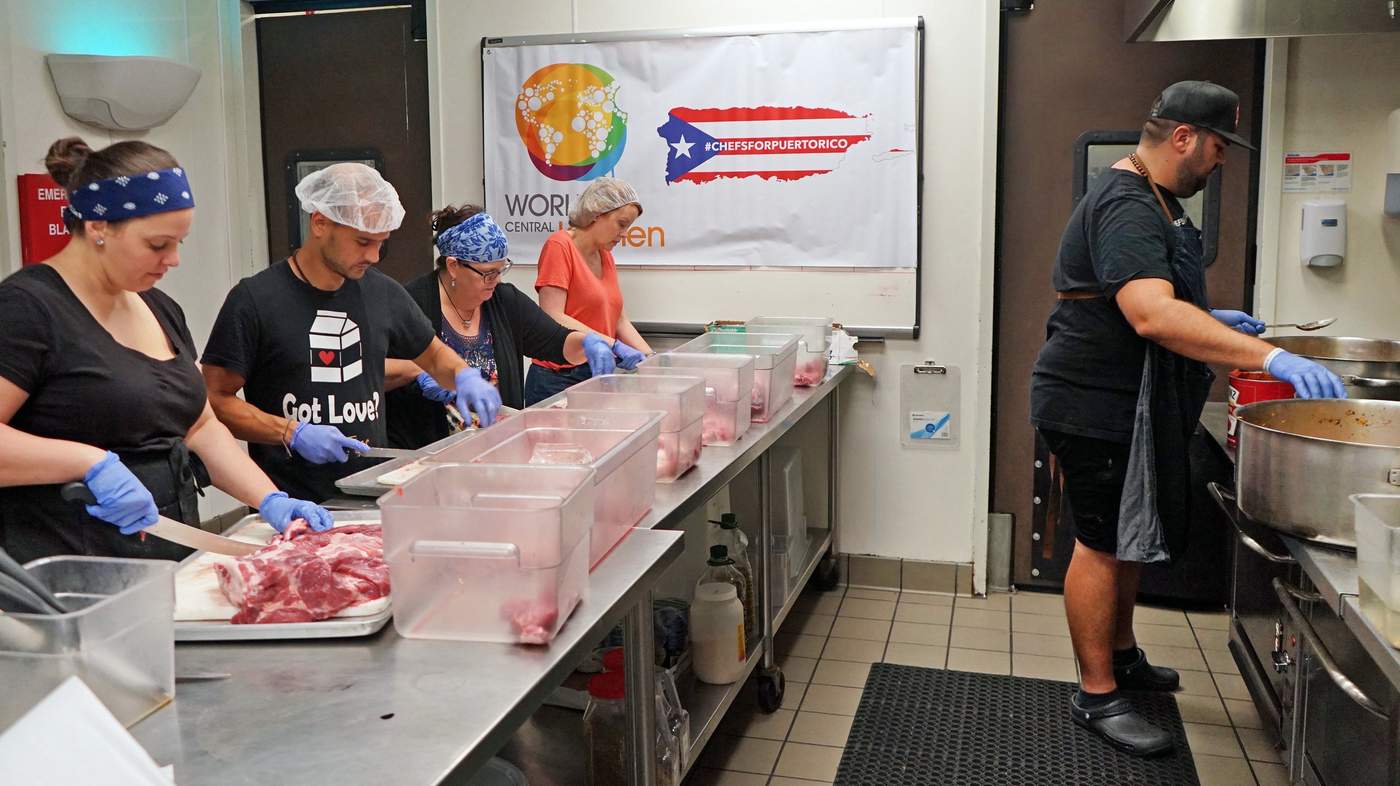
Volunteers prep meals at World Central Kitchen in Dorado, Puerto Rico. Contributed by Carla Dávila Ortiz
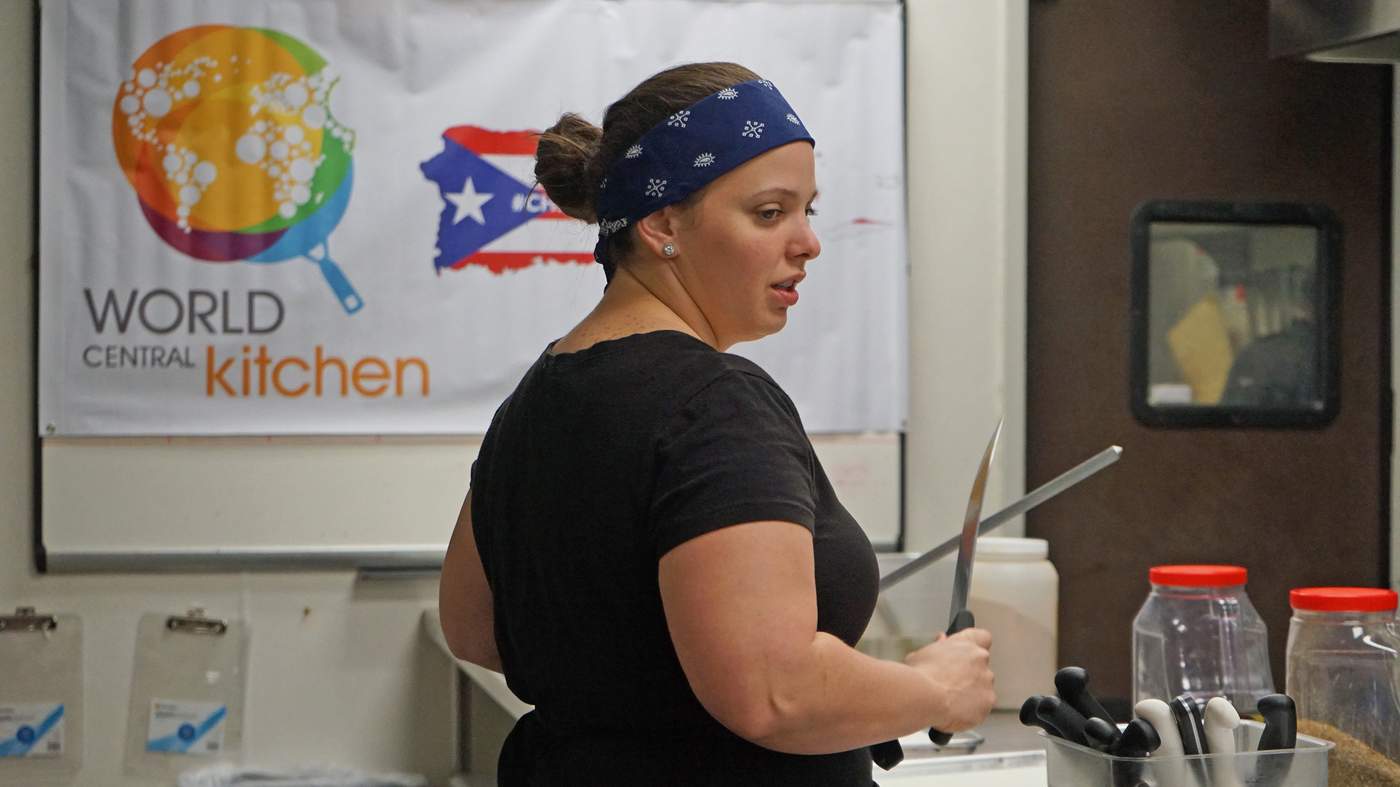
Kitchen manager Griselle “Ñaña” Vila at World Central Kitchen. Contributed by Carla Dávila Ortiz
Artist Carlos Dávila Rinaldi’s studio is filled with work for his new show “Aftermath,” including “Gas Man." Suzanne Van Atten / svanatten@ajc.com
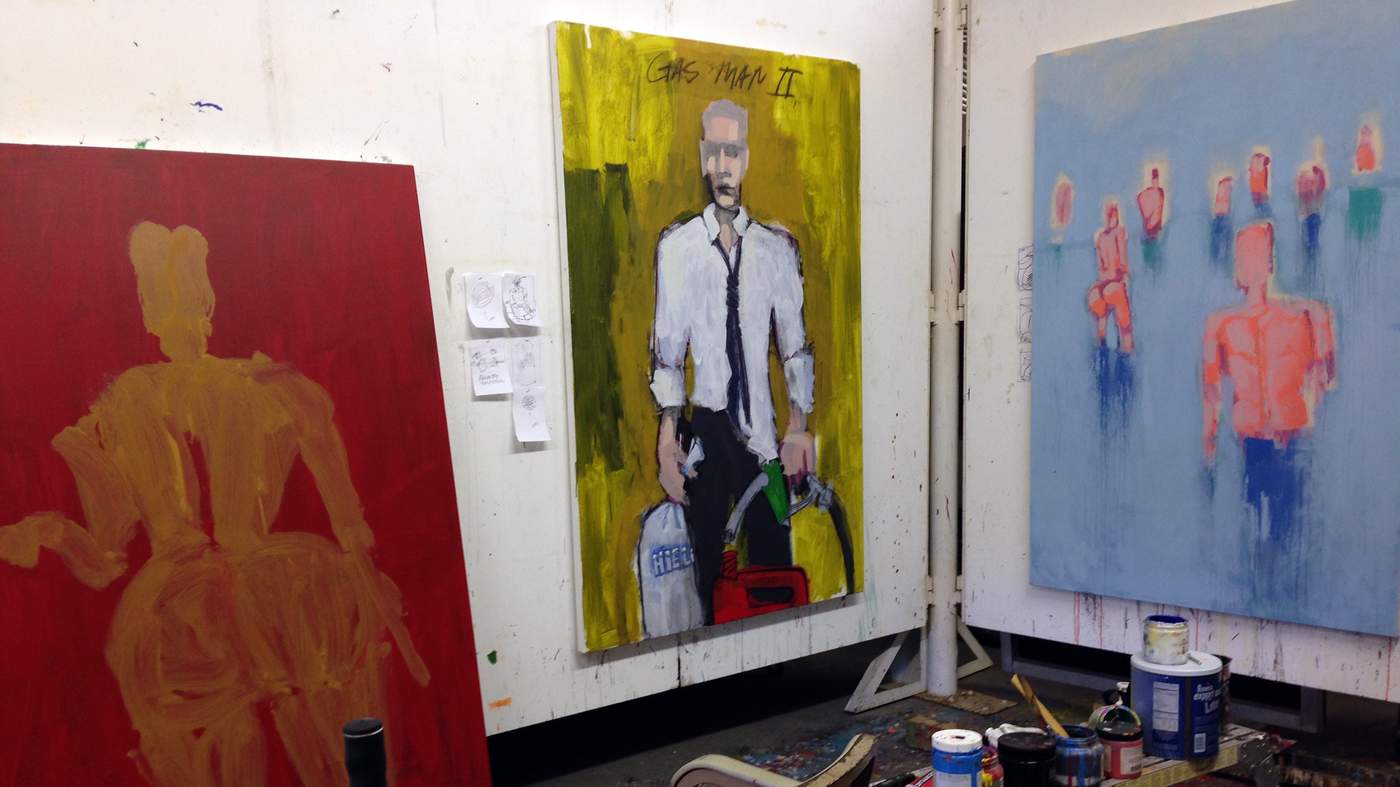
Photo: A volunteer helps an elderly Lares woman carry her meals home. Contributed by Carla Dávila Ortiz
6
Tourism dollars needed
I have no illusions that our small volunteer efforts in Puerto Rico made much of an impact. But I do know it made me feel better having done something as opposed to nothing, and it introduced me to some extraordinary individuals whose altruism inspired me. It also confirmed what I already knew: Anyone who thought Puerto Ricans sat around waiting for someone else to help them after Hurricane Maria couldn’t be more wrong.
After I returned home, I got a message from my publisher. The next edition of my travel book had been put on hold until the island had more time to recover. I understood the decision, but I was disappointed, primarily because what Puerto Rico needs most right now is tourist dollars. Tourism is Puerto Rico’s lifeline, and the infrastructure has made a remarkable recovery. The majority of hotels have reopened, restaurants are in business, roads are cleared and the island’s unparalleled natural beauty has been restored. Whenever someone asks me what they can do to help Puerto Rico, I tell them to go there and spend money.
As for people’s spirits, they are still frayed. The symptoms of PTSD from surviving a cataclysmic natural disaster and the mental anguish of living without power for so long has taken a toll. An event this epic will leave an imprint that lasts generations. And I can only imagine the trepidation that will arise when hurricane season starts again in June. So while Puerto Rico may be on its way back to normal, it seems unlikely it will ever be the same.
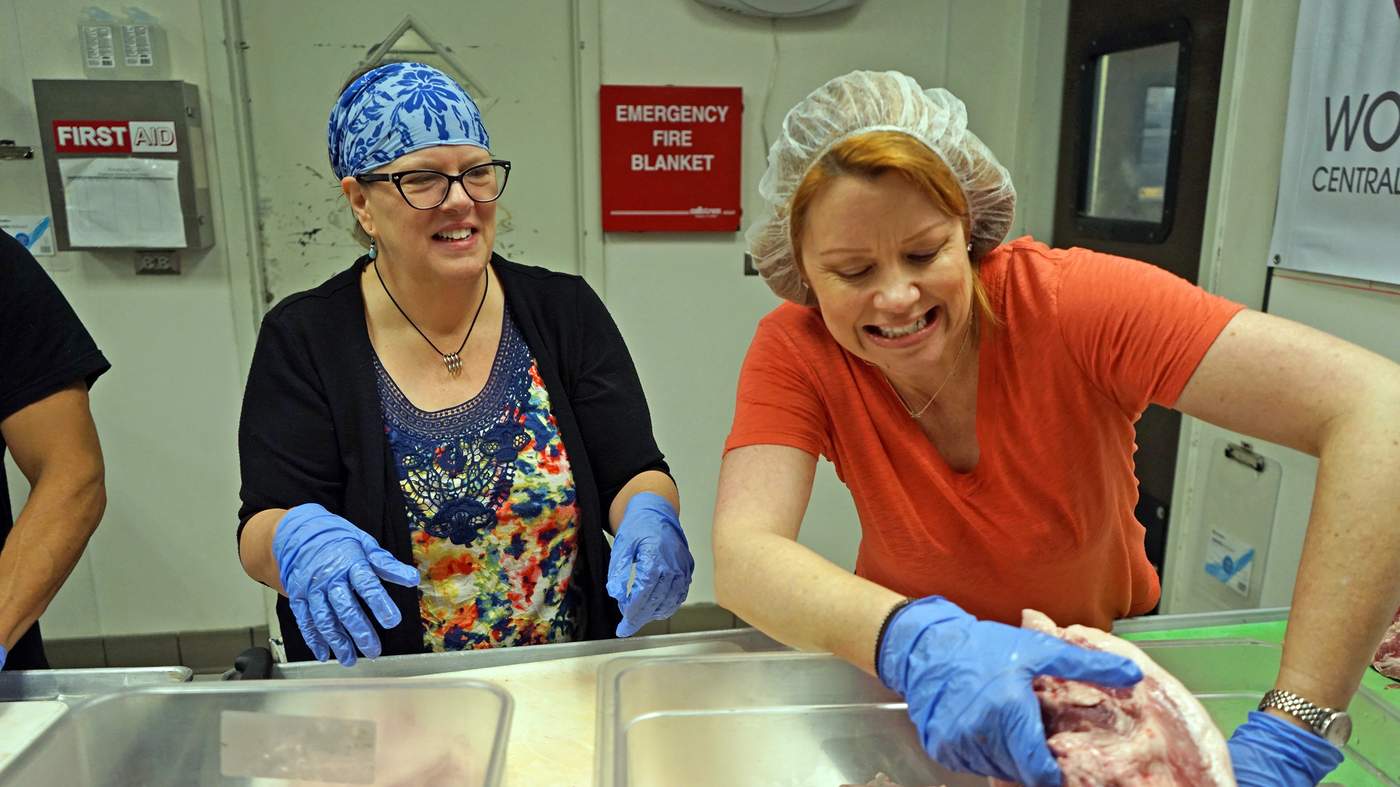
Writer Suzanne Van Atten (left) and Shelly Williams Kuras of Atlanta volunteer at World Central Kitchen in Dorado, Puerto Rico. Contributed by Carla Dávila Ortiz

ABOUT THE STORY
For this story, I spent five days in Puerto Rico volunteering and talking to residents about their experiences. Most of my time was spent in greater San Juan, but I also drove to Caguas, Dorado and the mountain town of Lares. Everywhere I went, I saw the same thing: signs of recovery alongside signs of destruction still waiting for repair. Puerto Rico is no longer in an emergency situation, but there is still need. If you’d like to help, consider making a donation to United for Puerto Rico at www.unidosporpuertorico.com/en.
Suzanne Van Atten
Personal Journeys editor
personaljourneys@ajc.com

ABOUT THE REPORTER
Suzanne Van Atten is Lead Features Content Manager for the Atlanta Journal-Constitution, where she has worked for 12 years. She is an award-winning travel writer and author of the travel guide “Moon Puerto Rico” (Hachette), now in its fourth edition. She holds an MFA in creative nonfiction writing from Queens University of Charlotte, N.C. , and is director of the Decatur Writers Studio.

ABOUT THE PHOTOGRAPHER
Carla Dávila Ortiz is a photographer living and working in Puerto Rico. She has a B.A. from the Universidad del Sagrado Corazón in communications with a major in photography. She is currently working on a series of role-play photos, self-portraits of herself dressed as different characters. In 2016 she traveled to Cuba with the Ballet Concierto School in an exchange program with Alicia Alonso’s Pro-Danza to document dancers there. Carla works with a local advertising agency, generating both photographic and video content for social media. Follow her work on Instagram at @cdophotography.
Please confirm the information below before signing in.