
Southeast travel:
Louisiana
For The Atlanta Journal-Constitution
September 17, 2017
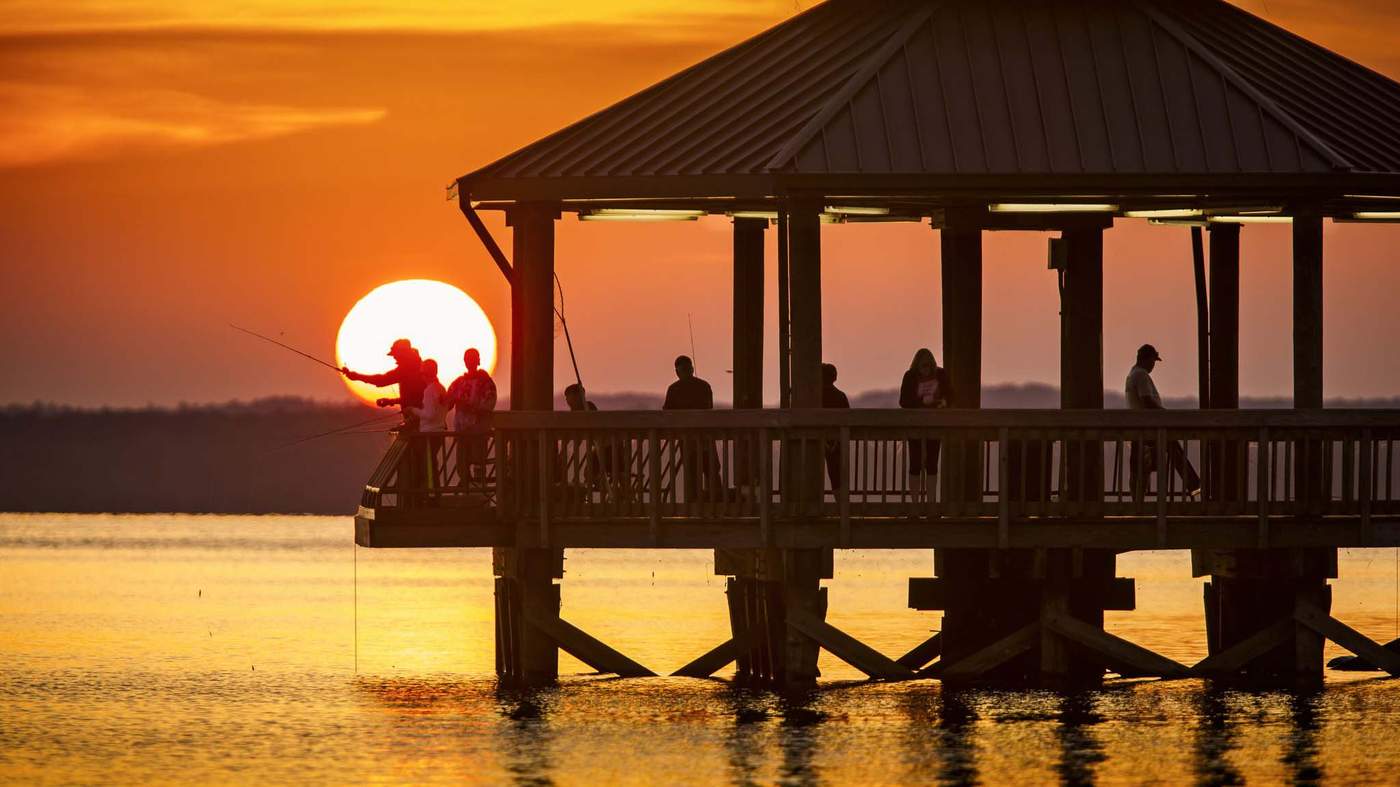
Toledo Bend Lake has been named as the best bass lake in the nation on more than one occasion, and it’s often host to pro and amateur fishing tournaments. CONTRIBUTED BY SABINE PARISH TOURIST COMMISSION

Once known as the Child of the Mississippi, Louisiana, with its rich historical past still fully evident today, manages to keep us engaged with a seamless blend of timeworn and cutting edge.
Acadiana region
The Acadiana region in south Louisiana is known as Cajun country, named for the French-Canadians who settled in the area in the 1700s. Today, chances are, you’ll pick up the thick permutation of the French Cajun language as often as English. Each of the 22 parishes that make up the region promises exotic scenery, stellar food and some foot-stomping zydeco.
New Iberia Parish is home to Avery Island, a subtropical slip of land perched atop a hunk of rock salt so deep that it’s thought to reach down 29,000 feet or more — that’s deeper than the height of Mount Everest.
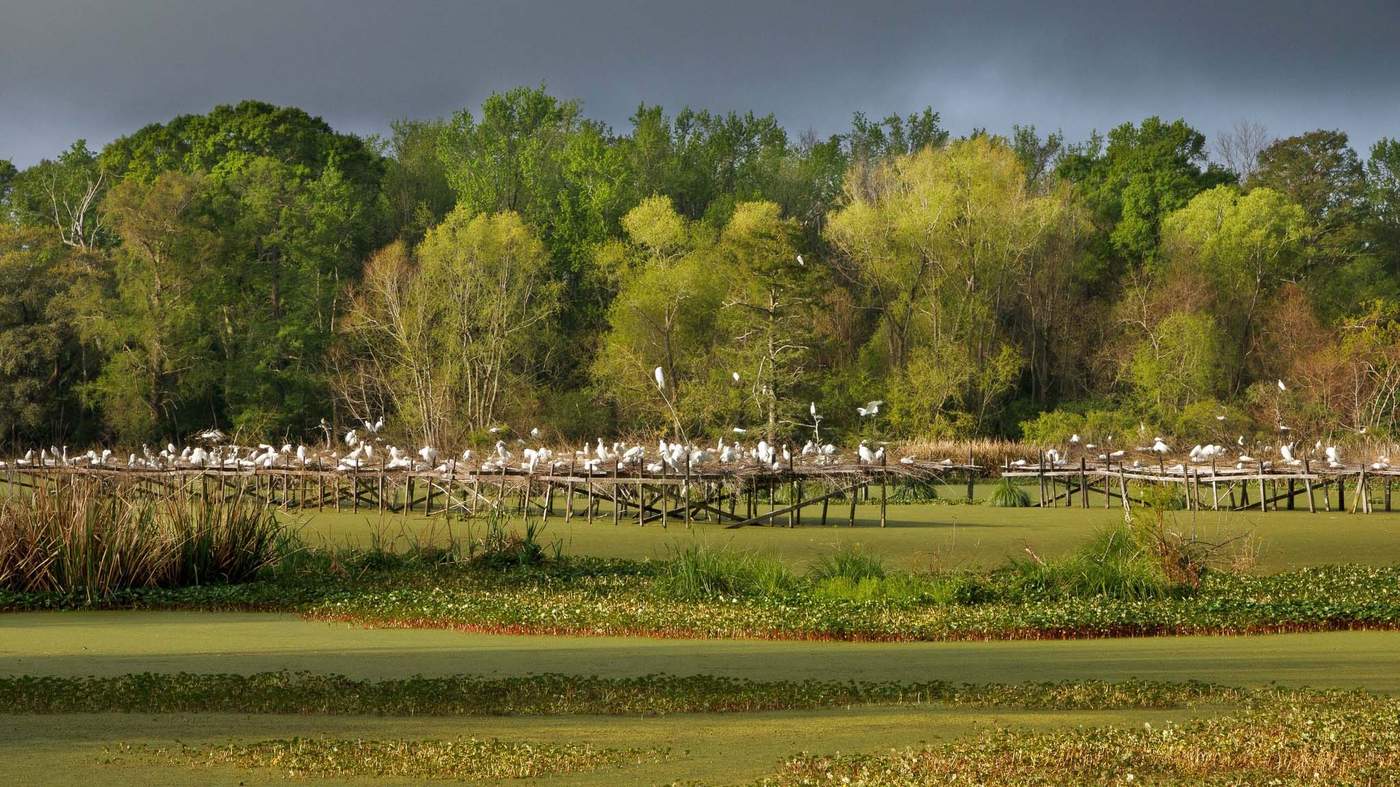
Tabasco pepper sauce might be the best-known commodity to come from Avery Island, but this place is a booming tourist destination. Rabid birders will be thrilled to know that the island’s Jungle Gardens (Highway 329, Avery Island. 337-369-6243, junglegardens.org, @JungleGardensLA) now offers customized bird tours for individuals or groups. Recently, the Tabasco factory opened a visitor’s center featuring a restaurant serving up Cajun fare. Naturally.
St. Martin Parish sits in the Cajun Heartland. Don’t miss a tour of the mysterious Atchafalaya Basin that makes up the largest river swamp in the nation. The wetlands draw legions of visitors who come to see the moss-covered cypress trees, forests of eerie hardwood stumps reaching through the murky waters, and the abundant wildlife.
Meanwhile, literature and history buffs who appreciate romance and tragedy will want to make their way to Longfellow-Evangeline State Historic Site (1200 N. Main St., St. Martinville. 337-394-3754, crt.state.la.us) and bask in the shade of the Evangeline Oak, made immortal by Henry Wadsworth Longfellow in his epic poem that expressed the plight of Acadians ousted from Nova Scotia who traveled to the region and became the Cajuns we know today. The site is just steps from the Museum of the Acadian Memorial.
Once you’ve spent a full day taking in the third-oldest city in the state, you’ll want a comfortable place for some downtime. The Old Castillo Bed and Breakfast (220 Evangeline Blvd., St. Martinville. 337-394-4010, oldcastillo.com), adjacent to the park, lies on the banks of the Bayou Teche, beneath the branches of the Evangeline Oak. This genteel hotel, furnished with period pieces, is listed on the National Register of Historic Homes, and is the oldest operating bed-and-breakfast in Acadia.
For a home-cooked lunch of authentic Cajun and Creole fare, head up the road a piece to Lafayette. At La Cuisine de Maman (300 Fisher Road, Lafayette. 337-205-9899, bayouvermiliondistrict.org, @Vermilionville), take a seat, tuck your napkin into your shirt and prepare to feast. You can select from the buffet or off the menu. The circa-1800s home offers tables in a glassed-in porch with views of the surrounding Vermilionville Living History Museum and Folklife Park.
Avery Island may be known as home to Tabasco hot sauce, but it also has Jungle Gardens for avid birders. CONTRIBUTED BY JUNGLE GARDENS
New Orleans
Touring a plantation in New Orleans is a natural when visiting, but Whitney Plantation (5099 La. 18, Wallace. 225-265-3300, whitneyplantation.com, @WhitPlantation), which sits on the Mississippi River, barely an hour’s drive from the French Quarter, provides its visitors a sobering experience that focuses on slavery rather than opulence. Tours of the plantation, now a designated historic district on the National Register of Historic Places, include the Antioch Baptist Church, which was built by slaves, various outbuildings, slave quarters and the main house, circa 1790.
Let’s face it, the Big Easy offers a quirky study in contradictions. And nowhere does it get weirder than at Mardi Gras World (1380 Port of New Orleans, New Orleans. 504-361-7821, mardigrasworld.com), a museum where you can get up close and personal with those crazy floats without worrying about inebriated crowds. Within the massive warehouse, where vibrant and garish floats and props are stashed, you’ll get a chance to peek in on artists as they work. It gets better. Mardi Gras World allows guests to try on costumes.
We know that New Orleans is all about having a good time, and so it goes at the Catahoula (914 Union St., New Orleans. 504-603-2442, catahoulahotel.com), a new boutique hotel in the Central Business District. Fans of this former 1845 townhouse love the sane room prices, and they can’t get enough of the stylish Pisco bar that focuses on “Peruvian cocktail culture.” Who knew there was such a thing? Grab the Aguaymanto Sour — flavored with a jolt of pisco, a South American brandy, on the rooftop terrace, then settle in for some soulful tunes among the stars courtesy of the city skyline.
North Louisiana
Of course, history runs much deeper in the region. Poverty Point (6859 La. 577, Pioneer. 318-926-5492, crt.state.la.us) was granted World Heritage recognition in 2014. This vast, ancient network of mounds and ruins on Bayou Macon — lowland Delta country in the northeastern part of the state — is dated between 1700 and 1100 B.C. Poverty Point was the name of a plantation that once stood on the site. Today, it stands as an important reminder of an extraordinary past when its inhabitants went to great lengths to create a sophisticated culture. To tour, visitors can select from a self-guided driving (or walking) trail or hop on a tram. If you plan to stay overnight, check out a waterfront lodge in nearby Poverty Point Reservoir State Park.
Anglers, particularly those hoping to lure bass, will want to make plans to take a fishing vacation at Toledo Bend Lake(1601 Texas Highway, Many. 318-256-5880), considered by Bassmaster Magazine as the best bass fishing lake in the nation. The lake hosts various fishing tournaments throughout the year for both amateurs and pros. While bass is king here, catfish, crappie and bream also are plentiful. Toledo Bend Lake is the place to snatch copious amounts of lunkers (bass over 10 pounds). Visitors to the area will find a variety of places to stay. The tony Cypress Bend Golf and Conference Resort offers suites and a spa, along with fine dining while Wildwood is the place for full-service cabins, private ponds and a boat launch. If fishing and roughing it go hand in hand for you, there’s plenty of camping available in the area.
The northern part of the state also claims the Louisiana Sports Hall of Fame and Northwest Louisiana History Museum (800 Front St., Natchitoches. 318-357-2492, louisianastatemuseum.org, @LaStateMuseum), which opened in 2013. The 27,000-square-foot museum is home to the Sports Hall of Fame’s permanent collection of memorabilia celebrating the achievements of more than 300 Louisiana athletes and sports figures.
Natchitoches — pronounced nak-it-tish — isn’t simply about sports, though. Founded in 1714, it’s considered the oldest permanent settlement in the state. The 33-block National Landmark Historic District gives visitors a look at the past peppered with plenty of shopping and dining opportunities. Film buffs might recognize Natchitoches as the filming location for “Steel Magnolias.”
Natchitoches recently unveiled its Louisiana Sports Hall of Fame in the 27,000-square-foot Northwest Louisiana History Museum complex. CONTRIBUTED BY MARK J. SINDLER / LOUISIANA STATE MUSEUM

Central Louisiana
Designed to thrill youngsters, the 12-acre Prehistoric Park (1135 N. Barn Road, Henderson. 337-981-3466, prehistoric-park.com), the state’s first dinosaur-themed attraction, features life-sized dinosaurs, some of which are animatronics. Walking through the attractions takes under an hour, and there are also a gift shop and a play area.
Raw, grilled, barbecued, swimming in lemon vodka, or dolled up with bacon and Brie are only a handful of ways Jolie Pearl (315 North Blvd., Baton Rouge. 225-615-7172, jolieoysterbar.com, @JoliePearl2014) dishes up its oysters. This newish oyster bar in the state’s capital offers more than 50 different types of the bivalves in a casual setting that pairs perfectly with the main attraction. Among the trendy trappings of reclaimed wood and corrugated metal, the bar features clever, eye-catching chalkboard diagrams that easily explain the anatomy of an oyster — in case you were wondering. Booze and oysters pair beautifully, and if you want to crank it up a few notches, order the absinthe service.
Part curator of Baton Rouge history and part art gallery, Watermark (150 Third St., Baton Rouge. 225-408-3200, watermarkbr.com, @WatermarkBR), the city’s newest luxury hotel, combines the best of old and new. Housed in what was the headquarters of the Louisiana Trust & Savings Bank, overlooking the Mississippi River, the 1920s structure was built in the elegant Greek Revival style. Today, the hotel is a blend of design elements spanning the last century, including midcentury modern and art deco. Located off the lobby, you can’t miss the Gregory, the Watermark’s fine dining restaurant with art deco furnishings set off by the lush murals painted by Angela Gregory, the restaurant’s namesake. Even if you don’t stay at the Watermark when you’re in Baton Rouge, stop by and gawk. It’s that gorgeous.
Please confirm the information below before signing in.