


Vanished
How the mysterious disappearance of
Sherron Lankester’s son nearly destroyed her.
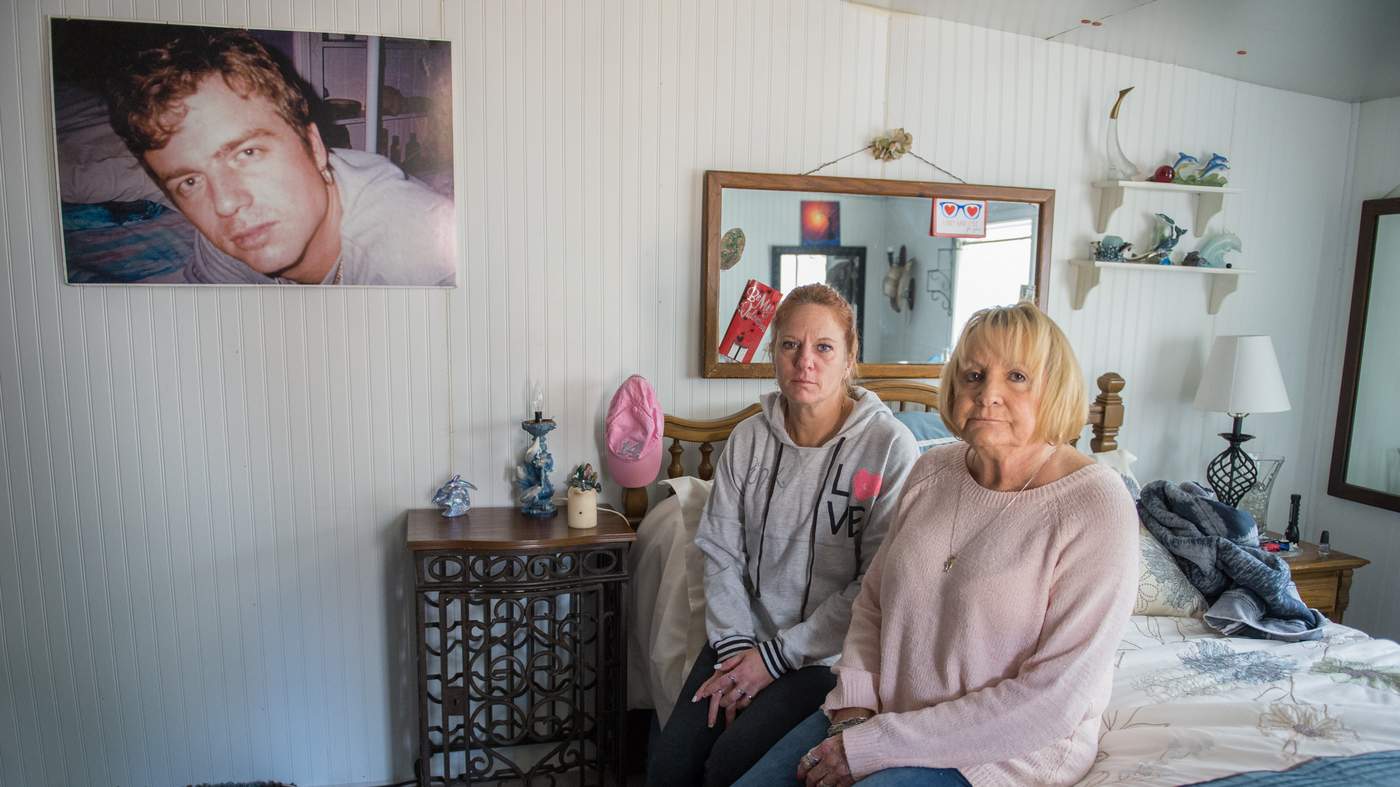


Photo: Leslie and Sherron look through a photo album in Leslie’s room at their Acworth home.
5
A bond in torment
Sherron and Leslie’s relationship had always been marred by disagreements and hurt feelings. Sherron says Jack favored Leslie over Steve, so Sherron compensated by favoring Steve over Leslie.
It was wrong, she knows now.
But mother and daughter found common ground in their pursuit of answers in Steve’s disappearance.
As impassioned as Sherron was in her search, Leslie was more so.
Leslie is small but tough. Growing up, she never wore dresses, preferring blue jeans and high-top sneakers. When it came to work, she gravitated toward professions like fixing cars and driving backhoes.
When Steve disappeared, something changed for Leslie. She got clean. She had a new obsession: Finding out what became of her brother.
Leslie collected tidbits of information in the case and catalogued them in a notebook. She made sure everybody knew she was looking. As the months drew on, her frustrations grew. She heard gruesome tales, one after the other. She communicated with the police regularly and gave them tips she’d gleaned. But she saw no progress in the case. She thought they weren’t trying hard enough.
In the early months of 2005, everything started to get to Leslie and her behavior grew more desperate.
She started sneaking in people’s homes as they slept and waking them up with a gun held to their faces. She made them think she would draw blood if they didn’t talk.
It isn’t clear how much the police knew of her methods, but Leslie says they warned her to calm down before something bad happened.
She didn’t listen.
One day in June 2005, Leslie and a male acquaintance drove a white Oldsmobile to a house in The Mecca. When she arrived, she saw Carrie Gentry, a woman Leslie was convinced knew what happened to Steve, seated in her car in the driveway. So Leslie pulled up behind Gentry’s car, blocking her in, and something sparked in her mind. She’d heard Carrie was among those who had pictures of her brother being tortured, beaten down to his hands and knees, burned by cigarettes and starved.
Leslie appeared at Carrie’s passenger’s-side window, a mere 5-foot-3, 115 pounds, holding a Smith & Wesson .38 loaded with five rounds.
She told Carrie they needed to talk.
Leslie got in the car and tossed Carrie’s keys into the woods. She told Carrie it was time someone made an example of her. Leslie called out to her acquaintance and told him to bring her something from the Oldsmobile.
Duct tape.
Leslie wrapped it over Carrie’s hands, arms and eyes. Then she grabbed Carrie by the hair, led her to the trunk of the Oldsmobile and ordered her inside.
Before Leslie could decide what to do next, someone who witnessed the act dialed 911.
Deputies arrived to hear pounding and muffled shouts coming from the Oldsmobile trunk. The cops ordered Leslie and everyone else who’d gathered to lay face down in the yard.
The deputies popped the trunk and found Carrie, panicked and crying, inside.
Leslie spent a year in jail before agreeing to take a plea bargain. She was given 10 years in prison, 15 more on probation.
Sherron had already lost a son. Now a daughter.
But it did not deter her from continuing her search for Steve.
6
‘Where’s my son’s body?’
By 2008, police had interviewed some 70 people, written numerous search warrants, dug up yards, searched bodies of water, sent out dogs, looked in wells and been told at least 10 different stories about how Steve died. Half of those stories involved Neally.
Sherron befriended a woman whose adult son was missing in a separate case in Cartersville.
They got business cards printed with their sons’ pictures and the words, “Have you seen us?” They got licenses to carry handguns. Together they would question people. Sherron says her friend did most of the talking, recording conversations on a tiny microphone in her bra. Sherron waited in the car with a pistol in her lap, ready for the worst.
They went to Neally’s old neighborhood and spoke with neighbors. They’d heard Steve was killed at Neally’s house on Sundown Way, that blood covered the floor in the days after. But police said there was no direct evidence.
This was typical of Steve’s case: No direct evidence.
Sherron didn’t like most of the detectives. It seemed like they didn’t care.
But Steve Edwards, the bulldog, was different. Sherron didn’t know why Edwards cared so much, but she didn’t ask too many questions.
After she lost her son, many of her friends, relatives and fellow church members distanced themselves. But there was always Edwards.
He traded emails with her and called once in a while to ask if she wanted to take a ride. Together they visited sites around Acworth where the stories took them. They even went to Alabama. They never found anything significant, but the drives made Sherron feel they were at least trying.
As long as Edwards was on the case, she thought there was hope.
In 2009, at age 57, Edwards retired. He’d spent 16 years with the sheriff’s office and taken only one week off. Now he wanted to spend time with his family.
But Edwards couldn’t let Steve’s case go.
A newspaper reporter writing about Edwards’ retirement asked if any investigations still haunted him.
“The case of Stephen Lankester,” he replied.
Even after retirement, Edwards would call the sheriff’s office and ask if any tips had come in. He tried to run down leads remotely. And he tried to assure Sherron the case wasn’t cold.
Still, it all was getting to her.
She often woke in the night to the haunting dream of Steve coming to the house, begging: Help me, Momma.
Meanwhile, Neally, now freed from prison, was going about his life as he pleased.
Sherron fantasized about seeing him one day, what she would say and do.
And she grew more despondent all the time.
She thought of death, about hurling her body from a bridge onto the hard earth below and what comfort giving up might bring.
“I just sit, I don’t even get dressed anymore,” she told a reporter as the sixth anniversary of Steve’s disappearance approached.
One day in 2012, Sherron finally got the chance to find out what she would do if she encountered Neally.
She and a friend of Steve’s were returning from visiting Leslie at prison and had stopped at a gas station for cigarettes. Steve’s friend went in the store while Sherron waited in the car. When she returned, she told Sherron that Neally was inside the store.
The 67-year-old woman opened the glove box, reached inside and pulled out a loaded .38-caliber handgun.
For years, she had wondered how Neally could go on like he was. Did he know the torment she’d had been through? Did he know how badly she wanted to bring her son home, if only for a funeral?
Now he emerged from the store.
She called his name and invited him to her car window to talk. He didn’t come. She called again.
Walt, it would be in your best interest if you came over here and talked to me.
He relented and leaned down to the window. He must’ve seen the gun on her lap.
Where’s my son’s body at? Sherron asked.
I don’t know.
You know, I could kill you right where you stand.
Now, Mom, don’t talk like that.
Rage boiled in Sherron.
I’m not your mother, she spat. If I’d been your mom, I’d’ve killed you soon as you was born.
Thoughts of shooting him flashed in her mind. She wanted him to suffer the way she imagined Steve did.
But she didn’t shoot. She watched him walk away.
She doesn’t know why. Her best guess is that it was grace, that God made her stop, because it’s a sin to kill and hell is forever.
A few days later, Edwards, Sherron’s favorite detective, died in his home in Tennessee. She read about it in the paper.
She couldn’t help but think the case died with him.
Two years later, Neally returned to state prison for selling meth. Repeated attempts to get his side of the story have been fruitless.
Around the 10th anniversary of Steve’s disappearance, something changed for Sherron.
She decided the time had come to celebrate her son’s life. She planned an event at New Hope Baptist. She invited media and politicians. It turned out to be just friends and family, but that was OK. Members of her church came. For so long, Sherron had felt abandoned by them, like they’d forgotten Steve’s death. Now they shared her pain over his loss and her joy for memories of his life. A gospel group from Cartersville sang and everyone ate chili in the fellowship hall afterward.
A few days later, Sherron was back at her kitchen table talking about how beautiful the event was.
Sherron glowed, smiling. Her spirit seemed buoyant. She was ready to move on.
She was ready to try extracting some happiness from the life she had left.
Epilogue
In a meeting with her parole officer earlier this month, Leslie tested positive for marijuana and methamphetamine. She is serving 30 days in the Bartow County jail.
Sherron is worried about her daughter, terrified really.
Otherwise, things are better for Sherron. She now finds support and comfort at New Hope Baptist. And she’s thinking of holding another event in Steve’s honor, to spend a few hours with people who recognize her grief. Perhaps on the next anniversary of his disappearance.
With 12 years now gone, the sheriff’s office is still trying to solve the case. New detectives are lending fresh eyes to the evidence, officials say.
Sherron remains determined. She won’t let them give up.
In remembrance of her son, Sherron had a memorial to Steve tattooed on her back.


ABOUT THE STORY
I met Sherron Lankester in 2013 while working for The Cherokee Tribune. Her son had been missing since 2004, and she felt abandoned and forgotten by friends, family, police and the media. Over the next three years, I researched her son’s disappearance and spent numerous hours with Sherron. We went to church together and to prison. I tried to understand how she gets through the torment life has handed her. As sad as it is, her story is one of resilience and love.
Joshua Sharpe
News reporter
personaljourneys@ajc.com

ABOUT THE REPORTER
Joshua Sharpe is a local news reporter covering DeKalb County for the AJC. He’s a native of Waycross, and his work has appeared in newspapers and magazines around the state and in Florida. Before joining the AJC, he worked for The Cherokee Tribune and the Gwinnett Daily Post, winning awards for feature and news writing. He lives in Decatur.

ABOUT THE PHOTOGRAPHER
Bita Honarvar is an Atlanta-based photographer whose work has appeared in the New York Times, Guardian US, Chicago Tribune and The Atlanta Journal-Constitution, where she was a staff photojournalist and photo editor for 16 years.
Please confirm the information below before signing in.